The Russian Shepherd Dog is a popular search term among people who want to learn about large, intelligent, and protective dogs from Russia and nearby regions. These dogs are often known for their loyalty, strong working ability, and close bond with their families.
However, the name Russian Shepherd Dog does not always refer to one specific breed. It may describe dogs such as the East European Shepherd or the Caucasian Shepherd, which have different appearances, temperaments, and care needs.
If you are thinking about bringing one of these dogs home, understanding its personality, exercise needs, grooming, and training requirements is important.
This guide explains the Russian Shepherd breed types, their history, size, behavior, and daily care in simple language.
What Is a Russian Shepherd Dog?
The term Russian Shepherd Dog is commonly used when discussing shepherd and guardian dogs connected with Russia.
Two well-known examples are the East European Shepherd and the Caucasian Shepherd. Although both are powerful dogs, they were developed for different working purposes.
The East European Shepherd is generally associated with herding, service, and working roles. In comparison, the Caucasian Shepherd is known for its traditional livestock and property guarding abilities.
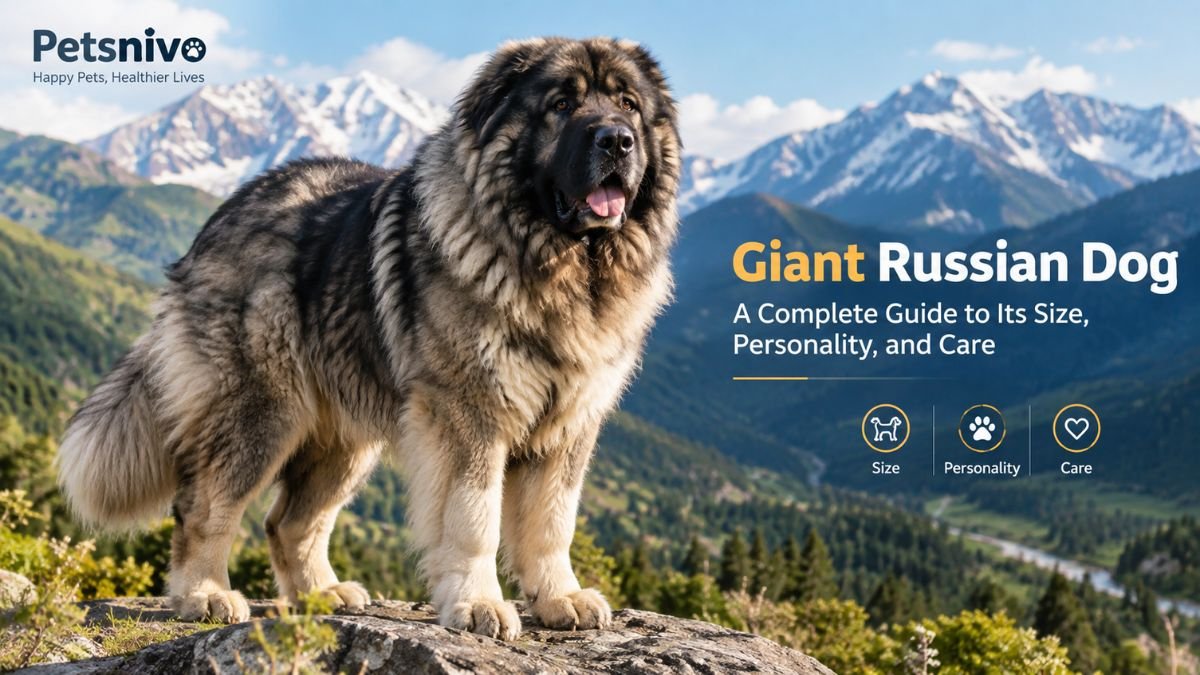
The Caucasian Shepherd is also known as the Giant Russian Dog because of its large size and protective nature.
These breeds should not be treated as identical. Their body structure, coat, exercise needs, and behavior can be different.
When researching a Russian Shepherd Dog, it is helpful to identify the exact breed before making a decision.
History and Origin of the Russian Shepherd Dog
Russian shepherd-type dogs have a long connection with working life, including livestock protection, guarding, and service work.
East European Shepherd
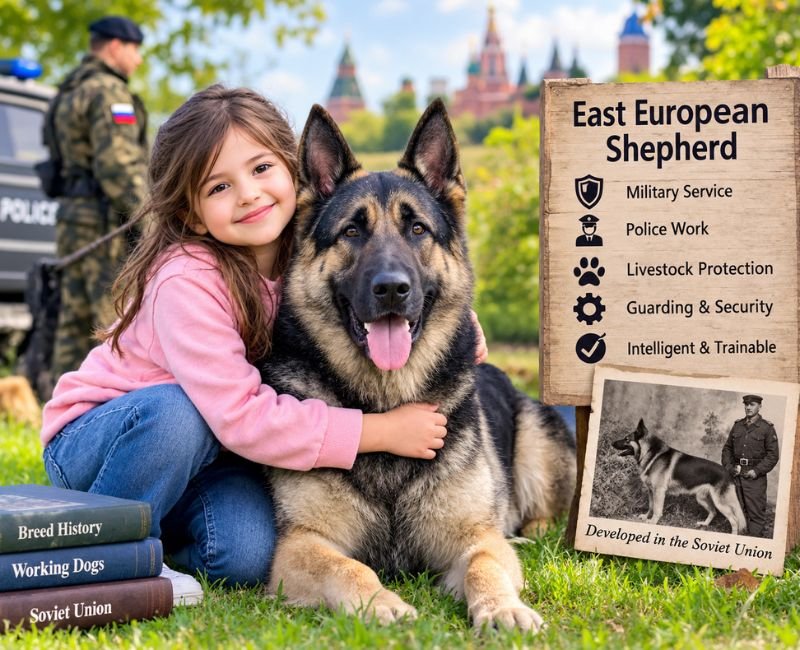
The East European Shepherd was developed in the Soviet Union during the twentieth century. Breeders worked with German Shepherd ancestry to develop a dog suited to local conditions and working needs.
The breed became associated with military, police, and service activities. Its intelligence, trainability, and strong working ability made it useful in demanding environments.
Today, the East European Shepherd is valued by people interested in active working dogs.
Caucasian Shepherd
The Caucasian Shepherd, also called the Caucasian Ovcharka, comes from the Caucasus region.
For generations, these dogs were used to protect livestock and property. Their large bodies, thick coats, and protective instincts helped them work in challenging outdoor conditions.
Unlike the East European Shepherd, the Caucasian Shepherd is primarily known as a livestock guardian.
Both breeds have interesting histories, but their original purposes explain why their care and training requirements are not exactly the same.
Russian Shepherd Dog Appearance and Physical Features
The appearance of a Russian Shepherd Dog depends on the breed being discussed.
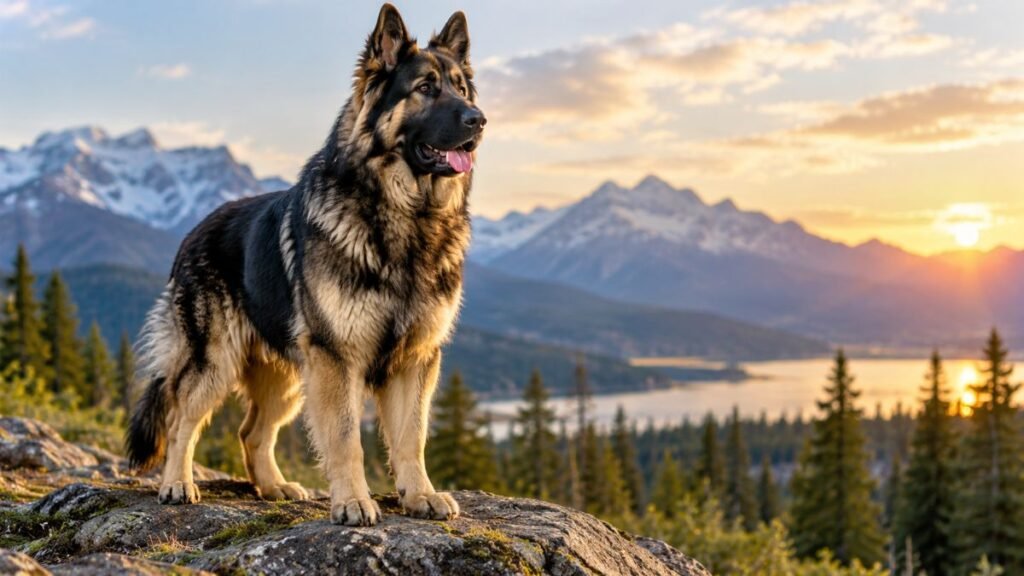
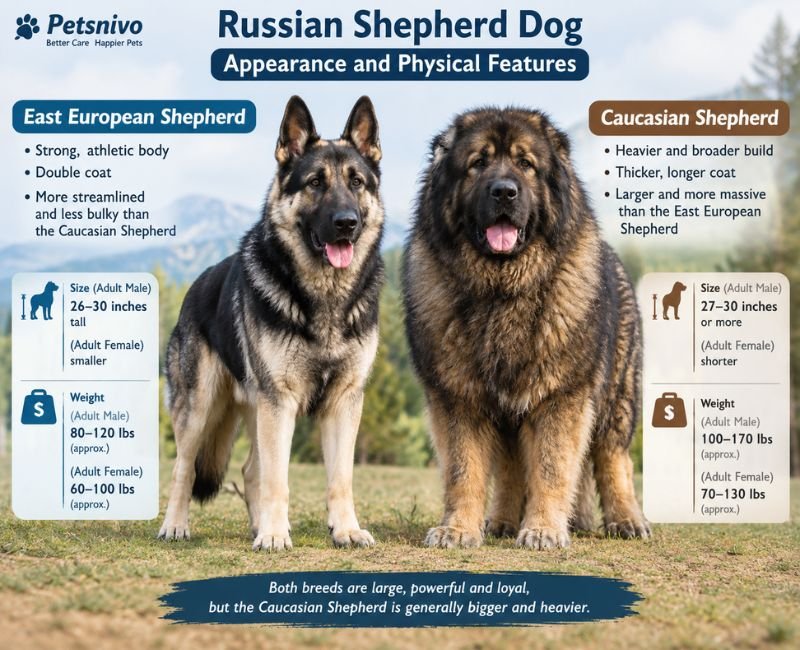
The East European Shepherd usually has a strong, athletic body and a double coat. The Caucasian Shepherd is generally heavier, broader, and more heavily coated.
Size and Weight
The East European Shepherd is a large dog. Adult males are commonly around 26–30 inches tall, while females are generally smaller.
The Caucasian Shepherd is often larger and heavier. Adult males may stand around 27–30 inches or more, while females are usually shorter.
Weight varies with sex, genetics, and individual development. A healthy body condition is more important than reaching a particular number.
Coat and Colors
The East European Shepherd has a dense double coat that helps protect it from different weather conditions.
Common colors include black and tan, black and grey, and darker sable patterns.
The Caucasian Shepherd has a thick coat that may be short, medium, or long. Its colors can include grey, fawn, cream, white, and mixed patterns.
Both breeds need regular grooming, especially during seasonal shedding.
Russian Shepherd Dog Temperament and Personality
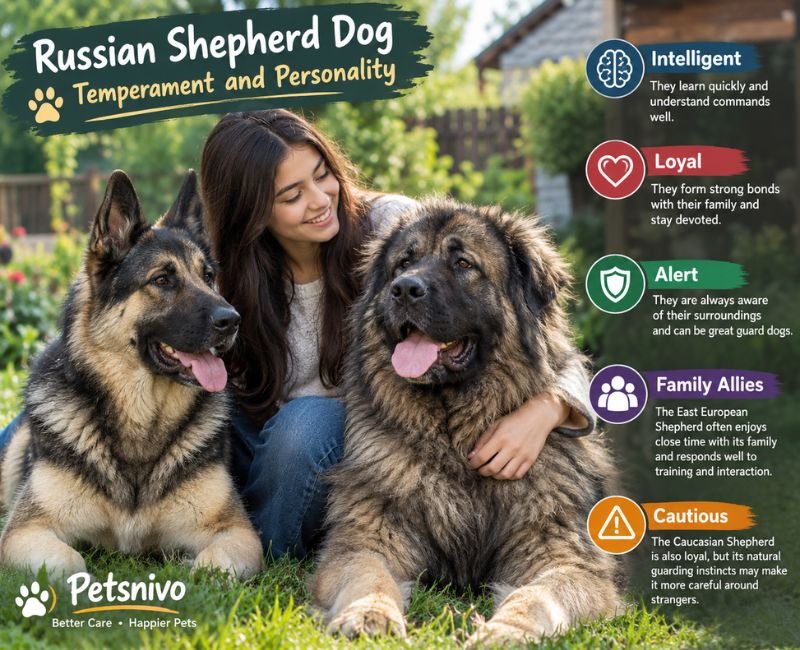
The Russian Shepherd Dog temperament depends on its breed, early experiences, training, and environment.
However, many shepherd-type dogs are known for intelligence, loyalty, and strong awareness of their surroundings.
Loyalty and Family Bond
The East European Shepherd often develops a close relationship with its family. It enjoys having a purpose and usually responds well to regular interaction and training.
The Caucasian Shepherd can also form a strong bond with its household. However, its natural guarding instincts may make it more cautious around unfamiliar people.
Intelligence and Confidence
These dogs are intelligent and capable of learning different commands.
However, intelligence does not always mean that a dog is easy for beginners. Some Russian Shepherd types can be independent and need an experienced, patient owner.
Protective Instincts
Protection is an important part of the working background of these dogs.
A well-socialized dog can learn to remain calm around visitors and unfamiliar situations. Still, responsible handling is necessary because of its size and strength.
Is the Russian Shepherd Dog Good for Families?
A Russian Shepherd Dog may become a good family companion when its needs are properly understood.
The East European Shepherd may suit active households that can provide exercise, training, and daily attention.
The Caucasian Shepherd requires even more careful consideration because of its size and strong guardian instincts.
Families should consider the following points:
- Enough safe living space
- Early socialization
- Consistent training
- Daily exercise and attention
- Supervision around children
- Responsible management around visitors
Young children should never be left alone with a large dog, even when the dog is familiar with the family.
A calm environment and clear boundaries help create a safer relationship between dogs and household members.
Russian Shepherd Dog Exercise Needs
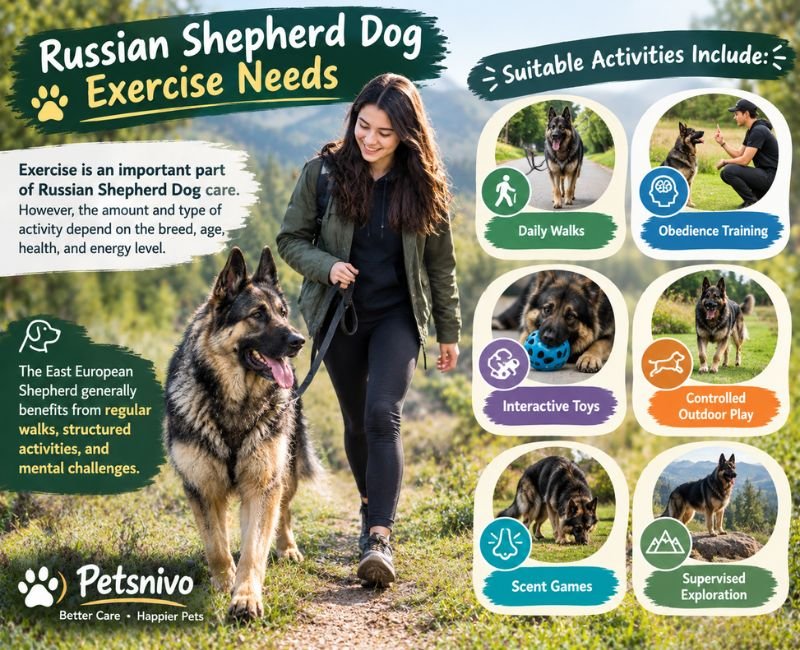
Exercise is an important part of Russian Shepherd Dog care.
However, the amount and type of activity depend on the breed, age, health, and energy level.
The East European Shepherd generally benefits from regular walks, structured activities, and mental challenges.
Suitable activities include:
- Daily walks
- Obedience training
- Interactive toys
- Controlled outdoor play
- Scent games
- Supervised exploration
The Caucasian Shepherd may enjoy regular walks and outdoor time, but it does not necessarily need intense athletic exercise.
Puppies should receive age-appropriate activity because their bones and joints are still developing.
Mental stimulation is also important. Simple training sessions and problem-solving games can help prevent boredom.
Russian Shepherd Dog Training and Socialization
Training should begin early, especially for a large and protective Russian Shepherd Dog.
Early learning helps a puppy understand household rules and become comfortable with different people, sounds, and environments.
Start With Basic Commands
Begin with simple commands such as:
- Sit
- Stay
- Come
- Leave it
- Walk calmly
Keep training sessions short and positive. Reward good behavior with praise, treats, or play.
Socialization
Socialization means helping a dog become comfortable with normal experiences.
Introduce the puppy to suitable people, calm dogs, different surroundings, and everyday sounds in a safe and controlled way.
For a Caucasian Shepherd, responsible socialization is especially important because of its natural guarding background.
Consistency Matters
Use clear rules and reward calm behavior.
Harsh punishment and fear-based training can damage trust and may increase behavior problems. If you are inexperienced with large guardian breeds, seek help from a qualified, reward-based dog trainer.
Russian Shepherd Dog Grooming and Coat Care
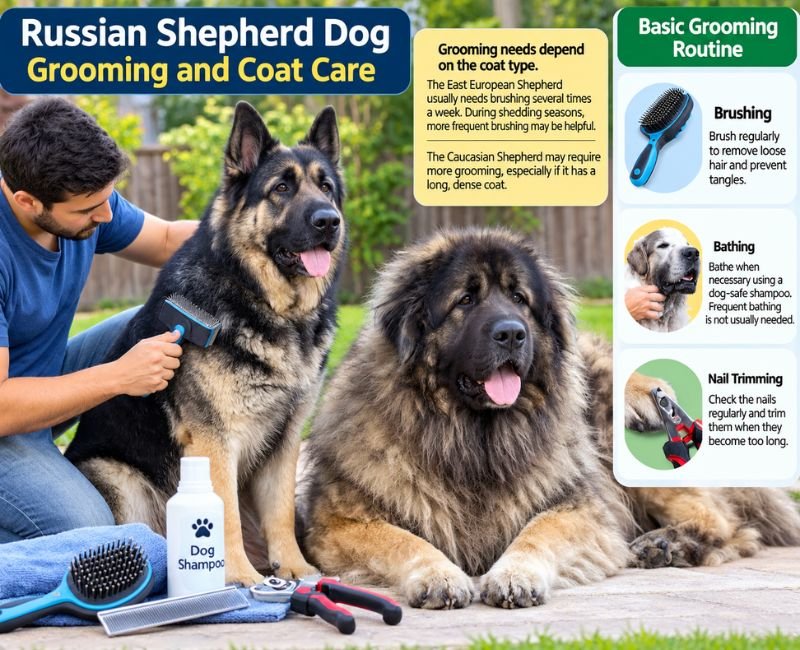
Grooming needs depend on the coat type.
The East European Shepherd usually needs brushing several times a week. During shedding seasons, more frequent brushing may be helpful.
The Caucasian Shepherd may require more grooming, especially if it has a long, dense coat.
Basic Grooming Routine
Brushing: Brush regularly to remove loose hair and prevent tangles.
Bathing: Bathe when necessary using a dog-safe shampoo. Frequent bathing is not usually needed.
Nail trimming: Check the nails regularly and trim them when they become too long.
Ear care: Check the ears for dirt, redness, or unusual odor.
Dental care: Regular tooth brushing supports good oral health.
A proper grooming routine keeps the coat clean and gives you a chance to notice changes in your dog’s skin or body.
Russian Shepherd Dog Diet and Nutrition
A balanced diet supports healthy growth, energy, and overall well-being.
Large and giant breeds have different nutritional needs from small dogs. Puppies, adults, and senior dogs may also require different food.
Choose a complete and balanced dog food suitable for the dog’s life stage and size.
For growing puppies, controlled growth is important. Feeding too much or using unsuitable supplements can create problems for developing joints.
Fresh drinking water should always be available.
The correct food amount depends on age, weight, activity, and body condition. A veterinarian can help you choose an appropriate feeding plan.
Avoid giving human foods without checking whether they are safe for dogs.
Common Health Concerns
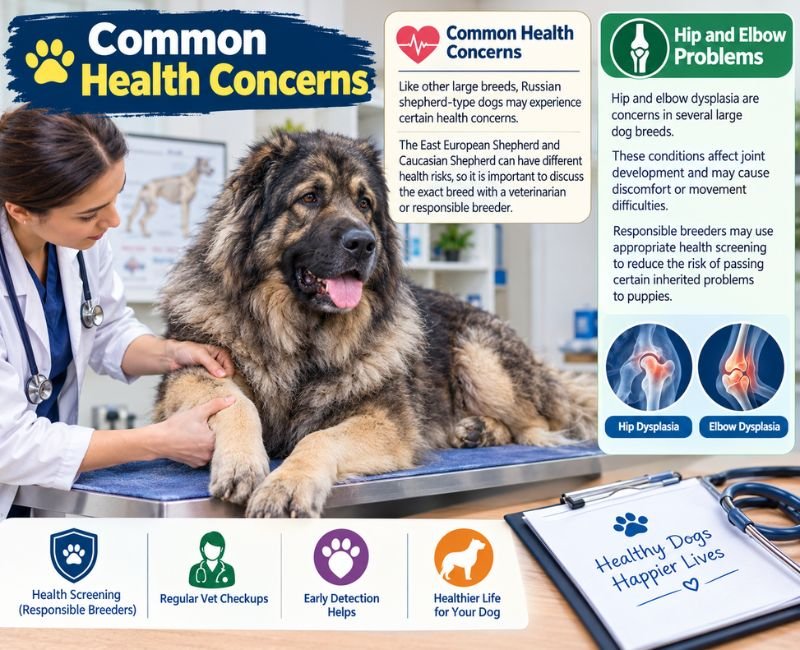
Like other large breeds, Russian shepherd-type dogs may experience certain health concerns.
The East European Shepherd and Caucasian Shepherd can have different health risks, so it is important to discuss the exact breed with a veterinarian or responsible breeder.
Hip and Elbow Problems
Hip and elbow dysplasia are concerns in several large dog breeds.
These conditions affect joint development and may cause discomfort or movement difficulties.
Responsible breeders may use appropriate health screening to reduce the risk of passing certain inherited problems to puppies.
Weight Management
Excess weight places additional pressure on joints.
A balanced diet, suitable exercise, and regular health checks can support long-term well-being.
Routine Veterinary Care
Regular veterinary visits help monitor growth, dental health, vaccinations, and other health needs.
No breed is completely free from health problems. Individual health depends on genetics, lifestyle, nutrition, and proper care.
How Much Does a Russian Shepherd Dog Cost?
The price of a Russian Shepherd Dog varies depending on the exact breed, breeder, location, bloodline, and health screening.
An East European Shepherd and a Caucasian Shepherd may have different prices and availability.
Before choosing a puppy, research the breeder carefully.
Ask about:
- Parent dogs and their health
- Puppy vaccination records
- Early socialization
- Living conditions
- Relevant health screening
- Breed documentation
Avoid choosing a puppy based only on a low price.
Adoption may also be an option in some areas. Remember that the initial purchase or adoption cost is only one part of dog ownership.
Food, grooming, training, veterinary care, and suitable living arrangements are long-term responsibilities.
Pros and Cons of Owning a Russian Shepherd Dog
Every dog breed has positive qualities and responsibilities.
Pros
- Strong loyalty to family
- High intelligence
- Good working ability
- Protective instincts
- Can learn useful commands
- Suitable for experienced and responsible owners
Cons
- May be challenging for first-time owners
- Requires early socialization
- Large size needs careful management
- Regular grooming is necessary
- Training requires patience and consistency
- Some types may be cautious around strangers
Understanding both sides helps people make a more responsible decision.
Is the Russian Shepherd Dog Right for You?
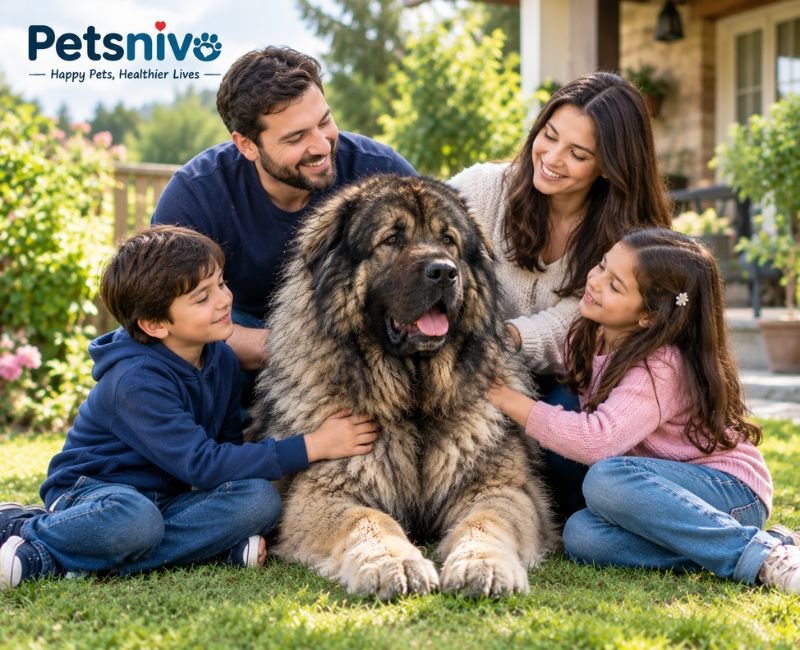
The Russian Shepherd Dog can be a rewarding companion for the right household.
However, it may not suit someone who wants a low-maintenance dog or cannot provide regular training and supervision.
Before choosing one, think about your daily routine, living space, experience with dogs, and ability to manage a large animal.
The East European Shepherd may be a better fit for an active person interested in training and working activities.
The Caucasian Shepherd is generally better suited to experienced owners who understand guardian breeds and can manage their protective behavior responsibly.
Choosing a dog should always be based on its individual needs rather than appearance alone.
Frequently Asked Questions
1. Is the Russian Shepherd Dog a good family dog?
It can be a good family companion with proper training, socialization, and supervision. Suitability depends on the exact breed and the family’s experience.
2. How big does a Russian Shepherd Dog get?
Size depends on the breed. East European Shepherds are large dogs, while Caucasian Shepherds are generally heavier and may reach giant-dog size.
3. Is the Russian Shepherd Dog easy to train?
These dogs are intelligent, but some can be independent. Early training, positive reinforcement, and consistency are important.
4. Does the Russian Shepherd Dog shed a lot?
Yes, both breeds have coats that shed. Regular brushing helps remove loose hair, especially during seasonal shedding.
5. How much exercise does a Russian Shepherd Dog need?
Most need regular walks, suitable outdoor activity, and mental stimulation. Exercise should match the dog’s age, breed, and health.
Final Thoughts
The Russian Shepherd Dog is an interesting search term that covers more than one type of Russian shepherd or guardian breed.
The East European Shepherd is known for its working ability and trainability, while the Caucasian Shepherd is recognized for its size and traditional guarding role.
Both require responsible ownership, suitable nutrition, regular grooming, early socialization, and consistent training.
Before bringing one home, learn about the exact breed and make sure you can meet its long-term needs.
With proper care and a suitable environment, a Russian Shepherd-type dog can become a loyal and valued companion.