The Giant Russian Dog is known for its large size, thick coat, and strong personality. Many dog lovers search for this breed because they want to learn about its appearance, behavior, history, and care needs.
One of the most famous dogs linked with this name is the Caucasian Shepherd Dog, also known as the Caucasian Ovcharka or Russian Bear Dog.
This giant dog has a long history as a livestock guardian. It was traditionally used to protect animals, farms, and homes.
The Giant Russian Dog is loyal, alert, and naturally protective. However, its large body and independent nature mean that it needs proper training, socialization, and daily care.
In this guide, we will explain everything about the Giant Russian Dog in simple English, including its size, temperament, food, grooming, health, and family life.
What Is a Giant Russian Dog?
The term Giant Russian Dog is commonly used for large dogs connected with Russia and nearby regions.
The Caucasian Shepherd is one of the best-known examples. It is also called the Caucasian Ovcharka.
This breed was developed as a working dog. Its main job was to protect livestock and property.
The Giant Russian Dog has a strong body, thick fur, and a natural guarding instinct. It can be independent and careful around strangers.
Although people often call it a Russian Bear Dog, this is an informal name rather than a separate official breed.
The Caucasian Shepherd is recognized as a distinct dog breed by international kennel organizations.
The Story Behind the Giant Russian Dog
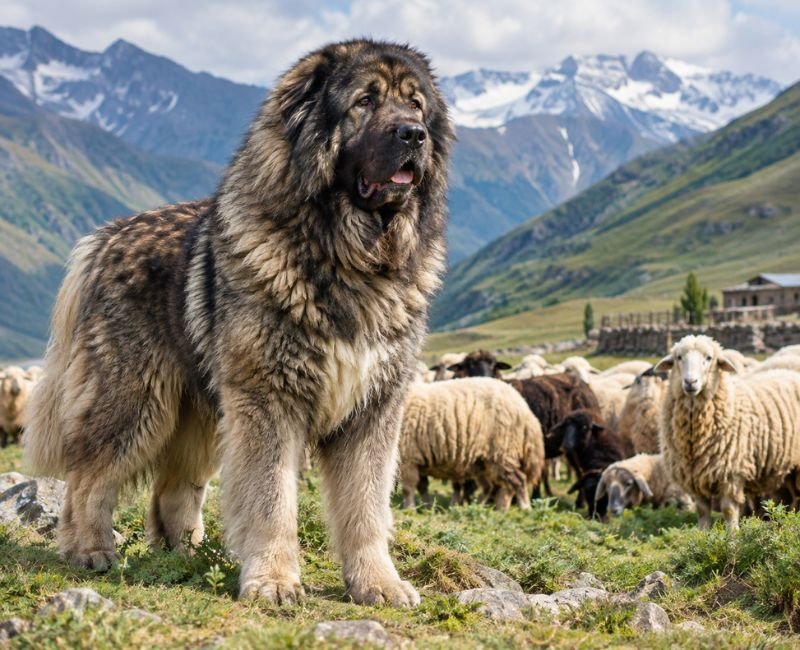
The history of the Giant Russian Dog is connected to the Caucasus region.
For many generations, shepherds used large guardian dogs to protect their livestock. These dogs worked in mountain areas and other outdoor environments.
They needed to be strong, alert, and independent.
The Caucasian Shepherd developed across the Caucasus region, including areas connected with southern Russia.
During the Soviet period, organized breeding of this dog began in the 1920s.
Size and Appearance
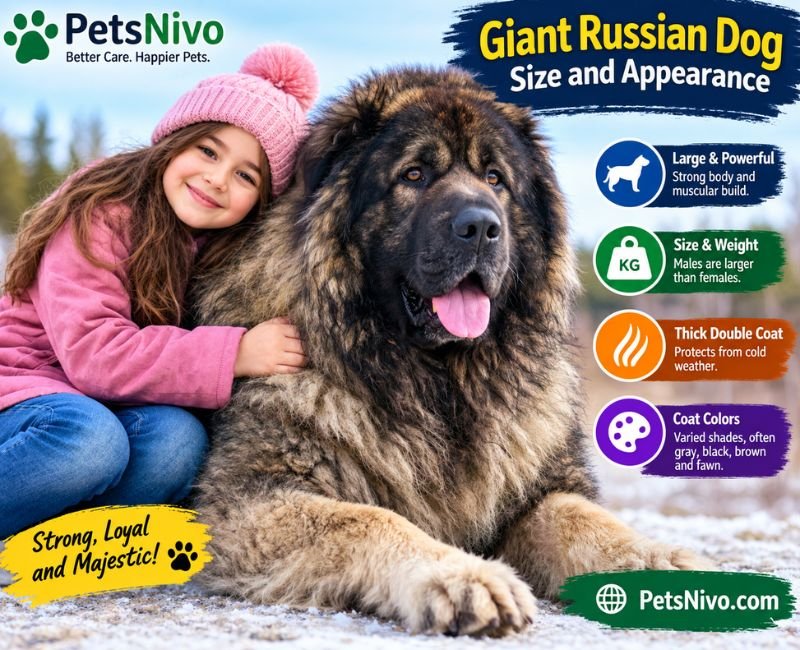
The Giant Russian Dog has a large and powerful body. Its broad head, thick coat, strong legs, and muscular build make it easy to recognize.
Size and Weight
The Caucasian Shepherd is a giant dog breed.
Adult males are usually larger than females. Their size can vary because of genetics, age, and individual development.
A healthy body structure is more important than extreme size.
Coat and Colors
The Giant Russian Dog has a thick double coat.
Its coat helps protect it from cold weather and outdoor conditions.
Common coat colors include:
- White
- Gray
- Cream
- Fawn
- Brindle
- Mixed colors
Some dogs have long fur around the neck, which gives them a lion-like appearance.
Others have shorter coats.
Facial Features
The breed usually has a broad head, strong neck, deep chest, and thick tail.
Its overall appearance reflects its history as a working guardian dog.
Temperament and Personality
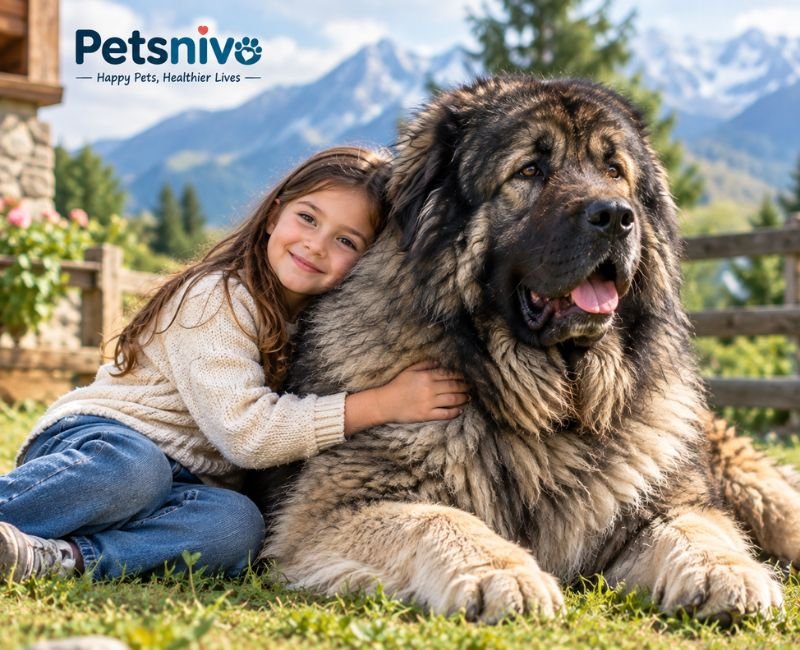
The Giant Russian Dog is known for its loyal, confident, and protective nature.
It can develop a strong bond with its family. However, it may be careful around unfamiliar people.
Its personality depends on genetics, training, socialization, and daily environment.
Loyal Nature
A well-raised Giant Russian Dog can become very attached to its family.
It often enjoys staying near familiar people and watching its surroundings.
Independent Behavior
The Caucasian Shepherd was developed to work without constant human direction.
Because of this, it may not follow commands as quickly as some other breeds.
Training requires patience and consistency.
Protective Instinct
The Giant Russian Dog has a natural guarding instinct.
Early socialization helps it become more comfortable with normal people and everyday situations.
Owners should teach calm behavior instead of encouraging aggression.
Can a Giant Russian Dog Be a Good Family Pet?
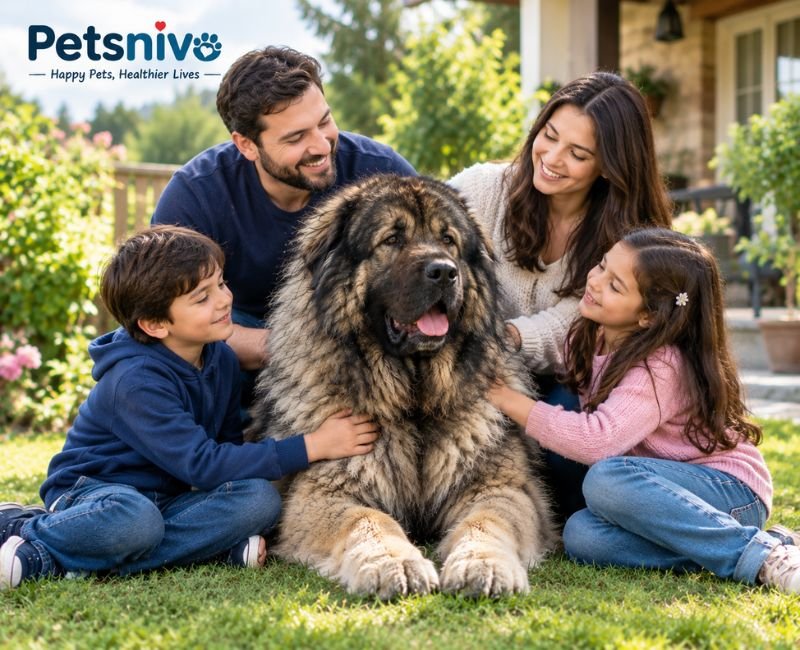
The Giant Russian Dog can live with a family when its needs are properly understood.
However, its large size and protective nature require careful handling.
“Families with teenagers can also learn more about responsible dog care and training in our guide to Russian teen dogs.”
Families should consider these points before choosing the breed:
- Enough safe living space
- Regular training
- Daily care and attention
- Proper supervision around children
- Safe management around visitors
Young children should always be supervised around dogs.
Every dog has its own personality. Proper socialization and responsible training can help develop good behavior.
For first-time dog owners, professional guidance from a qualified trainer may be helpful.
Training and Socialization
Training is very important for a Giant Russian Dog.
This breed is intelligent, but its independent nature can make training challenging.
Start Training Early
Begin with simple commands such as sit, stay, come, and walk.
Short training sessions can help the dog understand what you expect.
Socialize Your Dog
Introduce puppies to normal daily experiences in a safe and positive way.
These may include visitors, household sounds, familiar people, and friendly dogs.
Do not force interactions if the dog feels uncomfortable.
Use Positive Training
Reward good behavior with praise, attention, or suitable treats.
Avoid harsh punishment or methods that create fear.
If the dog becomes difficult to manage, seek help from an experienced dog trainer.
Exercise Needs
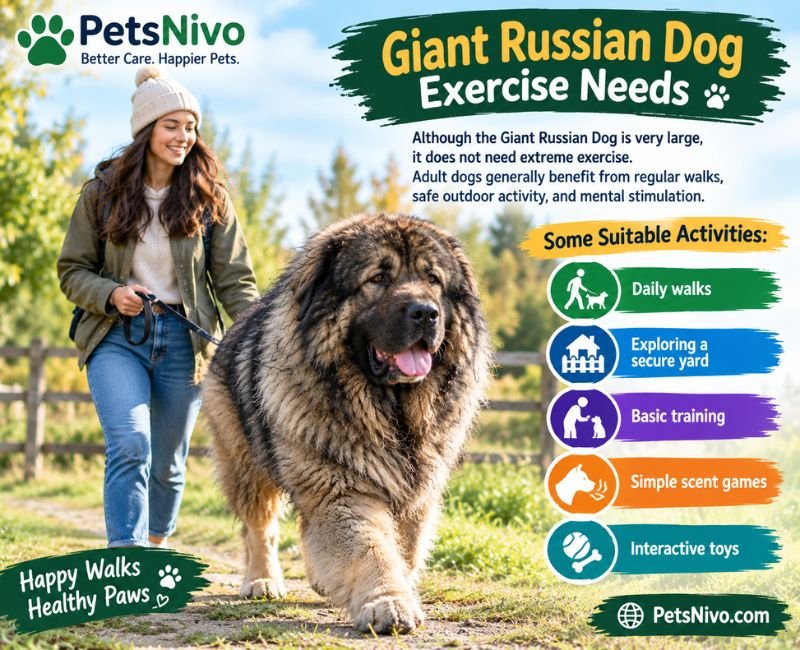
Although the Giant Russian Dog is very large, it does not need extreme exercise.
Adult dogs generally benefit from regular walks, safe outdoor activity, and mental stimulation.
Some suitable activities include:
- Daily walks
- Exploring a secure yard
- Basic training
- Simple scent games
- Interactive toys
Puppies need special care because their bones and joints are still developing.
Avoid forcing intense exercise on young dogs. A veterinarian can help you choose suitable activities for your dog’s age.
A secure outdoor area is important because this breed has a strong guarding instinct.
Grooming and Coat Care
The Giant Russian Dog has a thick coat that needs regular grooming.
Without proper care, loose hair and tangles can build up.
Brushing
Brush the coat regularly to remove loose fur.
Long-haired dogs may need more attention, especially during seasonal shedding.
Bathing
Bathe your dog when needed with a suitable dog shampoo.
Avoid bathing too frequently unless advised by a veterinarian.
Nail Care
Check your dog’s nails regularly.
Long nails can make walking uncomfortable, so keep them at a suitable length.
Ear Care
Check the ears for dirt, redness, or unusual smells.
If you notice irritation, contact a veterinarian.
Food and Nutrition
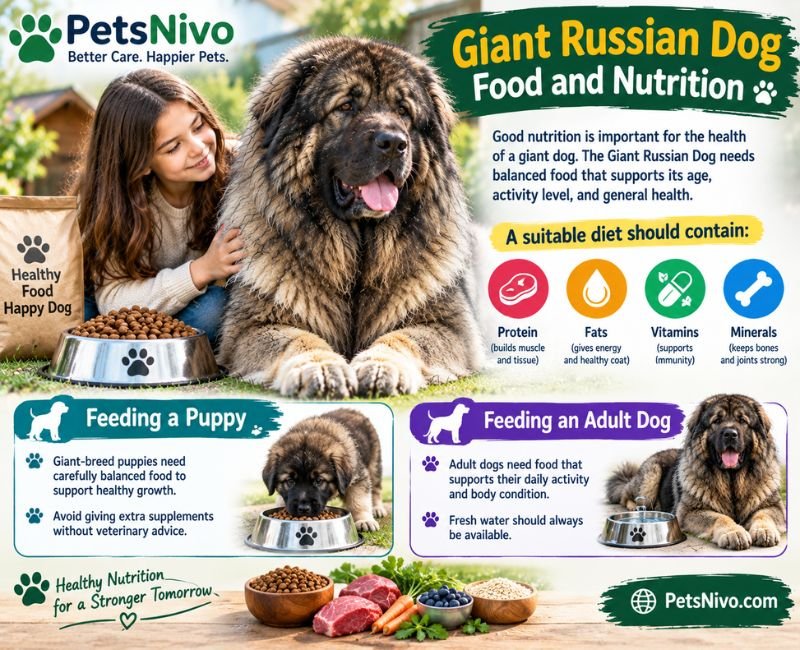
Good nutrition is important for the health of a giant dog.
The Giant Russian Dog needs balanced food that supports its age, activity level, and general health.
A suitable diet should contain protein, fats, vitamins, and minerals.
Feeding a Puppy
Giant-breed puppies need carefully balanced food to support healthy growth.
Avoid giving extra supplements without veterinary advice.
Feeding an Adult Dog
Adult dogs need food that supports their daily activity and body condition.
Fresh water should always be available.
Simple Feeding Tips
- Choose suitable dog food.
- Follow age-appropriate feeding guidance.
- Avoid sudden food changes.
- Monitor your dog’s body condition.
- Ask a veterinarian about feeding amounts.
Proper nutrition supports healthy growth and general well-being.
Common Health Problems in Giant Russian Dogs
Like other large breeds, the Caucasian Shepherd may have certain health concerns.
Some possible conditions include:
Hip Dysplasia
This condition affects the hip joint and may cause discomfort or movement problems.
Elbow Problems
Some large dogs may develop elbow joint conditions.
Joint Problems
A dog’s large body makes joint health important.
Weight-Related Problems
Extra weight can place more pressure on the joints.
Not every Giant Russian Dog will develop these conditions.
Regular veterinary visits, balanced food, suitable exercise, and responsible breeding can support good health.
If your dog shows pain, unusual movement, or changes in behavior, consult a veterinarian.
How Much Does This Giant Breed Cost?
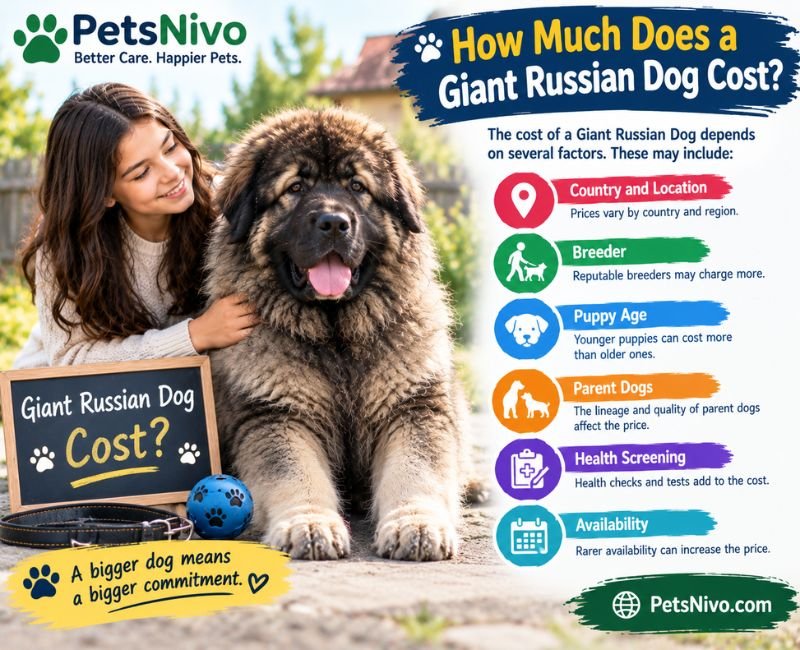
The cost of a Giant Russian Dog depends on several factors.
These may include:
- Country and location
- Breeder
- Puppy age
- Parent dogs
- Health screening
- Availability
Prices can change between locations, so check with responsible breeders in your area.
Do not choose a puppy only because it is cheap.
Ask about its health history, parents, vaccination records, and early care.
Remember that buying a dog is only the beginning.
Food, grooming, training, veterinary visits, and daily care also require a long-term budget.
Pros and Challenges of Owning This Breed
Before bringing a Giant Russian Dog home, understand both its good qualities and its responsibilities.
Advantages
- Loyal to familiar family members
- Naturally alert
- Strong working background
- Impressive appearance
- Thick coat suited to cold conditions
Challenges
- Needs early socialization
- Requires consistent training
- Can be independent
- Needs regular grooming
- Requires secure living arrangements
- May be difficult for inexperienced owners
Understanding these points can help people prepare for responsible ownership.
Is This Giant Breed Right for You?
The Giant Russian Dog may suit people who understand large guardian breeds.
However, it is not the right choice for every household.
Before getting one, think about your experience, available space, daily routine, and ability to provide proper training.
You should also consider whether you can manage a large dog safely around visitors and other animals.
The Giant Russian Dog should not be chosen only because of its impressive appearance.
Its health, behavior, comfort, and long-term care should always come first.
Frequently Asked Questions About Giant Russian Dogs
1. What is a Giant Russian Dog?
The term usually refers to large dogs connected with Russia and the Caucasus region. The Caucasian Shepherd is one of the best-known examples.
2. How big does a Giant Russian Dog get?
The Caucasian Shepherd is a giant breed. Adult males are generally larger than females, but size varies between individual dogs.
3. Is a Russian Bear Dog the same as a Caucasian Shepherd?
Yes, Russian Bear Dog is a common informal name used for the Caucasian Shepherd.
4. Is a Giant Russian Dog easy to train?
Training can be challenging because the breed is independent. Early socialization, positive training, and consistent rules are important.
5. How long does a Giant Russian Dog live?
Its lifespan varies between individual dogs. Regular veterinary care, suitable nutrition, and responsible breeding support overall health.
Final Thoughts
The Giant Russian Dog is a powerful and loyal guardian with a long working history.
The Caucasian Shepherd is especially known for its large body, thick coat, independent personality, and protective nature.
However, owning this breed requires more than providing food and shelter. It needs early socialization, proper training, regular grooming, balanced nutrition, and veterinary care.
For people interested in giant Russian dog breeds, learning about the Caucasian Shepherd is a useful first step.
At Petsnivo, we aim to make dog breed information simple, clear, and helpful for every dog lover.