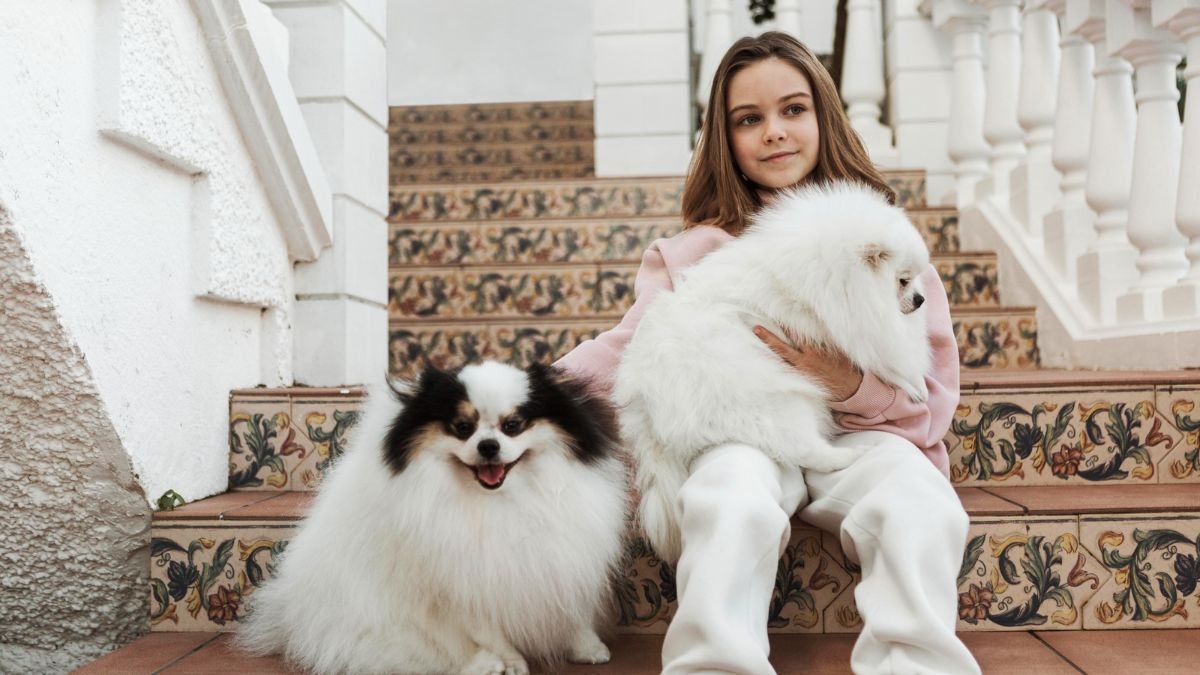
The phrase Russian Teen Dog may sound like the name of a particular dog breed, but it is not the official name of a recognized breed. People may use this phrase when searching for Russian dog breeds that can be around teenagers, young people, and families.
Russia has several different dog breeds, and they are not all alike. Some are small companion dogs, while others were developed for hunting, guarding, or working. Because of these differences, a dog should be chosen according to its temperament, size, exercise needs, training requirements, and family environment.
For a teenager, having a dog can be a rewarding experience. It can teach responsibility, patience, kindness, and routine. However, owning a dog also requires daily commitment. A teenager may help with many tasks, but the adults in the household should remain responsible for the dog’s overall care.
This guide explains what Russian Teen Dog can mean and looks at several Russian dog breeds that teenagers and families may come across when researching dogs.
What Does Russian Teen Dog Mean?
Russian Teen Dog is not the official name of a specific dog breed. Instead, it can be understood as a search phrase connected with Russian dogs and teenagers.
There are several breeds associated with Russia. Their personalities and physical characteristics can be very different.
For example, the Russian Hound is a hunting dog with an active nature and strong scenting abilities. Learn more about its history, traits, care, and training in our Russian Hound Dog guide.
For example, the Borzoi is recognized by the Fédération Cynologique Internationale (FCI) as a Russian hunting sighthound. The Russian Black Terrier is another recognized Russian breed with a working and guarding background.
The Russian Toy is very different from both of these larger breeds. It is a small companion dog that can have either a smooth or long coat. The American Kennel Club describes the Russian Toy as an active, intelligent, cheerful, and affectionate breed.
This is why families should research the specific breed rather than assuming that all Russian dogs have the same behavior.
Why Teenagers May Enjoy Russian Dogs

Dogs can become an important part of family life. For teenagers, caring for a dog can provide an opportunity to develop practical responsibilities.
Depending on the dog’s age, size, and temperament, a teenager may help with:
- Basic training
- Brushing
- Feeding under adult supervision
- Safe walks
- Playtime
- Cleaning the dog’s area
- Providing fresh water
- Learning about dog behavior
These activities can help teenagers understand that animals need consistent care.
However, dog ownership should not become the responsibility of a teenager alone. School, exams, hobbies, sports, and other commitments can make it difficult for a young person to manage every part of a dog’s life.
Adults should therefore be prepared to take responsibility for veterinary visits, medical decisions, food, expenses, training, and long-term care.
Russian Toy for Teenagers
The Russian Toy is one of the smaller Russian dog breeds.
The American Kennel Club recognizes the Russian Toy and describes it as a small, active companion dog. It has two coat varieties: smooth and long.
Its small size can make it attractive to families that want a little companion dog. However, small dogs still need proper training and respectful handling.
Teenagers should understand that a small dog’s body can be more vulnerable during rough play. Picking the dog up incorrectly, chasing it around the house, or playing too roughly can cause stress or injury.
A Russian Toy may enjoy spending time with family members, learning basic commands, and participating in suitable activities.
Families should also teach teenagers to recognize when the dog wants to rest or be left alone.
Borzoi and Teenagers: A Russian Dog Breed
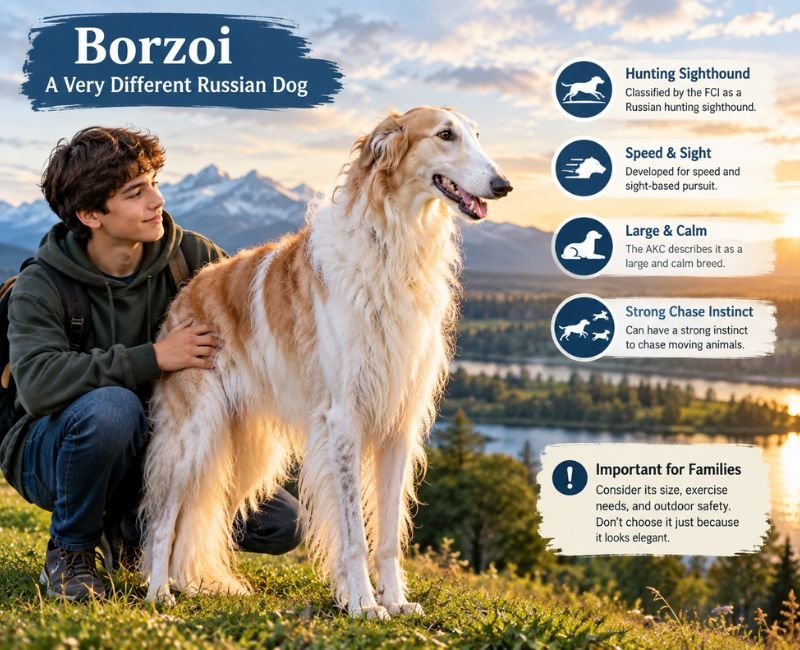
The Borzoi is another well-known Russian breed, but it has very different characteristics from the Russian Toy.
The FCI classifies the Borzoi as a Russian hunting sighthound. Historically, the breed was associated with hunting and developed for speed and sight-based pursuit.
The American Kennel Club describes the Borzoi as a large and calm breed. It also notes that the breed can have a strong instinct to chase moving animals.
This is important for teenagers and families.
A Borzoi should not simply be chosen because it looks elegant. The family needs to consider its size, exercise requirements, and outdoor safety.
Secure outdoor areas are particularly important for dogs with strong chase instincts. A teenager should also not assume that being physically active is enough to manage a large dog.
Adult supervision and responsible training are important parts of owning a breed of this size and background.
Russian Black Terrier for Teenagers and Families
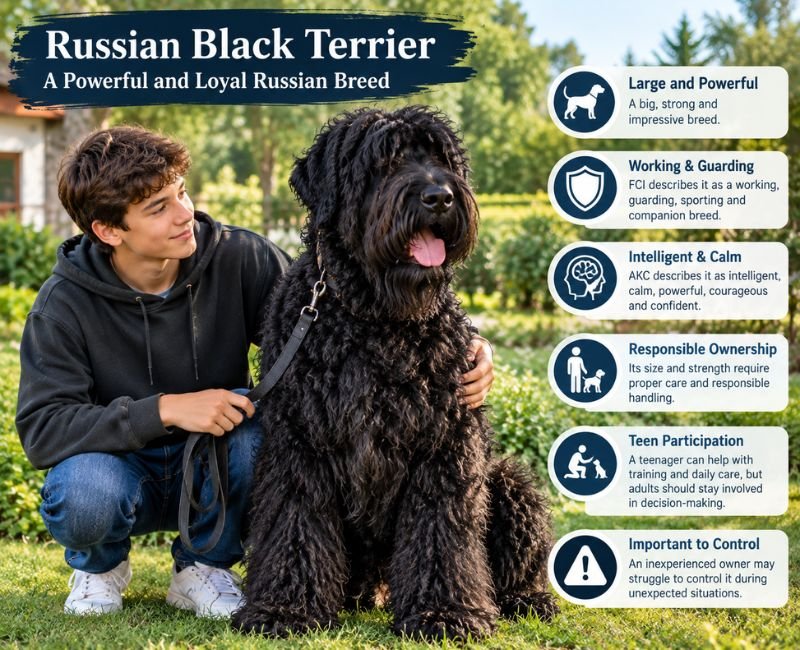
The Russian Black Terrier is another Russian breed that families may encounter.
It is a large and powerful dog. The FCI describes it as a working, guarding, sporting, and companion breed.
The American Kennel Club describes the Russian Black Terrier as intelligent, calm, powerful, courageous, and confident.
Because of its size and strength, this breed requires responsible ownership.
A teenager may participate in training and daily care, but an adult should remain involved in handling and decision-making.
This is especially important when a dog is strong enough that an inexperienced owner may struggle to control it during an unexpected situation.
Families should consider their previous experience with dogs before choosing a powerful working breed.
Are Russian Dog Breeds Suitable for Teenagers?
There is no universal answer.
The term Russian Teen Dog covers a broad idea rather than one specific breed. A small companion dog may have very different needs from a large working or hunting dog.
A dog’s individual personality also matters.
Two dogs of the same breed may behave differently depending on their socialization, training, age, environment, and experiences.
Families should consider several factors before choosing a dog.
Size
A teenager may find a small dog easier to handle physically. Large dogs require more awareness because their strength and body size can make everyday handling more demanding.
Energy Level
Some dogs need a lot of physical activity. Others are more comfortable with moderate activity.
A family’s daily schedule should match the dog’s needs.
Temperament
A dog should have a temperament that fits the household.
Families should learn about the breed’s typical characteristics while remembering that individual dogs can vary.
Training
Training is important for every dog.
Teenagers can learn basic training skills, but adults should provide guidance and take responsibility for more difficult situations.
Grooming
Different breeds have different coat-care requirements.
A family should understand how much brushing and professional grooming may be required before bringing a dog home.
Training a Russian Dog

Training should begin with simple and clear expectations.
Teenagers can help teach basic commands such as:
- Sit
- Stay
- Come
- Down
- Wait
- Leave it
Short sessions are often easier for both the dog and the person training it.
Reward-based training can help create a positive learning environment. Patience is important because dogs do not all learn at the same speed.
A teenager should not use hitting, intimidation, or harsh treatment to control a dog.
If a dog is difficult to handle, especially a large or powerful breed, an experienced adult or qualified trainer should help.
Good training is not only about teaching commands. It also helps a dog understand household routines and learn appropriate behavior.
Exercise Needs

Exercise is an important part of keeping a dog healthy and mentally engaged.
However, the correct amount of exercise depends on the individual dog.
Age, breed, health, energy level, and lifestyle can all affect exercise requirements.
Teenagers can participate in activities such as walking, playing, or training, provided the activity is safe and appropriate.
A young dog should not be pushed into excessive exercise simply because it appears energetic.
Families should also consider their living environment.
Someone living in a home with limited outdoor space may need a different type of dog from a family with access to a secure yard.
Grooming and Everyday Care

Grooming is another responsibility that teenagers can learn.
Some Russian breeds have relatively simple coats, while others need regular brushing and more extensive grooming.
The Borzoi has a long, silky coat that requires regular attention. The Russian Toy can have either a smooth or long coat, while the Russian Black Terrier has a dense coat that requires grooming.
A teenager can learn basic brushing techniques with guidance from an adult.
Grooming can also provide an opportunity to notice changes in the dog’s skin, coat, ears, or general condition.
If something unusual is noticed, the family should contact a veterinarian rather than trying to diagnose the problem at home.
Safety Between Teenagers and Dogs

Safety should always come first.
Teenagers should learn how to respect a dog’s personal space.
A dog should generally be left alone when it is:
- Eating
- Sleeping
- Frightened
- Sick
- Resting
- Showing signs of discomfort
Teenagers should also avoid pulling a dog’s tail, ears, or fur.
Even a normally friendly dog may react differently when it feels threatened, frightened, or uncomfortable.
Large dogs require additional care because their size and strength can make accidental situations more serious.
Every family member should learn safe and respectful ways to interact with the dog.
Socialization Is Important
Socialization helps dogs become familiar with different people, environments, sounds, and everyday situations.
It should be appropriate for the dog’s age and individual needs.
A well-socialized dog may find new experiences easier to handle, although socialization does not guarantee a particular personality.
Teenagers can help by calmly exposing the dog to normal household activities under adult guidance.
The goal is not to force a dog into uncomfortable situations. Instead, new experiences should be introduced carefully and positively.
How to Choose the Right Russian Dog
Choosing a dog should be a family decision.
Before selecting a breed, ask several practical questions.
How big will the dog become?
A puppy’s current size does not tell you how large it will be as an adult.
How much daily activity does it need?
A high-energy dog may not fit comfortably into a family with a very busy schedule.
How much grooming is required?
Long or dense coats may require frequent brushing and professional grooming.
Does the family have experience with dogs?
Some breeds can be more demanding than others.
Who will care for the dog when the teenager is busy?
Exams, school activities, holidays, and other commitments can change a teenager’s schedule.
Can the family afford long-term care?
Food, grooming, training, veterinary care, supplies, and other expenses continue throughout the dog’s life.
These questions can help families make a more realistic decision.
What Teenagers Can Learn From Dog Ownership

A dog can teach teenagers several useful life skills.
Daily care can encourage consistency. Training can teach patience. Grooming can develop attention to detail. Walking and feeding routines can encourage responsibility.
However, these benefits depend on responsible ownership.
A dog should never be treated as a temporary hobby. Dogs can live for many years and need care throughout their lives.
Before getting a dog, teenagers should understand that the exciting part of bringing a new puppy home is only the beginning.
Responsible Sources Matter
Families should be careful when searching for a puppy.
A responsible breeder or adoption organization should be willing to provide information about the dog’s history, health, temperament, and care requirements.
Avoid making a decision based only on photographs or attractive advertisements.
For recognized breeds, organizations such as the FCI and national kennel clubs can provide useful breed information. Veterinary professionals can also help families understand general health and care considerations.
The more information a family gathers before making a decision, the better prepared it can be for long-term ownership.
Frequently Asked Questions
Is Russian Teen Dog an official breed?
No. Russian Teen Dog is not the official name of a recognized dog breed. It is better understood as a search phrase relating to Russian dogs and teenagers.
What Russian dog breeds can families research?
Families may come across breeds such as the Russian Toy, Borzoi, and Russian Black Terrier. Each has different characteristics and care requirements.
Can a teenager take care of a dog?
A teenager can help with many daily responsibilities, but adults should remain responsible for the dog’s overall welfare, veterinary care, expenses, and long-term needs.
Is the Russian Toy a large dog?
No. The Russian Toy is a very small companion breed. The AKC recognizes smooth-coated and long-coated varieties.
Does a Borzoi need exercise?
Borzoi are active sighthounds with a history connected to hunting. Families should provide appropriate activity and pay close attention to outdoor safety because of their pursuit instincts.
Is the Russian Black Terrier a powerful dog?
Yes. It is a large working breed with guarding and working characteristics, so responsible training and adult involvement are important.
Final Thoughts
The term Russian Teen Dog does not refer to one official breed. Instead, it can describe searches related to Russian dog breeds and their suitability around teenagers and families.
Russian dogs can have very different personalities, sizes, and care requirements. A Russian Toy is a small companion dog, while the Borzoi is a large hunting sighthound and the Russian Black Terrier is a powerful working breed.
For teenagers, the most important lesson is that owning a dog involves responsibility every day.
Before choosing a dog, families should research the specific breed, consider their lifestyle, understand the dog’s adult size and needs, and make sure an adult is prepared to take responsibility.
The best dog for a teenager is not simply the one that looks attractive. It is the dog whose needs the entire family can responsibly meet for many years