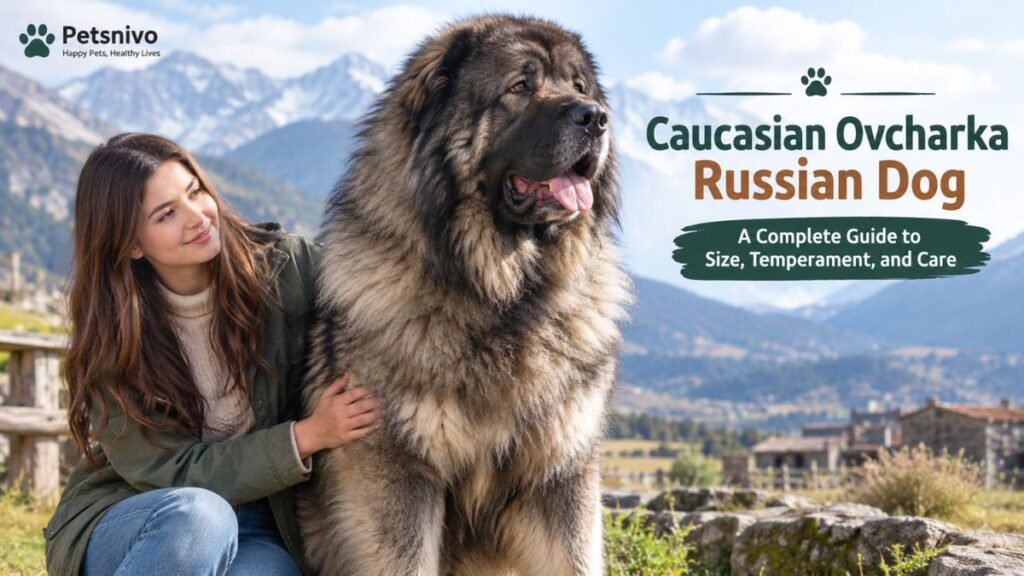
The Caucasian Ovcharka Russian Dog is a large and powerful guardian breed that often creates confusion because it has several names. You may see it called the Caucasian Shepherd Dog, Caucasian Mountain Dog, Caucasian Sheepdog, or Russian Caucasian Shepherd.
The Caucasian Ovcharka Russian Dog is also known for its strong guarding instincts, large size, and thick coat.
The biggest question is often about its origin. Is this dog Russian, Caucasian, or both? The answer is more detailed than a simple yes or no. Its historical roots are connected with the wider Caucasus region, while the breed also has an important connection with Russia and the former Soviet Union.
For someone thinking about owning this dog, its history is only the beginning. Its size, protective nature, training needs, coat, exercise requirements, and family suitability all matter.
This guide explains those points in simple terms so you can decide whether this large guardian dog fits your home and lifestyle.
What Is the Caucasian Ovcharka Russian Dog?
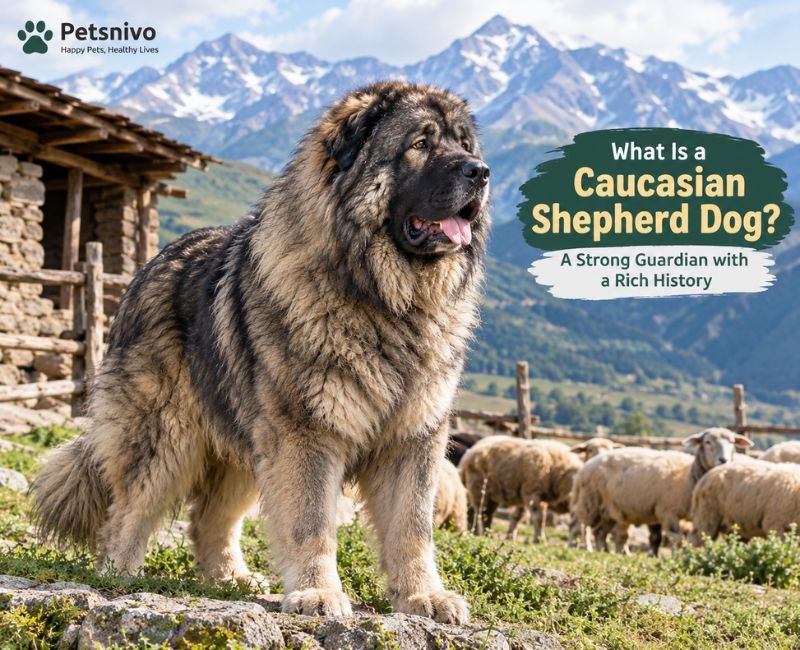
The Caucasian Shepherd Dog is a large livestock and property guardian with a long working history in the Caucasus region.
It was developed to live and work in demanding environments. Traditionally, dogs of this type helped protect livestock and property from predators and other threats.
The breed is known for its strong body, thick double coat, confidence, independence, and natural awareness of its surroundings.
Several names are used for the same breed in different places. Caucasian Mountain Dog and Caucasian Sheepdog are common alternatives, while Russian-language naming has also influenced the term used for this dog.
Despite the different names, the important point is that this is a serious guardian breed rather than simply a very large companion dog.
Is the Caucasian Ovcharka Russian Dog Really Russian?
This question needs some context.
The breed has deep roots in the Caucasus region, which includes areas associated with modern Georgia, Armenia, Azerbaijan, Dagestan, and southern Russia. Historical regional dogs could differ in size, coat, and appearance.
Russia and the former Soviet Union later played an important role in the organized development and standardization of the modern breed. The official FCI nomenclature lists the Russian Federation as the country of origin for the standardized breed.
This explains why you may see the dog described as a Russian Caucasian Shepherd.
So, if you searched for Caucasian Ovcharka Russian Dog, it is reasonable to find a Russian connection. However, the breed’s older working history is broader than modern Russia alone.
That distinction makes the breed’s history easier to understand.
Caucasian Ovcharka Russian Dog History and Origin
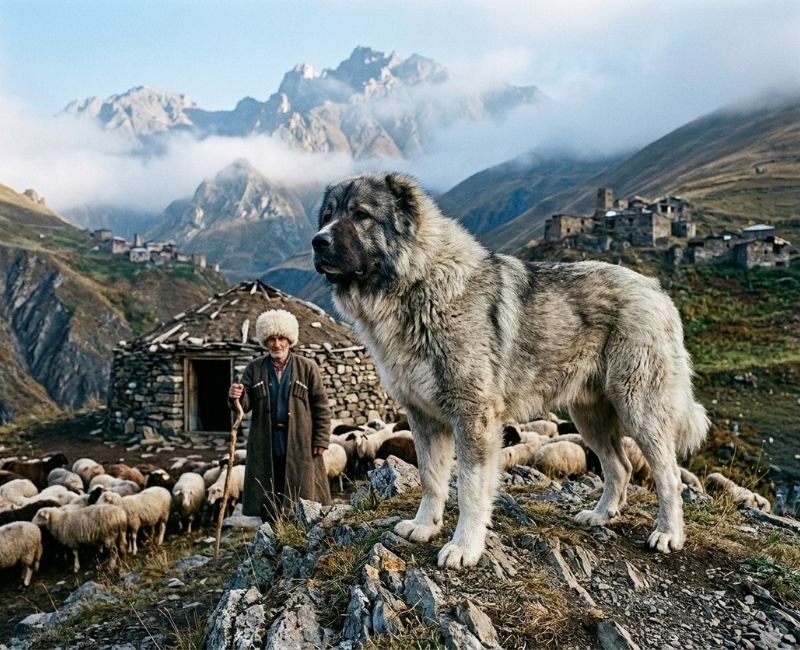
The Caucasus has a long tradition of using large guardian dogs around livestock and rural properties.
The local environment helped shape these dogs. Mountainous areas, cold weather, predators, and isolated properties created a need for dogs that could remain alert and make decisions without constant human direction.
Regional types were not always identical. Dogs from different areas could have different body shapes, coat lengths, and working characteristics.
During the Soviet period, selected dogs from these regional populations were brought into more organized breeding programs. This helped establish a more consistent modern breed.
The breed’s history is important because many of its modern behaviors come directly from its original purpose. A dog bred to guard territory may naturally be more cautious with unfamiliar people than a breed developed mainly for companionship.
Caucasian Shepherd Appearance
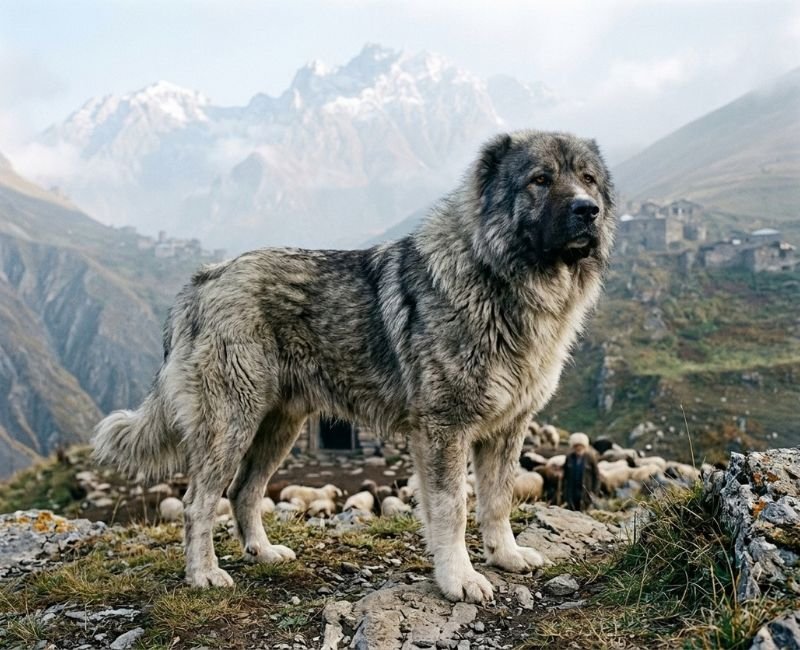
The Caucasian Shepherd has a strong and substantial appearance.
It generally has a broad chest, sturdy legs, strong bones, and a large head. Its muzzle is powerful, and the overall body is built for strength rather than speed.
The coat is one of its most noticeable features. It has a dense double coat that provides protection from difficult weather.
Coat length can vary. Some dogs have shorter coats, while others have longer hair around the neck, tail, legs, and body.
Common colors and patterns can include shades of white, gray, cream, fawn, brown, brindle, and combinations of different markings.
Males are generally larger and more heavily built than females.
The breed’s appearance can also vary between individual dogs and bloodlines, so photographs should not be treated as a perfect guide to every adult dog.
Caucasian Ovcharka Russian Dog Size and Weight
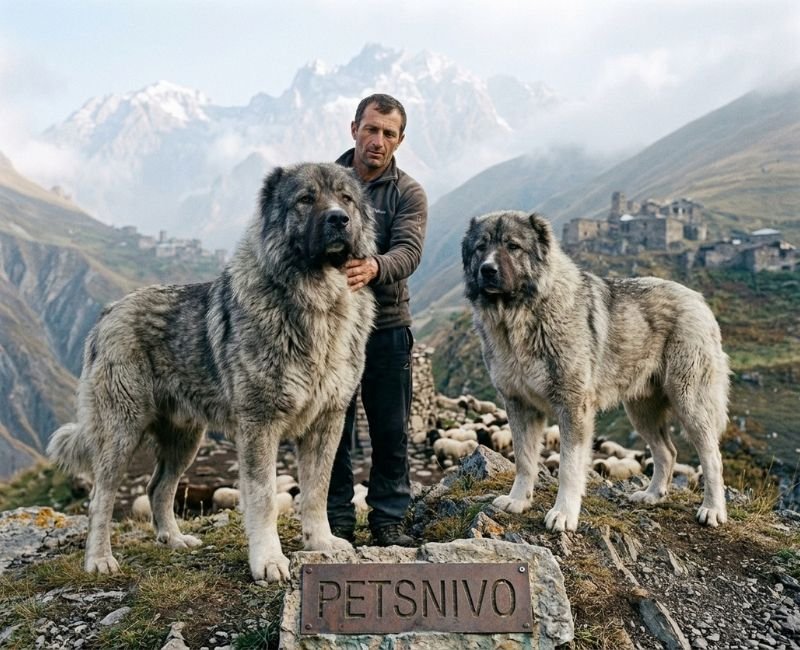
This is a very large breed, so size should be considered before bringing one home.
The Caucasian Ovcharka Russian Dog can reach an impressive adult size, so owners should understand its growth and weight needs.
Breed information commonly places adult dogs in a substantial height and weight range, with males generally larger than females. The American Kennel Club lists the breed at roughly 23–30 inches tall and around 99–170 pounds, although individual dogs can vary.
The important point is that heavier does not automatically mean healthier.
Genetics, sex, age, breeding line, nutrition, and body condition all affect a dog’s final size. A thick coat can also make a dog appear even larger.
Owners should aim for healthy development rather than trying to produce an unusually heavy dog. Maintaining an appropriate body condition is especially important for a large breed because extra weight can put additional stress on joints and mobility.
Caucasian Ovcharka Temperament and Personality
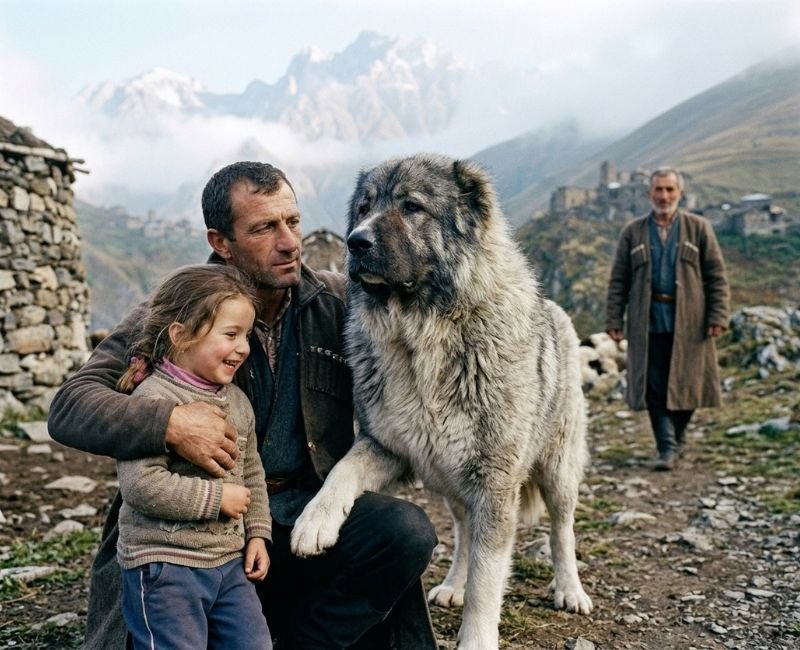
The Caucasian Shepherd temperament is closely connected to its guardian background.
The Caucasian Ovcharka Russian Dog has a naturally protective temperament and needs early socialization and consistent training.
Many dogs are loyal, confident, watchful, and strongly attached to their families. They can also be independent and may not look to their owner for instructions in every situation.
Around unfamiliar people, the breed can be reserved or suspicious. This behavior is not necessarily the same as aggression. A well-socialized dog can learn appropriate ways to respond to normal visitors and everyday situations.
Temperament varies between individual dogs.
Genetics, early socialization, breeding, training, environment, and life experiences can all influence behavior.
Owners should understand that this breed’s protective instincts should be managed rather than deliberately encouraged. The goal is a calm and controllable dog, not one that reacts aggressively to every unfamiliar person.
Is the Caucasian Shepherd Good for Families?
It can be, but it is not a breed that should be chosen without careful thought.
A well-raised Caucasian Shepherd can develop a strong bond with family members. Some can also live peacefully with other household pets when introduced and managed properly.
Children require special consideration.
Because the breed is so large and powerful, young children should always be supervised around the dog. Children should also learn not to disturb a dog while it is eating, sleeping, or resting.
Visitors need careful management as well. A guardian breed may naturally pay close attention to unfamiliar people entering its territory.
The breed can work well for families that understand these responsibilities, but it is not automatically suitable for every household.
Is the Caucasian Shepherd Good for First-Time Owners?
Generally, this breed can be difficult for a first-time dog owner.
The challenge is not simply its size. The dog can also be independent, protective, strong, and sometimes less interested in repetitive obedience work.
PetMD similarly notes that its guardian history and independence can make it a poor match for many first-time owners.
An inexperienced owner would need to learn about socialization, training, visitor management, leash control, grooming, and safe handling.
Someone who is prepared to learn and work with a qualified trainer may have a better experience, but the breed should not be selected simply because its appearance is impressive.
Caucasian Ovcharka Training and Socialization
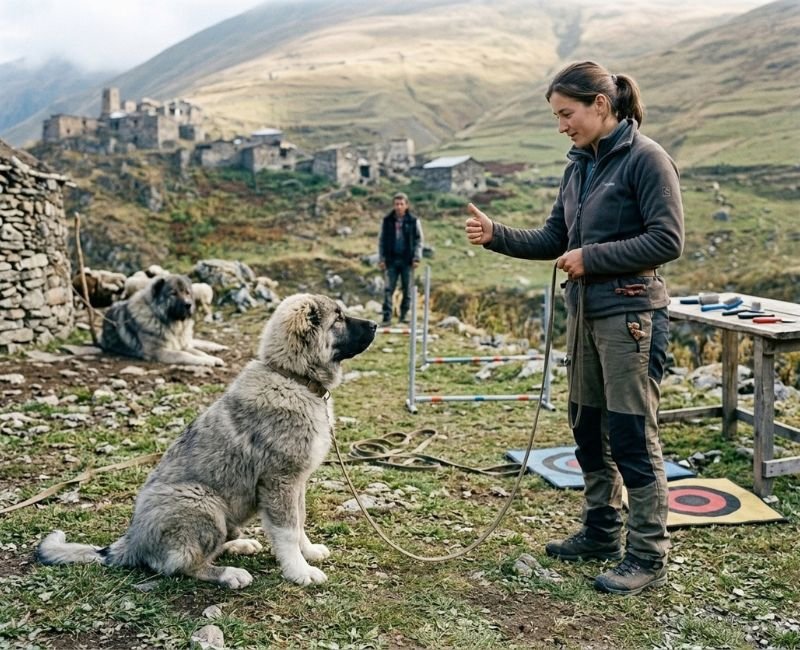
Training should begin while the dog is young.
Early socialization can help a puppy become familiar with different people, environments, sounds, animals, and everyday situations.
Training should focus on practical skills such as:
- Coming when called
- Walking calmly on a leash
- Waiting at doors and gates
- Basic obedience
- Calm visitor introductions
- Cooperative grooming
- Veterinary handling
Short and consistent training sessions can work better than long repetitive drills.
Positive reinforcement is a useful approach. Harsh punishment and attempts to make the dog more aggressive are poor choices.
The aim should be a confident dog that can respond to its owner even when something interesting or unfamiliar is nearby.
Caucasian Shepherd Exercise Needs
Despite its size, this breed does not necessarily need extreme daily exercise.
Healthy adult dogs can benefit from regular walks, safe outdoor activity, and mental stimulation. A secure area where the dog can move around can also be useful.
Good activities may include:
- Daily walks
- Supervised outdoor time
- Scent games
- Basic training
- Interactive toys
- Calm exploration
Puppies need more careful exercise because their bones and joints are still developing. Forced running and excessive repetitive activity should be avoided during growth.
Mental stimulation is important too. A guardian breed can benefit from activities that allow it to use its senses and learn useful skills.
Caucasian Ovcharka Grooming and Coat Care
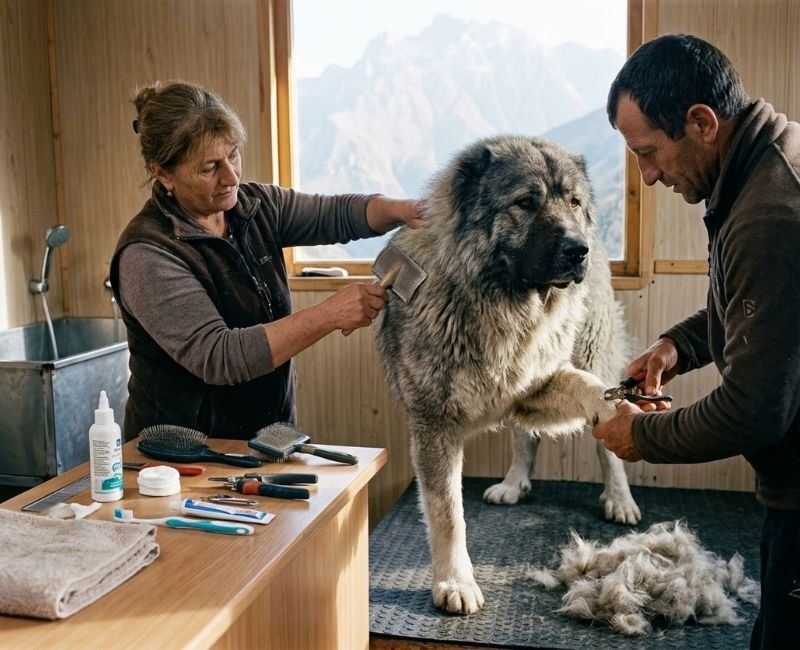
The dense double coat requires regular care.
Brushing helps remove loose hair and reduces the chance of tangles. Dogs with longer coats generally need more grooming than shorter-coated individuals.
Shedding can become especially noticeable during seasonal coat changes.
Owners should also maintain:
- Nail care
- Ear checks
- Dental care
- Regular brushing
- Occasional bathing
It is useful to teach a puppy to accept grooming calmly. A cooperative adult dog is much easier to brush, bathe, and examine.
If you do not enjoy regular pet-hair cleanup, this breed may require more work than you expect.
Caucasian Shepherd Food and Nutrition
Nutrition should support healthy growth and an appropriate body condition.
Growing puppies have different nutritional needs from adult dogs. Large-breed puppies should receive an appropriate diet designed for controlled growth rather than being fed simply to become as large as possible.
Portion control also matters.
Overfeeding can contribute to excessive weight, which can put additional stress on a large dog’s body.
Fresh water should always be available.
For concerns about allergies, digestion, weight, growth, or a specific medical condition, owners should speak with a veterinarian rather than choosing a special diet based only on internet advice.
Caucasian Shepherd Health
Large dogs can face certain health challenges, and responsible owners should understand this before bringing one home.
Joint and mobility problems are among the concerns worth discussing with a veterinarian and responsible breeder. Maintaining a healthy weight and avoiding inappropriate exercise during growth can support long-term mobility.
Responsible breeding also matters. Potential owners should ask about the health and temperament of the parents rather than choosing a puppy based only on appearance.
Regular veterinary checkups allow changes in weight, movement, teeth, skin, coat, and general behavior to be monitored.
This does not mean every Caucasian Shepherd will develop a particular health problem. Individual health varies considerably.
Caucasian Shepherd Lifespan
Published lifespan estimates can differ, so it is better not to treat one number as a guarantee.
Genetics, breeding, nutrition, body condition, veterinary care, environment, and overall lifestyle can all influence a dog’s health and longevity.
A better goal is to support healthy development and good quality of life throughout the dog’s years.
Caucasian Ovcharka Russian Dog Living Space
Living space is an important part of responsible ownership.
Because the Caucasian Ovcharka Russian Dog is a large guardian breed, safe space and secure fencing are especially important.
A secure home with a well-managed yard can be a good environment for this breed. Rural properties and farms can also suit its traditional working background.
Apartment living can be much more difficult because of the dog’s size, territorial behavior, shared entrances, elevators, neighbors, and visitor traffic.
However, simply having a large house does not solve every problem.
The dog still needs training, socialization, exercise, family interaction, and safe containment.
A secure fence is especially useful because a guardian breed should not be allowed to roam freely.
Caucasian Shepherd vs Other Russian-Associated Dogs
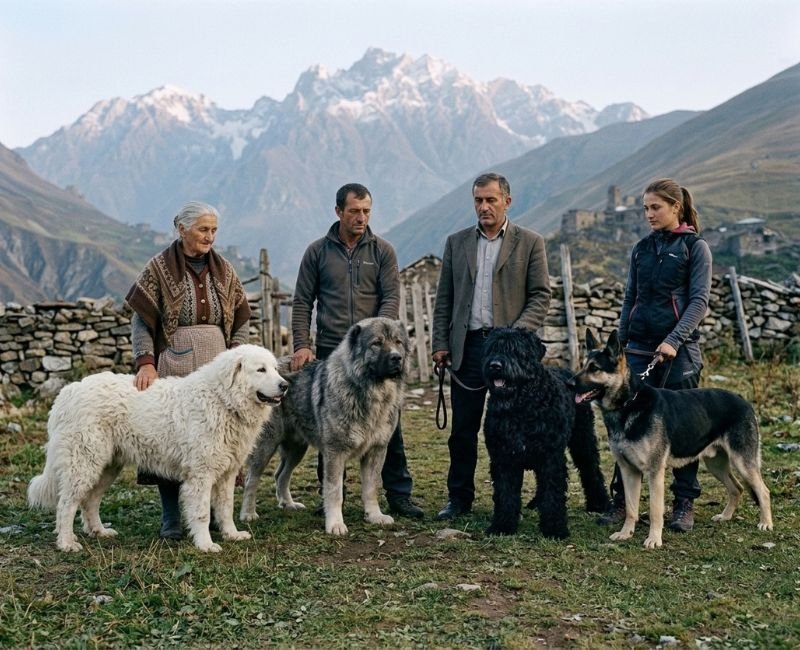
The Caucasian Shepherd is sometimes confused with other large breeds connected with Russia or the former Soviet Union.
The East European Shepherd has a strong shepherd and service background and generally has a more athletic body.
The Black Russian Terrier was developed in the Soviet Union and has a very different coat, appearance, and working history.
The South Russian Shepherd is another large livestock guardian with a long coat and protective nature.
You can also read our Russian Shepherd Dog breed guide to learn more about its temperament, size, and care needs.
These breeds should not be ranked simply by strength or size. Their purposes and ownership requirements are different.
Choosing between them should depend on lifestyle, experience, training ability, and the type of work or companionship you want from a dog.
What Does It Cost to Own a Caucasian Shepherd?
The cost of owning a large dog goes far beyond the initial purchase or adoption fee.
Owners may need to budget for:
- Food
- Veterinary care
- Grooming equipment
- Training
- Large beds and crates
- Strong collars and leashes
- Secure fencing
- Routine preventive care
Food and equipment can cost more for a very large dog than for a smaller breed.
Before getting a puppy, consider whether these ongoing responsibilities fit comfortably within your household budget.
Is the Caucasian Shepherd Right for You?
Ask yourself these questions before making a decision:
- Do I have enough safe space?
- Can I handle a very large dog?
- Can I provide early socialization?
- Can I maintain consistent training?
- Can I manage visitors safely?
- Can I afford large-dog food and veterinary care?
- Am I prepared for regular coat care?
- Do I understand guardian-breed behavior?
If most answers are yes, the breed may be worth considering.
If you want a dog that is naturally welcoming toward every stranger, needs very little grooming, or is extremely easy to train, another breed may be a better fit.
The best dog is not necessarily the biggest or most impressive one. It is the dog whose needs match your lifestyle.
Frequently Asked Questions
Is the Caucasian Shepherd a Russian dog?
It has a strong Russian and Soviet connection, but its deeper history is associated with the wider Caucasus region. The standardized breed is officially associated with the Russian Federation.
What is another name for the Caucasian Shepherd?
Common names include Caucasian Mountain Dog and Caucasian Sheepdog. The breed is also widely known by its Russian-language name.
How big does a Caucasian Shepherd get?
It is a very large breed. Adult size varies by sex, genetics, breeding line, and body condition. Some established breed guides place adults at roughly 23–30 inches and 99–170 pounds.
Is the Caucasian Shepherd good with children?
It can form a close bond with family members, but its large size and protective nature require careful supervision around children.
Is the Caucasian Shepherd aggressive?
It has strong protective instincts, but individual temperament varies. Good breeding, socialization, training, and management can make a major difference.
Is the Caucasian Shepherd good for first-time owners?
Usually, it is better suited to owners who understand large guardian breeds. Its size, independence, and protective nature can make ownership challenging for beginners.
How much exercise does a Caucasian Shepherd need?
Most healthy adults benefit from regular walks, secure outdoor activity, and mental stimulation. Puppies need age-appropriate exercise and should not be pushed into excessive forced activity.
Does a Caucasian Shepherd shed a lot?
Yes. Its dense double coat can shed heavily, particularly during seasonal coat changes. Regular brushing helps manage loose hair and maintain the coat.
Final Thoughts
The Caucasian Ovcharka Russian Dog is a powerful guardian with deep roots in the Caucasus and an important historical connection to Russia and the former Soviet Union.
Its large size, thick coat, independence, loyalty, and protective instincts make it very different from an ordinary companion breed. It can become a devoted family dog when its needs are properly understood and managed.
Before choosing one, think carefully about space, training, socialization, grooming, veterinary care, family life, and long-term costs.
A responsible owner does not need to make this breed more aggressive or unusually large. The better goal is a healthy, well-socialized, calm, and controllable dog that can live safely with its family.