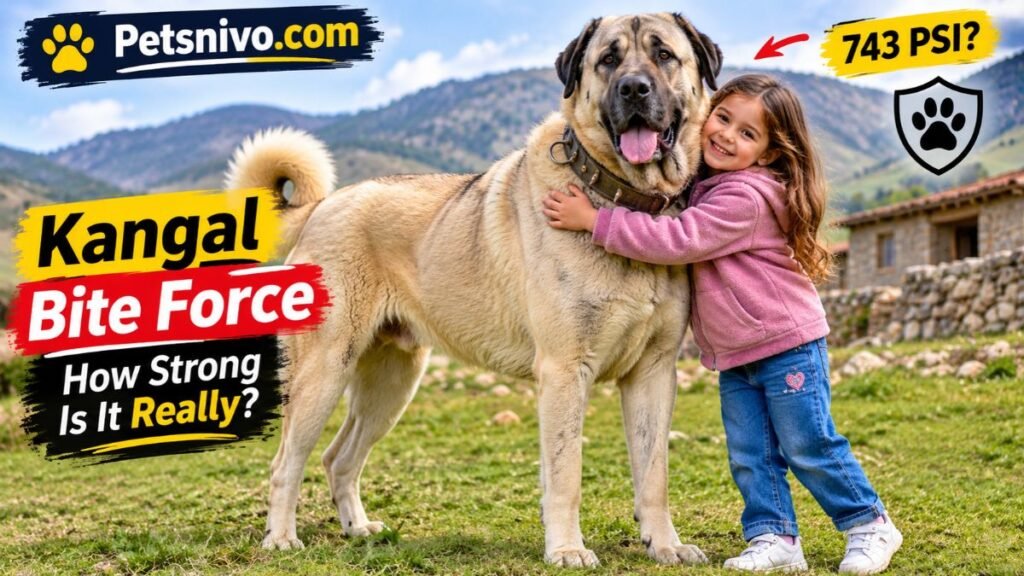
Kangal bite force is a popular topic among dog lovers and breed enthusiasts. The Kangal is one of the most powerful livestock guardian dogs, famous for its muscular body, broad head, and protective nature. Many websites claim that this breed has a bite force of 743 PSI, making it the strongest-biting dog in the world. But is this number scientifically proven?
Many websites claim that the Kangal has a bite force of 743 PSI, making it the strongest-biting dog breed in the world. But is this number scientifically proven?
The truth is that the Kangal has powerful jaws, but researchers have not confirmed its exact bite force through a standardized scientific study.
Understanding the Kangal bite force involves more than comparing numbers. Its jaw structure, body size, working history, and temperament help explain why this Turkish breed is so impressive.
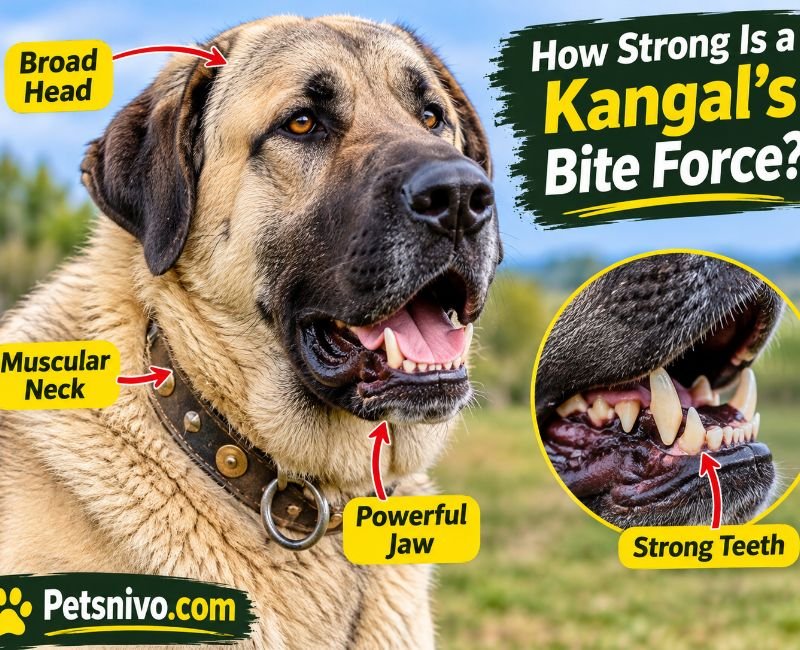
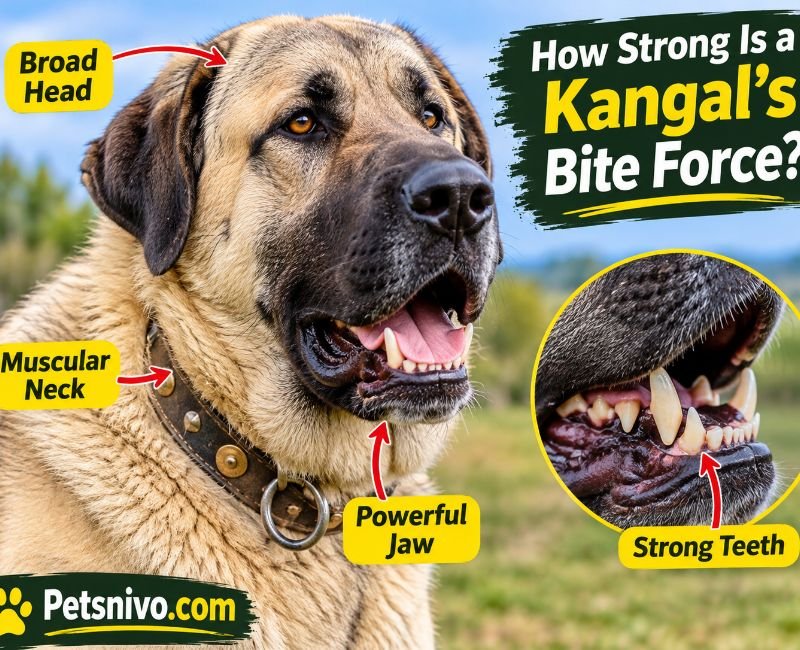
How Strong Is a Kangal’s Bite Force?
Although many online sources report a Kangal bite force of 743 PSI (pounds per square inch), researchers have not verified this figure through standardized testing.
The Kangal is a physically powerful dog. Its large head, developed jaw muscles, and substantial body contribute to its impressive strength.
However, researchers cannot determine a dog’s exact bite force simply by examining its size or physical appearance.
Several factors can influence a dog’s biting ability:
- Body size and physical condition.
- Skull shape and jaw structure.
- Development of the jaw muscles.
- Position of the teeth during biting.
- Dental health and age.
- Individual behavior and motivation.
Therefore, the Kangal has powerful jaws, but its exact PSI remains scientifically unverified.
Is the Famous 743 PSI Kangal Bite Force Accurate?
The 743 PSI figure appears on many websites discussing the strongest dog breeds. Some articles use it to rank the Kangal above breeds such as the Cane Corso, Rottweiler, and Mastiff.
However, its original scientific source is difficult to establish.
A reliable breed-wide measurement would require researchers to test multiple Kangals using consistent equipment and testing conditions. The results would also need to be published and independently evaluated.
No standardized Kangal-specific study has established 743 PSI as the breed’s average.
Other websites publish alternative estimates, including 250–400 PSI. However, readers should treat these figures cautiously because researchers have not confirmed them as breed averages.
| Popular Claim | What the Evidence Shows |
|---|---|
| Kangal has a 743 PSI bite | Not scientifically verified |
| Kangal has the strongest dog bite | No standardized worldwide ranking exists |
| Every Kangal has equal bite strength | Individual variation is expected |
| Large dogs always have stronger bites | Size is only one influencing factor |
The important distinction is between a popular online estimate and an actual scientific measurement. The Kangal’s physical strength is real, but the famous 743 PSI number remains unverified.
How Is Dog Bite Force Measured?
Scientists use different techniques to understand how strongly dogs can bite. However, measuring bite force in living animals is more complicated than many people realize.
Understanding PSI and Newtons in Dog Bite Measurements
PSI means pounds per square inch and measures pressure. Newtons (N) measure force.
These units are related but do not describe exactly the same thing.
Researchers cannot accurately convert a bite-force reading in Newtons into PSI without knowing the contact area and measurement conditions.
This is why comparing numbers from unrelated studies can be misleading.
What Is a Dog Bite Force Transducer?
Therefore, researchers cannot accurately convert a bite-force reading in Newtons into PSI without knowing the contact area and measurement conditions.
A 1995 study titled Measurement of Bite Force in Dogs: A Pilot Study examined 22 pet dogs weighing between 7 and 55 kilograms.
Researchers collected 101 readings, ranging from 13 to 1,394 Newtons. The average was 256 Newtons.
However, these measurements were not specific to Kangals and cannot establish the breed’s bite force.
A 2018 review published in Frontiers in Veterinary Science, titled Bite Forces and Their Measurement in Dogs and Cats, also explains how measurement methods, skull structure, body weight, and individual differences influence results.
Scientific takeaway: Without standardized testing involving Kangals, no exact breed-wide PSI figure can be considered confirmed.
Why Does the Kangal Have Such Powerful Jaws?
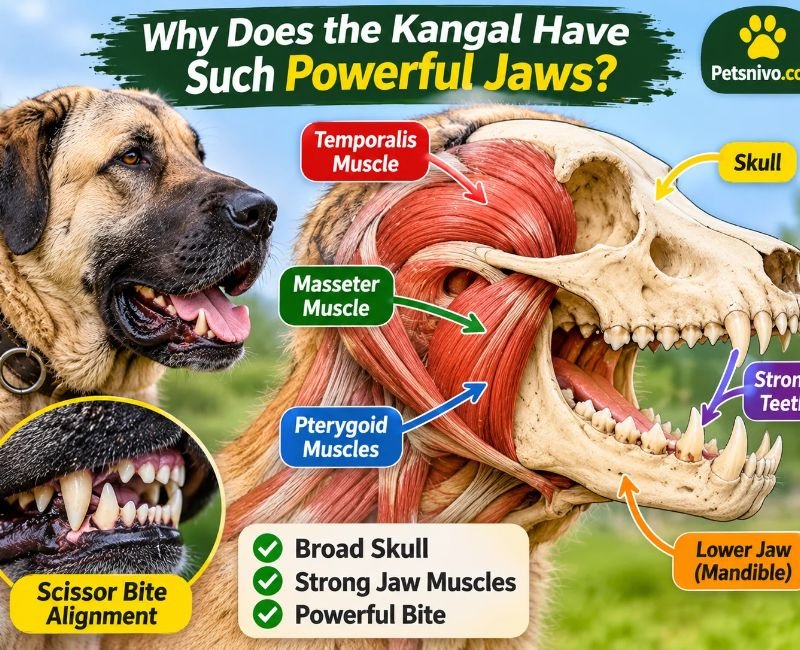
The Kangal’s physical structure reflects its history as a working livestock guardian. Several anatomical features contribute to its powerful appearance and biting ability.
1. Large Head and Skull Structure
The Kangal has a broad head that is proportionate to its muscular body.
Its skull provides structural support for the muscles responsible for jaw movement. However, a large skull does not automatically prove a particular bite-force measurement.
2. Strong Jaw Muscles and Their Functions
Several muscles work together to close and control a dog’s jaw.
The main muscles include:
- Masseter: Helps close the jaw during biting and chewing.
- Temporalis: Contributes to jaw-closing movement.
- Pterygoid muscles: Assist with jaw movement and stability.
Their development and condition can influence an individual dog’s biting ability.
3. Body Size and Muscular Build
Kangals are large, athletic dogs developed for demanding outdoor work.
Their muscular bodies help them protect livestock and move across challenging terrain.
Body size can influence bite-force measurements, but it cannot establish an exact PSI value on its own.
4. Teeth and Jaw Mechanics
A dog’s teeth help it grip, tear, and chew food.
Canines are useful for gripping, while premolars and molars help process food. The position of the bite also matters because measurements taken at different teeth may produce different results.
Kangal Bite Force Compared to Other Powerful Dog Breeds
The Kangal is frequently compared with other large dogs because of its muscular build and reputation as a livestock guardian.
Moreover, online charts often list exact PSI values without explaining how researchers calculate or verify those numbers.
There is no standardized scientific ranking that establishes the bite force of all these breeds under identical conditions.
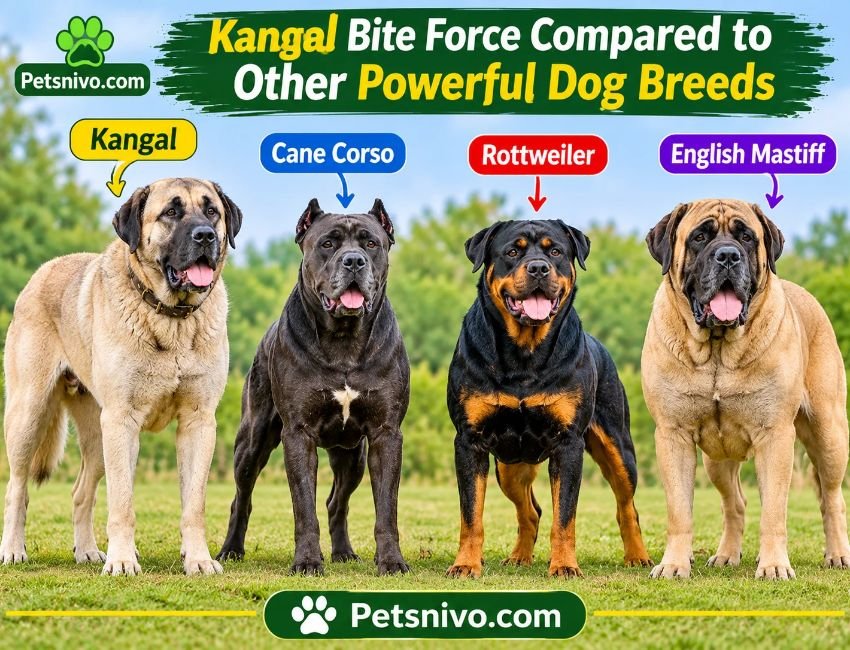
| Dog Breed | Physical Characteristics | Traditional Role |
|---|---|---|
| Kangal | Large, muscular, broad-headed | Livestock guardian |
| Cane Corso | Athletic, muscular, powerful head | Guardian and working dog |
| Rottweiler | Strong and compact | Herding and working dog |
| English Mastiff | Very large and heavy-bodied | Guardian |
| German Shepherd | Athletic and intelligent | Herding and service work |
| American Pit Bull Terrier | Compact and muscular | Historically developed for working roles |
| Tibetan Mastiff | Large and heavily coated | Livestock and property guardian |
| Dogo Argentino | Athletic and muscular | Hunting and working dog |
Kangal vs. Cane Corso Bite Force
Both breeds have powerful bodies and protective instincts.
The Kangal was developed primarily to guard livestock in Turkey, while the Cane Corso has a different Italian working background.
There is no reliable standardized research proving which breed has the stronger bite.
Kangal vs. Rottweiler Bite Force
The Rottweiler is another muscular working breed with a broad head and strong body.
Both breeds need consistent training and responsible handling. Their exact bite forces cannot be reliably ranked using popular internet estimates.
Kangal vs. Pitbull Bite Force
The Kangal is generally much larger and has a different body structure from the American Pit Bull Terrier.
Nevertheless, size differences alone cannot establish a scientifically verified numerical bite-force comparison between these breeds.
Readers interested in Pit Bull-type dogs can also explore our guide to Pitbull Bloodlines: 15 Popular Types and Traits to learn about their ancestry, different family lines, and inherited characteristics.
Kangal vs. English Mastiff Bite Force
The English Mastiff is known for its enormous size and heavy build. The Kangal is recognized for its athletic livestock-guardian structure.
Both are powerful dogs, but there is insufficient standardized evidence to establish which has the stronger bite.
Is the Kangal the Strongest-Biting Dog in the World?
Although many online dog bite-force lists rank the Kangal number one, readers should not consider these rankings reliable scientific records. Instead, they should look for standardized research before accepting such claims.
There are several reasons why an accurate worldwide ranking is difficult:
- Researchers use different measurement instruments.
- Bite force varies depending on the position of the teeth.
- Individual dogs differ in size, anatomy, and physical condition.
- Some published figures are theoretical estimates rather than direct measurements.
- No comprehensive standardized study compares all major dog breeds.
The Kangal is certainly among the impressive large livestock guardian breeds. However, declaring it the scientifically proven strongest-biting dog would go beyond the available evidence.
Why Were Kangals Bred With Powerful Jaws?
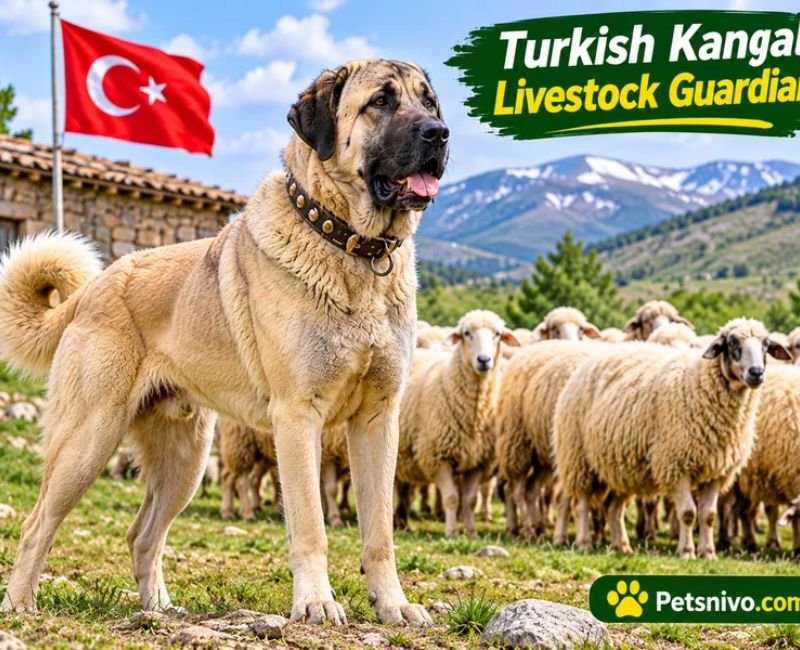
Historically, the Kangal originated in Turkey, and people have closely associated the breed with the Kangal District of Sivas Province in central Turkey.
According to the United Kennel Club, the breed has a long history as a livestock guardian.
Its traditional job was to protect sheep and goats from predators such as wolves, bears, and jackals.
Unlike herding dogs that guide livestock, Kangals traditionally remain close to the animals they protect.
Their working characteristics include:
- Physical strength and endurance.
- Alertness to unfamiliar activity.
- Independent decision-making.
- Natural protective instincts.
- The ability to work outdoors in challenging conditions.
These characteristics helped Kangals perform demanding livestock-guarding duties.
Their purpose was not to attack every unfamiliar person. They were developed to protect livestock and respond to genuine threats.
Is a Kangal Dangerous to Humans?
A Kangal is a large and powerful dog, so responsible ownership is essential.
For additional safety guidance, the American Veterinary Medical Association’s dog bite prevention guide explains responsible dog ownership, controlled socialization, and the importance of supervising children around dogs.
However, having a strong bite does not automatically mean a dog is naturally aggressive.
According to the United Kennel Club, the Kangal is alert, territorial, and protective of the animals and people to which it forms strong bonds. However, Kangals do not typically behave belligerently toward people.
Nevertheless, its natural guarding instincts require proper management.
Important Factors That Influence Kangal Temperament
Early socialization: Introduce young Kangals to different people, environments, sounds, and everyday experiences in positive and controlled ways.
Consistent training: Teach basic commands such as sit, stay, come, and leave it. Reward-based training helps establish good communication.
Responsible supervision: Always supervise interactions with children, visitors, and unfamiliar animals. Even a friendly large dog can accidentally cause injuries.
Secure fencing: Provide a properly enclosed outdoor space to prevent roaming and unwanted encounters.
Understanding protective behavior: Learn to recognize signs of stress and discomfort instead of encouraging unnecessary confrontation.
A dog’s physical ability to cause an injury and its temperament are two different things. Responsible training and ownership help reduce risks.
How to Keep a Kangal Healthy and Well-Trained
Owning a Kangal involves more than providing food and shelter. Its size, working background, and independent personality require appropriate care.

Here are important practices for owners.
Start Socialization Early
Introduce puppies gradually to different environments, people, and everyday situations. Avoid forcing interactions that make them uncomfortable.
Use Positive Reinforcement Training
Reward good behavior with praise, treats, and appropriate play. Consistent training helps build trust and encourages desirable habits.
Provide Daily Exercise
Kangals need suitable physical activity to maintain their general health. Adjust exercise according to age, development, and veterinary advice.
Maintain Kangal Dental Health
Regular dental examinations help identify gum disease, damaged teeth, and other oral problems that could affect normal biting and chewing.
Schedule Regular Veterinary Checkups
Routine veterinary care helps monitor dental health, joints, weight, and overall physical condition.
Never Encourage Aggressive Behavior
Dog fighting and aggression training are not responsible ways to develop a guardian dog.
Focus on obedience, self-control, safe handling, and appropriate social behavior.
Final Thoughts on Kangal Bite Force
The Kangal is an impressive Turkish livestock guardian known for its muscular body, broad head, endurance, and protective instincts.
However, researchers have not established the famous 743 PSI Kangal bite force figure through a standardized scientific study.
Understanding bite-force measurement, breed characteristics, temperament, and responsible ownership provides a more useful picture than relying on internet rankings.
Ultimately, the Kangal’s real value comes from its working ability, loyalty, intelligence, and protective nature—not simply an unverified PSI number.
Frequently Asked Questions About Kangal Bite Force
1. How Many PSI Is a Kangal’s Bite Force?
The Kangal is commonly reported to have a 743 PSI bite force. However, this figure has not been scientifically verified.
2. Is 743 PSI Scientifically Proven?
No. No standardized Kangal-specific study confirms 743 PSI as the breed’s average bite force.
3. Is the Kangal Stronger Than a Cane Corso?
Both breeds are powerful, but no reliable standardized research proves which has the stronger bite.
4. Can a Kangal’s Bite Cause Serious Injuries?
Yes. A Kangal’s size and physical strength mean its bite can cause serious injuries. Responsible training and supervision are essential.
5. Are Kangals Naturally Aggressive Toward Humans?
No. Kangals are naturally protective and territorial, but protective behavior is not the same as uncontrolled aggression.