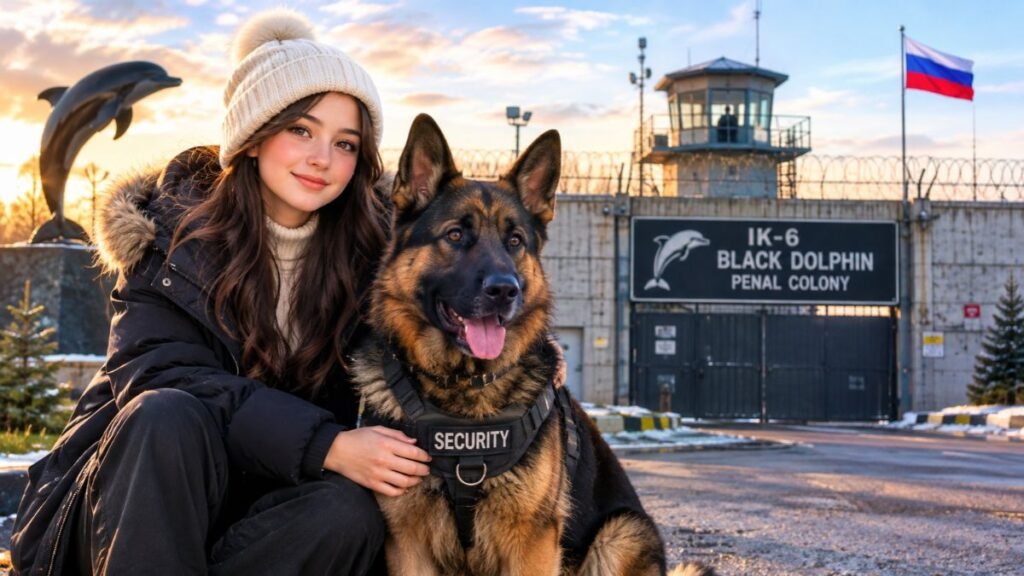
The topic of black dolphin prison russia dogs raises an important question: why are dogs associated with one of Russia’s best-known high-security prisons, and what is actually known about their work? Black Dolphin Prison, officially known as Penal Colony No. 6 (IK-6), is located in Sol-Iletsk in Russia’s Orenburg region, near the Kazakhstan border. Reporting about the facility describes prison staff accompanied by canine handlers when moving prisoners around the site.
However, it is important to separate confirmed reporting from stories that circulate online. Information about security dogs in general does not automatically prove which breeds are kept at this particular prison, how many dogs work there, or how they are cared for.
This guide examines the available information, explains the general role of prison working dogs, and considers why reliable evidence matters when discussing animals in a high-security environment.
What Is Black Dolphin Prison in Russia?
Black Dolphin Prison is the common English name for a Russian correctional facility officially designated IK-6. It stands in Sol-Iletsk, Orenburg Oblast, and operates under Russia’s Federal Penitentiary Service. The facility is particularly associated with prisoners serving life sentences and strict security arrangements.
The prison’s unusual nickname comes from a black dolphin sculpture displayed near its entrance. The sculpture is one reason the facility is recognizable in photographs and documentaries, although its reputation comes primarily from its role within Russia’s prison system.
Black Dolphin is often discussed in articles about high-security detention because of its strict rules and controlled movement of prisoners. Nevertheless, popular descriptions sometimes mix documented facts with dramatic storytelling. Readers should therefore assess individual claims rather than assume every detail in an online account is accurate.
Understanding this background helps explain why questions about security personnel and working dogs attract attention. It also provides context for distinguishing the prison’s documented practices from broader assumptions about Russian correctional facilities.
Why Are Dogs Associated With Black Dolphin Prison?
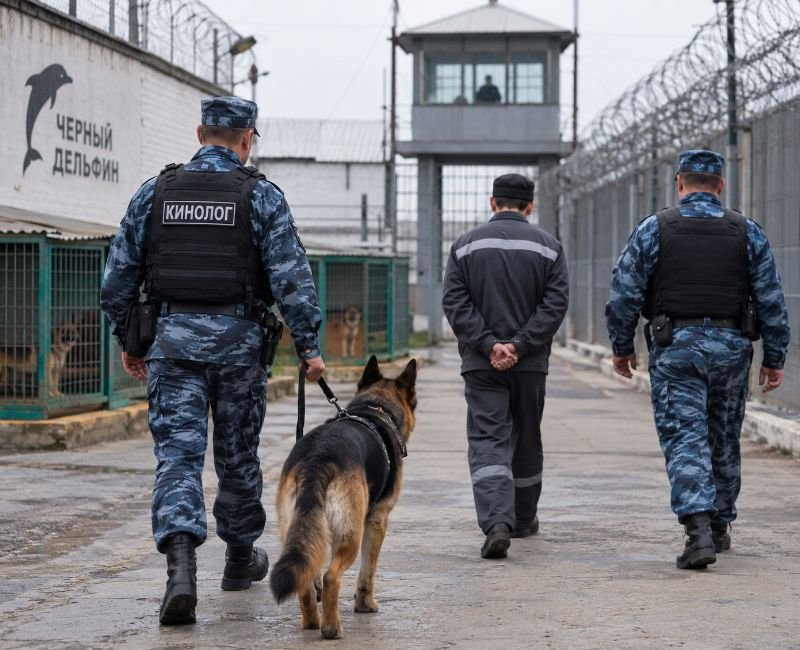
Dogs are associated with Black Dolphin because published reporting describes canine handlers accompanying staff when prisoners are escorted through the facility. A report from Russian news outlet Tatar-Inform, for example, describes a handler with a dog meeting a prisoner during movement inside the colony. It also refers to a kennel where dogs are prepared
The role of black dolphin prison russia dogs is often discussed online, but verified information about their exact duties remains limited.
This is meaningful evidence that dogs have been associated with the prison’s security arrangements. However, it does not establish every detail about their work, and a report about one prisoner’s routine should not be treated as a complete description of the facility.
The distinction matters because many articles discuss Black Dolphin Prison in general without providing detailed information about its canine unit. Some explain the prison’s history and strict security procedures, while others focus on the experiences of prisoners. Those topics may provide useful context, but they do not necessarily answer questions about the dogs themselves.
For readers searching for Black Dolphin Prison dogs, the most responsible conclusion is that reporting documents the presence of dogs and handlers in the prison’s security environment. Further claims about the animals’ individual duties, numbers, breeds, or living conditions require additional evidence.
What Do Prison Dogs Do?
Prison working dogs can support trained security personnel in several ways. Their duties depend on the facility, the dog’s training, local procedures, and the needs of the security team.
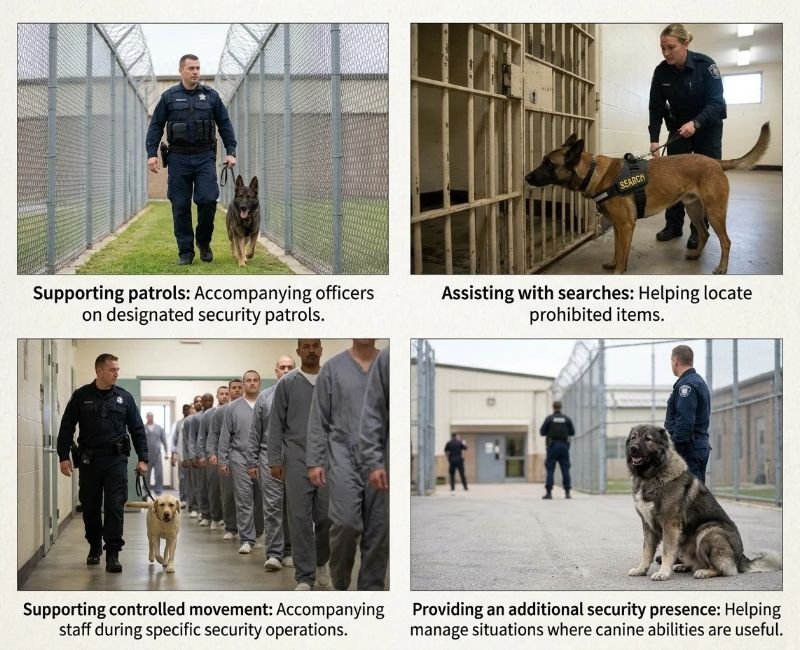
Common roles in correctional and other security environments can include the following:
- Supporting patrols: Dogs may accompany trained handlers during designated security patrols.
- Assisting with searches: Specially trained dogs may help search for prohibited items, depending on their training and the facility’s procedures.
- Supporting controlled movement: A dog and handler may accompany staff during particular security operations.
- Providing an additional security presence: A trained dog can help staff manage certain situations in which an animal’s abilities are useful.
These are general examples of working-dog duties, not a verified list of every task performed by dogs at Black Dolphin Prison.
The presence of a dog does not mean that every animal is trained for the same purpose. For instance, a dog trained to detect particular substances has a different role from one trained for patrol duties. Training, supervision, and the handler’s instructions determine what the animal is expected to do.
Moreover, a working dog is not an independent security system. It relies on a trained human handler who understands its behaviour, recognizes signs of stress, and follows the facility’s rules.
Which Dog Breeds Are Used in Russian Prisons?
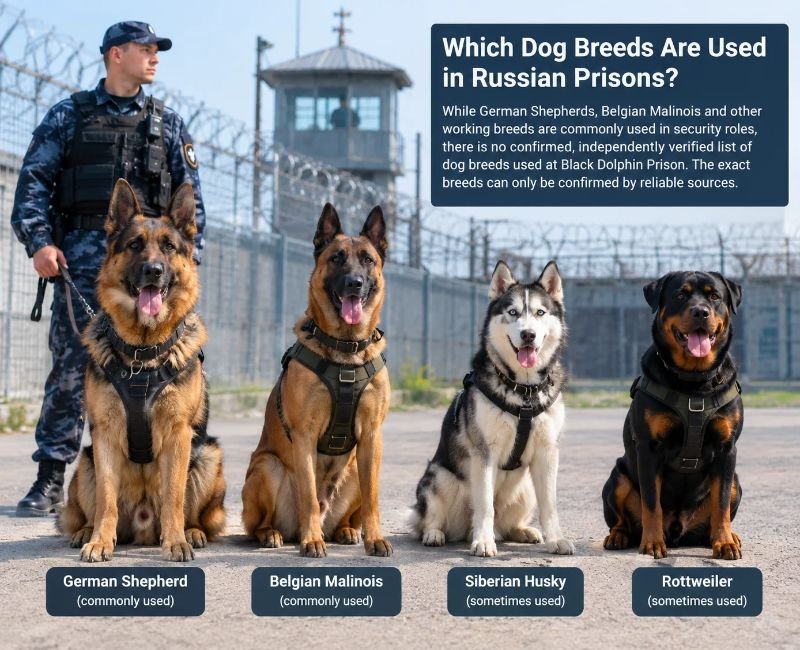
Readers often want to know whether Black Dolphin Prison uses German Shepherds, Belgian Malinois, or other familiar working breeds. These are recognizable examples of dogs used in some professional security and service roles, but that alone does not establish which breeds are present at this specific prison.
A breed should only be attributed to Black Dolphin Prison when a reliable source directly supports the claim. General information about canine units elsewhere in Russia cannot establish the exact breed composition of this facility.
Different working dogs have different physical characteristics and temperaments. Their suitability for a role depends on more than appearance: health, temperament, training, responsiveness to the handler, and the demands of the assignment are also important.
It is equally important not to assume that a dog is aggressive simply because it works in a prison. Professional working dogs require controlled behaviour and appropriate handling. Their working role should not be confused with the temperament of every individual dog belonging to the same breed.
At present, the available reporting cited in this article does not establish a complete, independently verified list of dog breeds used at Black Dolphin Prison. Until more specific evidence is available, naming a particular breed as confirmed would be misleading.
How Are Prison Dogs Trained?
Professional working dogs generally receive training suited to their intended responsibilities. Depending on their role, this can include obedience, responding reliably to a handler, remaining under control in unfamiliar environments, and becoming comfortable with appropriate working equipment and routines.
Training also requires a consistent relationship between the dog and its handler. Handlers need to understand canine body language, recognize signs of fatigue or distress, and respond appropriately when a dog becomes distracted or uncomfortable.
A responsible working-dog programme should also account for physical conditioning, rest, veterinary care, and the animal’s ability to work safely. These needs do not disappear because the dog is employed in a demanding security environment.
However, general knowledge about professional canine training should not be mistaken for inside information about Black Dolphin Prison. The sources cited here do not provide a complete account of the facility’s training curriculum, daily training schedule, or assessment procedures.
It is therefore more accurate to explain how working-dog training generally operates than to invent specific details about the prison’s programme.
Are the Stories About Black Dolphin Prison Dogs True?
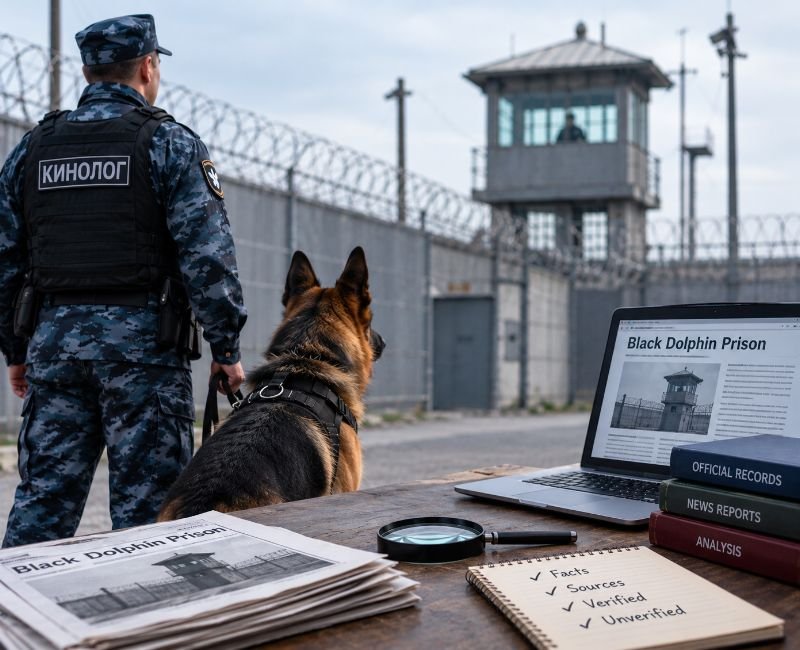
Online stories about high-security prisons can be difficult to evaluate. Some combine genuine reporting with assumptions, while others repeat claims without identifying their original source.
When researching black dolphin prison russia dogs, it is important to separate confirmed reports from unverified online claims.
A useful approach is to classify information into three categories.
Documented information: These are claims supported by identifiable reporting or official records. In this case, published reporting describes dogs and handlers being involved in prisoner movement at Black Dolphin Prison.
General background information: This includes explanations of how working dogs may assist security teams, how training is organized, and why handlers supervise them. Such information can help readers understand the subject, but it does not prove that every practice occurs at Black Dolphin.
Unverified claims: These include precise claims about dog numbers, named breeds, particular training methods, treatment of the animals, or dramatic incidents when no reliable supporting evidence is provided.
Before accepting a story, readers should look for the original report, its publication date, and the evidence it presents. They should also check whether other credible sources independently confirm the same detail.
Photographs and short video clips require similar care. An image of a working dog at a prison does not necessarily establish when it was taken, where the dog was assigned, or what duties it performed.
The goal is not to dismiss every account that lacks detail. Instead, it is to explain what can reasonably be concluded and what remains unknown. This makes an article more useful than one that repeats sensational claims simply to attract attention.
How Are Working Dogs Cared For?
Working dogs need appropriate care regardless of where they work. A secure environment does not remove the responsibility to protect an animal’s health and welfare.
Several basic needs are especially important.
- Veterinary care: Regular health checks and timely treatment help identify illness or injury.
- Clean housing: Dogs need a suitable, hygienic place to rest and recover.
- Fresh water and appropriate food: Nutrition and hydration must match the animal’s individual needs and activity.
- Rest and recovery: Working dogs require sufficient time away from demanding duties.
- Humane handling: Handlers should recognize signs of stress and avoid unnecessary discomfort or harmful treatment.
- Appropriate exercise and enrichment: Physical activity and opportunities to engage in suitable natural behaviours support overall welfare.
These are general animal-welfare principles. They should not be interpreted as confirmation that every practice has been independently inspected or documented at Black Dolphin Prison.
One important question is how working dogs are monitored when they become older or can no longer perform their duties. Responsible programmes need suitable plans for veterinary treatment, reduced workloads where appropriate, and retirement or alternative care when necessary.
Unfortunately, the sources discussed in this article do not establish a complete picture of the individual dogs’ living conditions, medical care, or retirement arrangements at Black Dolphin. A factual article should acknowledge this gap rather than assume either excellent or poor treatment without evidence.
How Are Black Dolphin Prison Dogs Different From Pet Dogs?
The main difference is their purpose and working environment. A pet dog generally lives with a household and participates in family life, while a prison working dog is assigned professional responsibilities under the supervision of trained personnel.
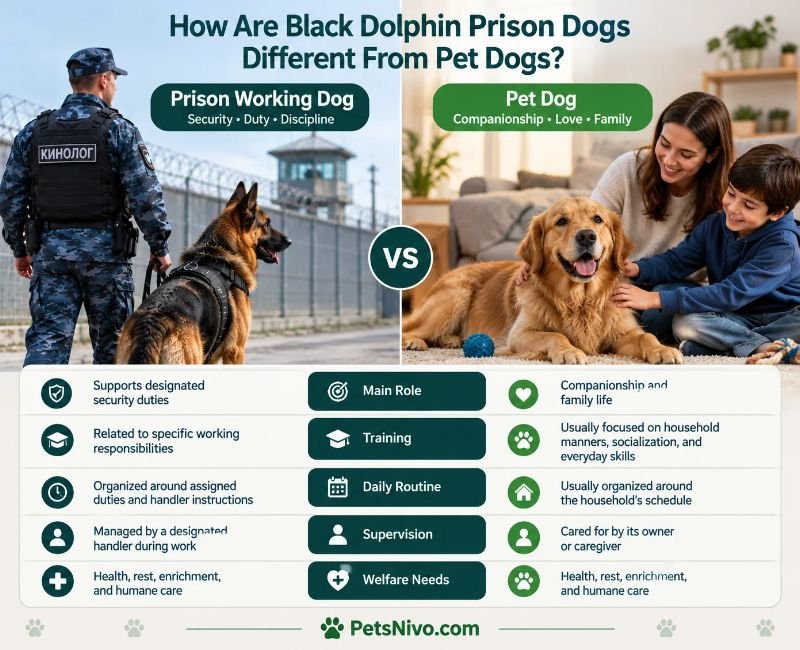
| Feature | Prison working dog | Household pet dog |
| Main role | Supports designated security duties | Companionship and family life |
| Training | Related to specific working responsibilities | Usually focused on household manners, socialization, and everyday skills |
| Daily routine | Organized around assigned duties and handler instructions | Usually organized around the household’s schedule |
| Supervision | Managed by a designated handler during work | Cared for by its owner or caregiver |
| Welfare needs | Health, rest, enrichment, and humane care | Health, rest, enrichment, and humane care |
Despite these differences, both working dogs and pets are living animals with individual needs. Both benefit from appropriate veterinary care, positive handling, suitable nutrition, and opportunities to rest.
If you need a safe and comfortable place for your dog to stay while you are away, choosing the right overnight boarding facility is important.
It is also worth remembering that a dog’s professional role does not tell us everything about its personality. Dogs should be understood as individuals, rather than judged solely by their breed or occupation.
For PetsNivo readers interested in dog behaviour and responsible ownership, this distinction offers a useful reminder: training should suit the dog’s needs, abilities, and environment.
Frequently Asked Questions
1. Why are dogs used at Black Dolphin Prison in Russia?
Published reporting describes canine handlers accompanying security staff when prisoners move around Black Dolphin Prison. This supports the conclusion that dogs have been used in its security environment, although the available reporting does not establish every duty they perform.
2. Are dogs really present at Black Dolphin Prison?
Yes. A Russian news report describes a prisoner being met by a canine handler and dog during movement inside the facility and mentions a kennel associated with service-dog preparation. This is evidence of their presence, although it does not provide a comprehensive inventory
3. What breeds of dogs are used in Russian prisons?
Different professional canine units may use different breeds depending on their responsibilities. However, the sources used here do not establish a complete list of breeds specifically assigned to Black Dolphin Prison. It would be inaccurate to present an unverified breed as confirmed.
4. Are Black Dolphin Prison dogs specially trained?
Reporting refers to dogs being prepared for service at a kennel associated with the prison. However, the available evidence does not provide a complete description of their training curriculum or individual qualifications.
5. Are the stories about these dogs online reliable?
Some information is supported by reporting, while other claims may be exaggerated or lack evidence. Readers should check original sources, distinguish general information from prison-specific facts, and avoid treating unverified stories as established truth.
6. How are working dogs’ welfare needs addressed?
Responsible working-dog programmes should provide suitable food, clean housing, veterinary care, rest, and humane handling. However, these general standards do not establish the actual conditions of dogs at Black Dolphin Prison, which require specific evidence.
Final Thoughts
The subject of black dolphin prison russia dogs is more specific than the broader history of Black Dolphin Prison. Published reporting provides evidence that dogs and canine handlers have been part of the facility’s security environment. However, important questions about exact breeds, individual duties, training procedures, and animal-welfare conditions remain unanswered by the sources cited here.
The most useful way to understand these dogs is to separate documented information from general knowledge about working animals and unverified online stories. That approach helps readers learn about the prison without relying on sensational claims.
For anyone researching Russian prison dogs, reliable reporting and careful source evaluation are essential. The same principle applies to animal-related content generally: clear explanations, accurate evidence, and an honest account of what is not known are more valuable than dramatic claims without support.