Leaving your dog for a night or two is never easy. You might be travelling for work, attending a family event, going into hospital, or simply taking a well-earned holiday. Whatever the reason, you want to know that your dog is safe, fed, warm and calm while you are away. That is why so many owners search for overnight dog boarding near them, and why the choice deserves more than a quick look at the nearest address.
This guide explains what overnight dog boarding is, how the different types compare, and how to judge whether a facility is truly safe. You will also find a list of questions to ask before you book, advice on costs, a packing checklist, and practical steps to help an anxious dog settle in. Friendly: “Stick with me, and you’ll come away knowing exactly what to watch for and what to skip.”
What Is Overnight Dog Boarding?
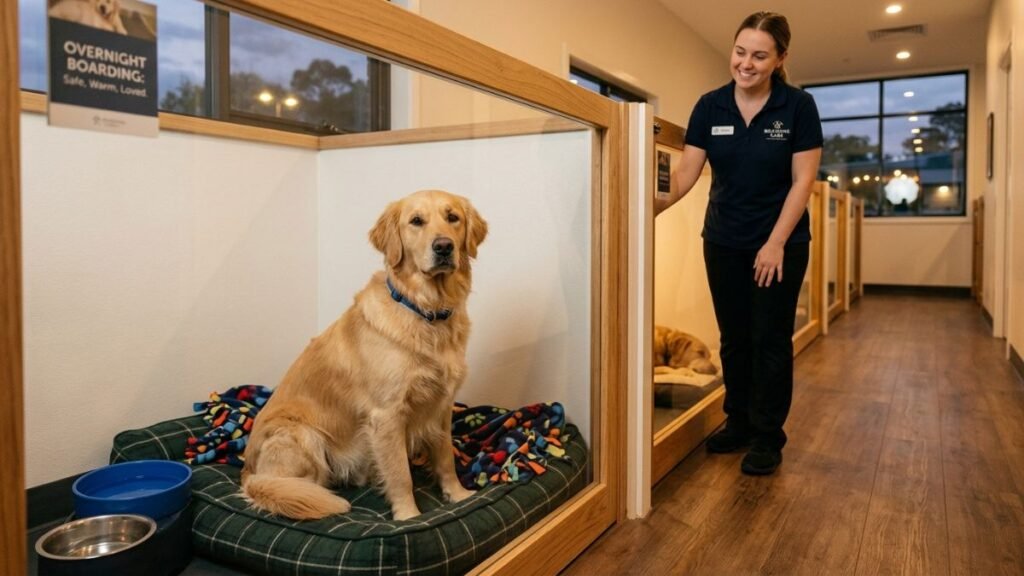
Overnight dog boarding means your dog stays away from home for at least one night while trained people look after it. During the stay, your dog is fed, walked, kept clean, watched for signs of illness, and given a safe place to sleep. Some places also offer play sessions, training, grooming and regular updates for the owner.
The service is different from daycare. In daycare, your dog goes home with you in the evening. In boarding, the night itself is part of the care, which means supervision, comfort and safety after dark matter just as much as daytime activities.
Types of Overnight Dog Boarding
Not every boarding service works in the same way.Knowing the different options can help you choose the best place for your dog based on its needs. Kennels and boarding centres. These are purpose-built facilities with individual runs or rooms. They usually have set routines, outdoor yards and staff who handle many dogs every day. They suit healthy, confident dogs that cope well around noise and activity.
Pet hotels and luxury suites. These offer larger private rooms, soft beds, climate control and extra services such as webcams or grooming. They tend to cost more, but they can be a good fit for owners who want extra comfort and communication.
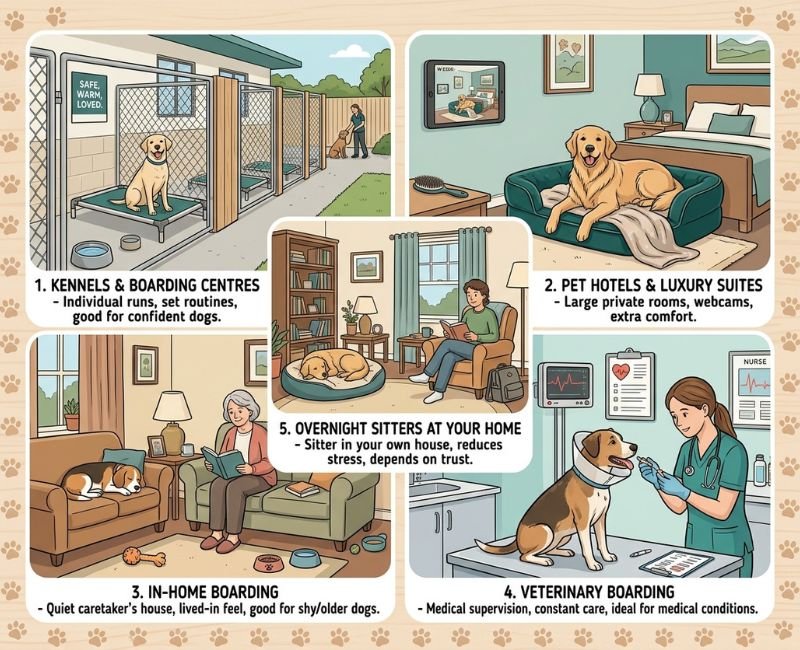
In-home boarding. Here, your dog stays in a caretaker’s own house and lives like a member of the household. The atmosphere is quieter and more personal, so this option often works well for shy, older or small dogs. However, you should check how many other animals are in the home and whether the caretaker is available through the night.
Veterinary boarding. Some clinics board dogs on site. This is helpful when your dog has a medical condition, needs injections or takes regular medicine, because a professional is close by if something changes.
Overnight sitters at your home. A sitter can also stay in your house. Your dog keeps its normal surroundings, which reduces stress. This is a good option for dogs that hate unfamiliar places, although it depends on finding someone you trust with your home.
There is no single best choice. The right option depends on your dog’s age, health and personality, and on what you feel comfortable with.
What “Overnight” Really Means
Providers do not all use the word “overnight” in the same way. Some count a night as a full 24 hours from check-in. Others only count the hours between evening and morning. This difference can change the price, especially if you arrive late to collect your dog.
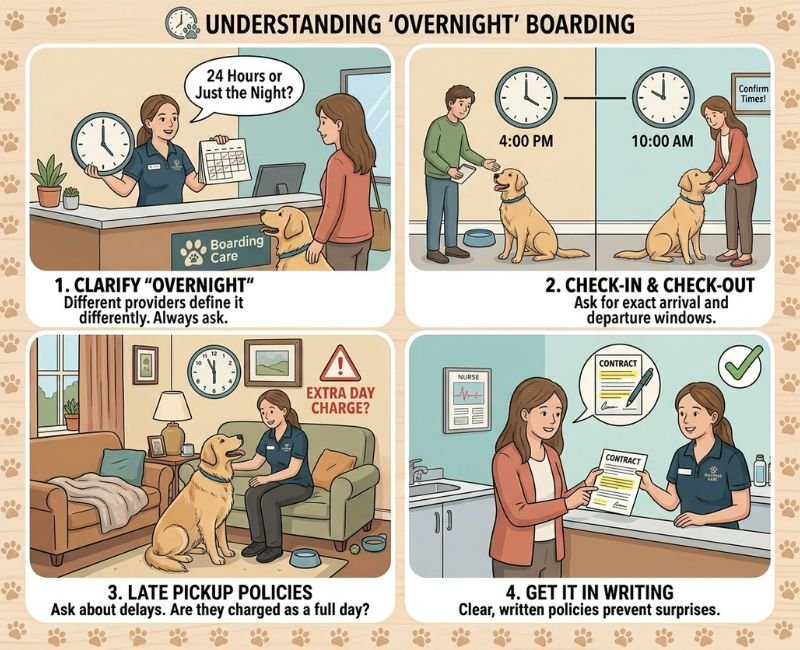
Therefore, before you book, ask for the exact check-in and check-out times. Ask what happens if you are delayed, and whether a late pickup is charged as an extra day. A good provider will explain this clearly and put it in writing. If the answer sounds vague, ask again.
How to Check That a Boarding Facility Is Safe
Safety matters most at night, when owners cannot see what is happening. When you compare overnight dog boarding options, look closely at the following points.
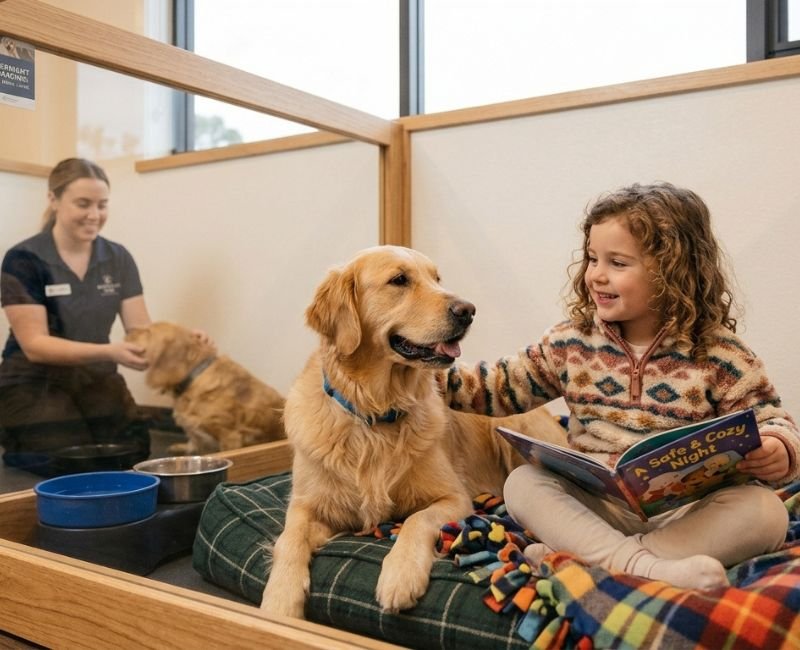
Supervision after closing time. Ask who is on site overnight. Some places have a person present all night, while others only check on dogs at set times. Neither answer is automatically wrong, but you should know which one applies and decide whether it feels right for your dog.
Clean and secure space. The area should smell fresh, the floors should be clean, and fences and gates should be in good repair. Dogs should not be able to escape or reach other dogs through gaps. Water bowls should be clean and always full.
If you want to find a suitable place for your dog to play and stay active, read our guide on Indoor Dog Park Near Me: Finding the Best Place for Your Dog.
Comfortable temperature. Dogs should never be left too hot or too cold. Look for shade, good airflow and proper bedding. In cold weather, ask how the facility keeps dogs warm.
Separate sleeping areas. Most dogs sleep better with their own space.If dogs stay in the same room, ask the staff how they choose which dogs can share a space and what they do to keep them safe and prevent conflicts.
An emergency plan.Ask the staff how they would handle the situation if your dog becomes ill or gets injured during the night. A responsible provider works with a local vet, knows the quickest route there, and will contact you immediately.
Proof of vaccination. Most facilities ask for up-to-date rabies, distemper and parvovirus vaccines, and often kennel cough as well. This protects every dog in the building. A place that asks for records is usually taking health seriously.
Questions to Ask Before You Book
Before choosing any overnight dog boarding service, ask these questions. A trustworthy provider will answer openly and without pressure.
- How many dogs does each staff member look after at one time?
- Who is present overnight, and how often are the dogs checked?
- Can I visit first and see where my dog will sleep?
- Which vaccines and health checks do you require?
- What happens if my dog becomes ill or injured?
- How much exercise and play will my dog get each day?
- What exactly is included in the nightly price?
- Can I receive updates or photos while I am away?
- What is your cancellation and late pickup policy?
- Can I meet my dog’s caretaker before the stay?
Planning an overnight stay for your dog? Read our guide on Colorado Springs Dog Kennels: How to Choose the Right One for Your Dog for more tips on selecting a suitable boarding facility.
What Affects the Cost of Overnight Dog Boarding?
Prices vary from one provider to another, and several factors usually decide the final amount.
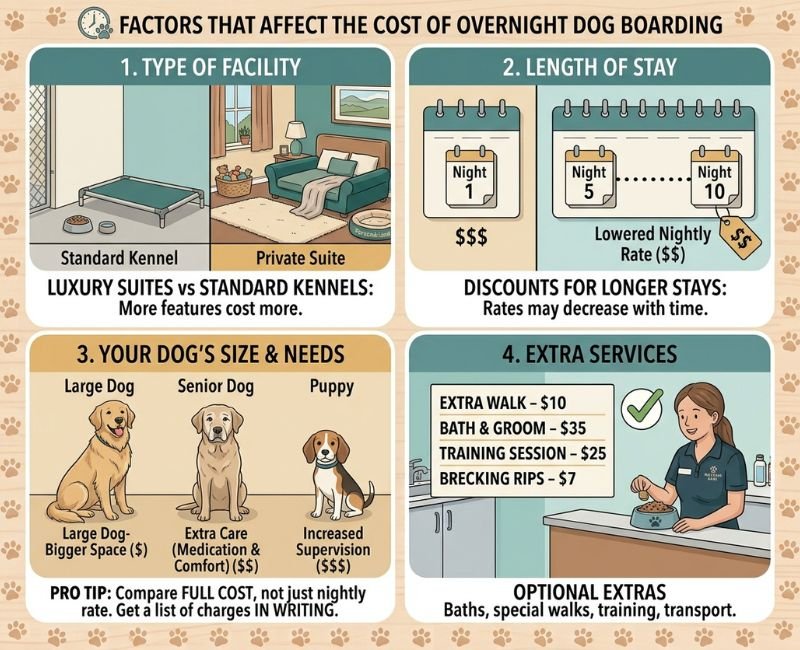
Type of facility. Private suites and luxury rooms generally cost more than standard kennels or shared spaces. In-home boarding can fall anywhere in between, depending on the caretaker and the level of attention.
Length of stay. Some providers lower the nightly rate for longer stays, while others charge the same amount each night.
Your dog’s size and needs. Large dogs may need bigger spaces. Puppies, seniors, and dogs on medication often need extra time and attention, which may add to the cost.
Extra services. Baths, additional walks, training sessions, special food and transport are often priced separately.
Busy seasons. Holidays and school vacations are popular times. Rates may rise, and spaces can fill up weeks in advance.
For this reason, compare the full cost rather than just the nightly rate. Ask for a list of every charge in writing before you agree, so there are no surprises when you collect your dog.
What to Pack for Your Dog’s Overnight Stay
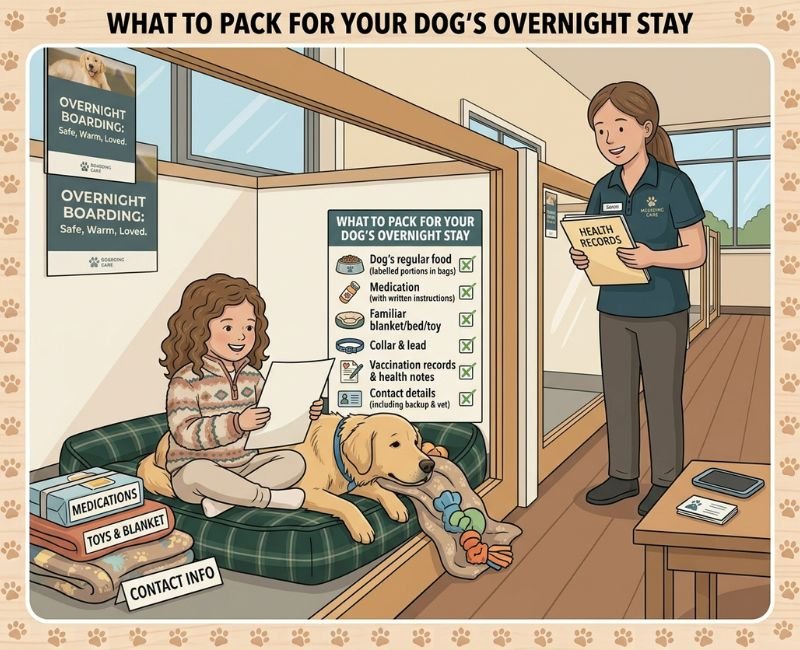
A little preparation makes the stay smoother for everyone. Most owners bring the following items.
- Your dog’s regular food, in labelled portions for each meal
- Any medication, with clear written instructions on dose and timing
- A familiar blanket, bed or toy that smells like home
- A collar with an identification tag, and a lead
- Vaccination records and any health notes
- Your phone number, a backup contact and your vet’s details
Avoid changing your dog’s food just before boarding. A new place and new food at the same time can easily upset the stomach. Also, label your dog’s belongings so they come back with you.
How to Prepare an Anxious Dog for the First Night
It is completely normal for a dog to feel unsure the first time. Fortunately, a few simple steps can help.
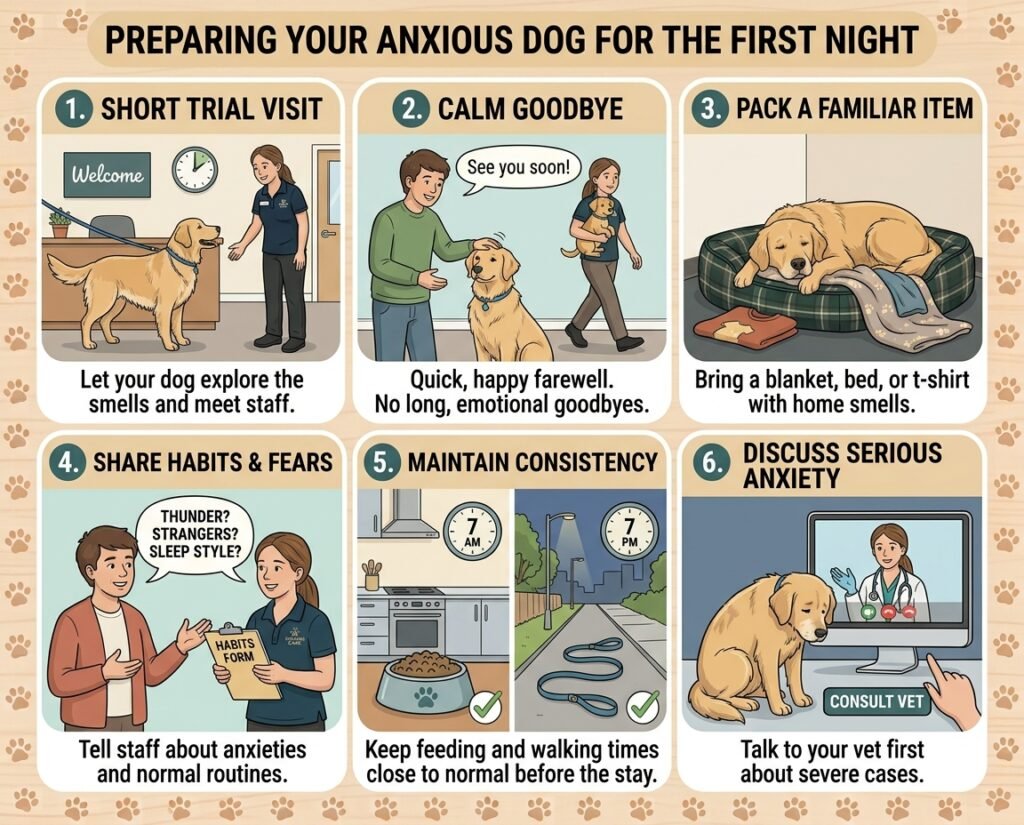
Start with a short visit. If the facility allows it, take your dog for a trial visit or a daytime stay first. This lets your dog meet the people and get used to the smells and sounds before the first night.
Keep the goodbye short and calm. Long, emotional farewells can make dogs more nervous. A quick, cheerful goodbye sends the message that everything is fine.
Bring something familiar. A blanket or an old T-shirt that smells like you can bring real comfort in a new place.
Share your dog’s habits. Tell the staff about fears such as thunder, strangers or being alone, and explain how your dog likes to sleep. As a result, they can plan around those needs from the first evening.
Stay consistent. Keep feeding and walking times as close to normal as possible in the days before the stay.
If your dog has serious separation anxiety, speak to your vet before booking. They may suggest a different setting, such as a home sitter, or other ways to ease the stress.
Frequently Asked Questions
Is overnight dog boarding safe for my dog? It can be very safe when the facility is clean, properly supervised and asks for vaccination records. Always visit the place and ask about night-time supervision before you book.
Is someone awake at night? This depends on the provider. Some have a person on site all night, while others carry out regular checks. Ask directly and choose the option you feel comfortable with.
What happens if my dog gets sick while boarding? A good provider contacts you right away and takes your dog to a vet when needed. Always leave a working phone number and a backup contact.
Will my dog be anxious or sad? Some dogs feel nervous the first time. A trial visit, familiar items from home and clear notes for the staff usually help a great deal.
How early should I book? Book as early as you can, especially around holidays, because spaces fill up quickly.
What if I need to cancel? Cancellation rules differ. Ask for the policy in writing before you pay.
Final Thoughts
Finding the right overnight dog boarding near you takes a little time, but the effort is worth it. Visit the facility, ask direct questions, and check vaccination rules, night-time supervision and the emergency plan. Compare the total cost rather than only the nightly rate, and prepare your dog with a short trial visit, familiar items and a calm goodbye.
Most importantly, choose the place where you feel your dog will be safe, comfortable and well cared for. With the right preparation, your dog can enjoy a relaxed stay, and you can enjoy your time away with real peace of mind.