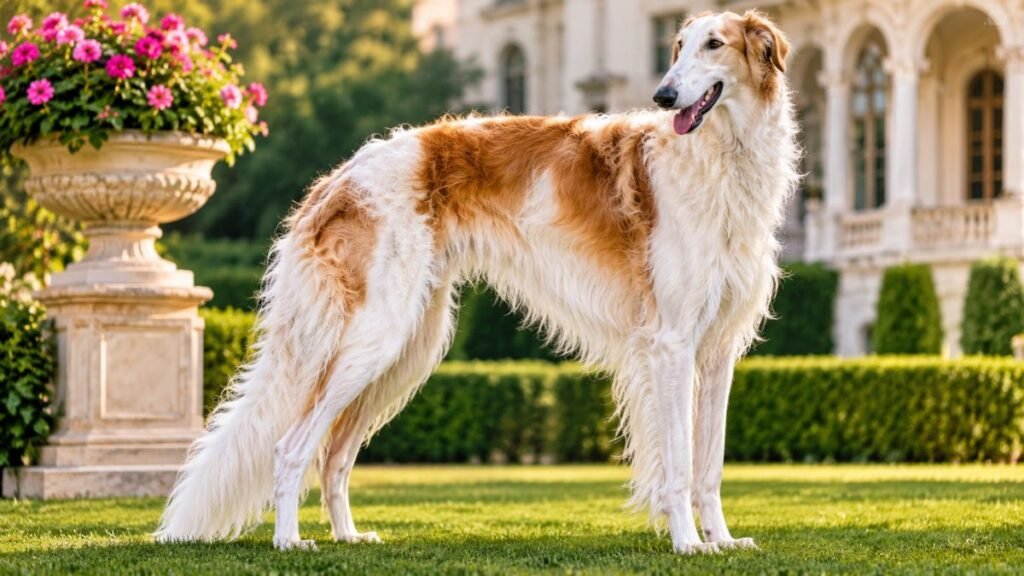
The dog breed Russian Wolfhound, commonly known as the Borzoi, is a large Russian sighthound famous for its long legs, silky coat, and impressive speed. Originally developed for hunting, this breed combines an athletic body with a calm and elegant appearance.
However, the Borzoi is not suitable for every household. Its independent personality, strong prey drive, grooming needs, and exercise requirements deserve careful consideration.
This guide covers the breed’s appearance, temperament, health, training, nutrition, and daily care to help you decide whether a Russian Wolfhound is right for you.
Understanding the dog breed Russian Wolfhound can help owners learn about the Borzoi’s temperament, exercise needs, grooming, and health requirements
What Is a Russian Wolfhound?
The Russian Wolfhound is another name for the Borzoi, a sighthound developed in Russia. Sighthounds use their vision and speed to pursue moving animals.
Anyone researching the dog breed Russian Wolfhound should understand its original hunting purpose, physical features, and independent personality before choosing one as a companion.
The Borzoi has a narrow head, deep chest, long legs, and a lean body. These features support its ability to run quickly across open ground.
Is the Russian Wolfhound the Same as a Borzoi?
Yes. Russian Wolfhound is a traditional name for the Borzoi, also known as the Russkaya Psovaya Borzaya.
It is different from breeds such as the Caucasian Shepherd and Russian Black Terrier. Each has its own history, temperament, and care requirements.
What Was the Russian Wolfhound Bred For?
The Borzoi was developed to hunt by sight and speed. Its athletic build helped it pursue fast-moving game across open terrain.
Although many Borzois now live as companion dogs, their hunting instincts can still influence their behavior.
Russian Wolfhound Breed History and Origin
Where Did the Borzoi Originate?
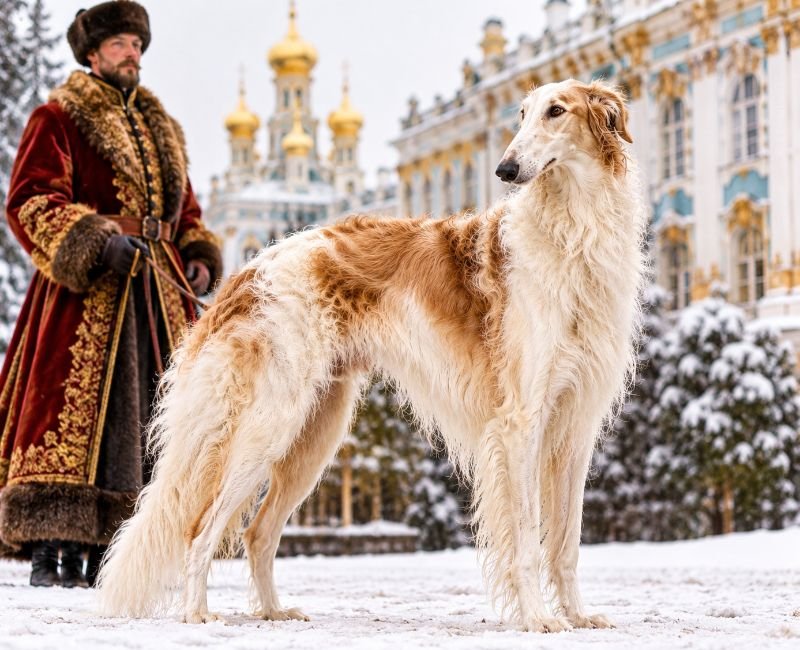
The Borzoi originated in Russia, where it was valued by aristocrats for hunting. Wealthy families maintained kennels and developed dogs suited to the country’s hunting traditions.
How Did the Breed Become Popular?
The breed gradually spread beyond Russia through breeding programs and international interest. Today, Borzois participate in dog shows, live as companions, and retain their identity as sighthounds.
Russia has a long history of using dogs for different purposes, from hunting companions to professional working animals. You can also learn about the role of dogs in Russian prisons by exploring their history and responsibilities at Black Dolphin Prison.
Their history explains why they can be calm indoors yet become highly focused when they notice a moving animal.
Dog Breed Russian Wolfhound: Appearance and Physical Features
The Borzoi is tall, lean, and athletic. Its long muzzle, deep chest, tucked-up abdomen, and curved outline give it a distinctive silhouette.
Its coat is usually silky, and legs a narrow head, and a deep chest that give the breed its distinctive appearance.
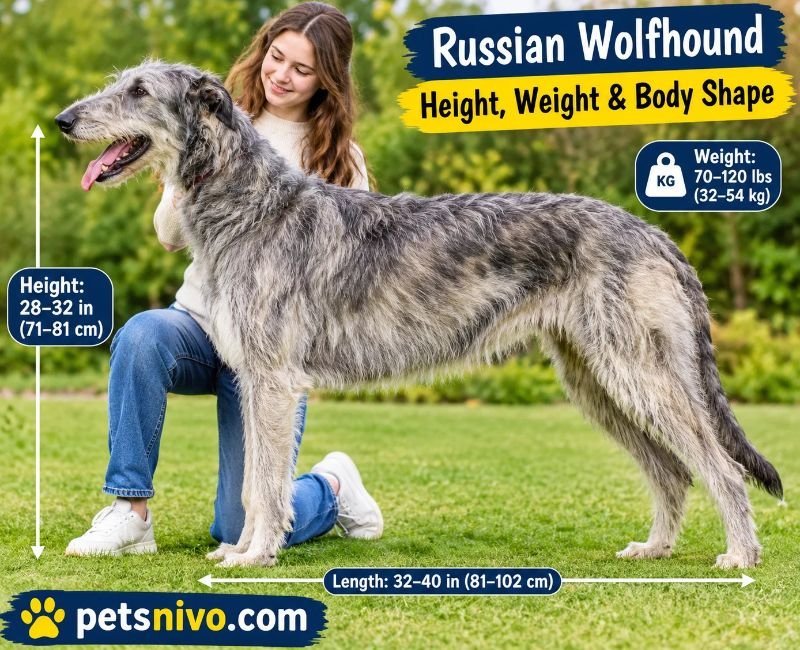
Russian Wolfhound Height and Weight
The Borzoi is a large dog, and adult measurements vary by sex and individual development.
| Feature | General information |
| Male minimum height | About 28 inches (71 cm) under the UKC standard |
| Female minimum height | About 26 inches (66 cm) under the UKC standard |
| Male weight | Approximately 75–105 pounds (34–48 kg) as a general reference |
| Body type | Lean, tall, and athletic |
Height figures follow the Weight can vary, and the figures above are not strict limits for every dog.For accurate information about the Borzoi’s height, weight, appearance, and physical characteristics, readers can consult the official Borzoi breed standard published by the United Kennel Club (UKC).
What Colors Do Russian Wolfhounds Have?
Borzoi coats can be white, cream, gold, red, gray, or combinations of colors. Accepted colors depend on the relevant kennel-club standard.
Do Russian Wolfhounds Shed?
Yes. Their coat sheds throughout the year, and seasonal shedding may become more noticeable.
Brushing several times a week helps remove loose hair and reduce tangles, especially behind the ears and around the legs.
Dog Breed Russian Wolfhound: Temperament and Personality
Are Russian Wolfhounds Calm or Active?
Many Borzois are calm at home after suitable exercise. Outdoors, however, they can show considerable speed and energy when they spot something worth chasing.
The dog breed Russian Wolfhound is known for its calm indoor behavior, independent nature, and strong instinct to chase moving animals.
Are Borzois Affectionate With Their Owners?
Many form strong bonds with their families but may be reserved around unfamiliar people. Their sensitive and independent nature makes gentle handling especially important.
Are Russian Wolfhounds Aggressive?
The breed is not generally defined by aggression. However, every dog has an individual temperament, and early socialization, training, and responsible breeding can influence behavior.
Their prey drive should not be confused with aggression toward people.
Russian Wolfhound as a Family Dog
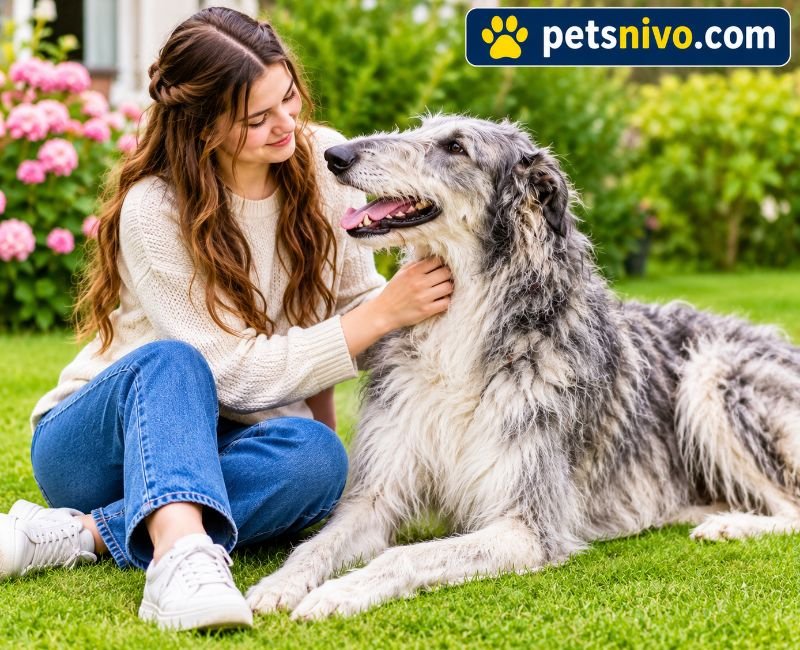
A well-socialized Borzoi can suit a family that understands its needs. Many prefer calm interactions and a comfortable place to rest.
Are They Safe Around Children?
Children should learn to handle the dog gently and respect its space. Because a Borzoi is large and can move quickly, adults should supervise interactions with young children.
Can They Live With Cats?
Some Borzois can coexist with familiar cats, but their strong chasing instinct creates a genuine risk.
Introduce pets carefully, supervise interactions, and provide smaller animals with secure areas. Peaceful coexistence cannot be guaranteed.
Are They Suitable for Homes With Small Pets?
Homes with rabbits or other small animals require particular caution. Discuss your circumstances with a responsible breeder or experienced rescue organization before choosing this breed.
Borzoi Exercise Requirements and Daily Activity
The Borzoi needs regular exercise to support its physical and mental wellbeing. Daily walks, suitable enrichment, and safe opportunities to move freely can help meet these needs.
How Much Exercise Does a Borzoi Need?
Exercise requirements depend on age, health, and fitness. Adult dogs generally benefit from regular walks and opportunities for safe running.
Puppies need age-appropriate activity rather than forced long-distance exercise.
Why Is a Secure Fence Important?
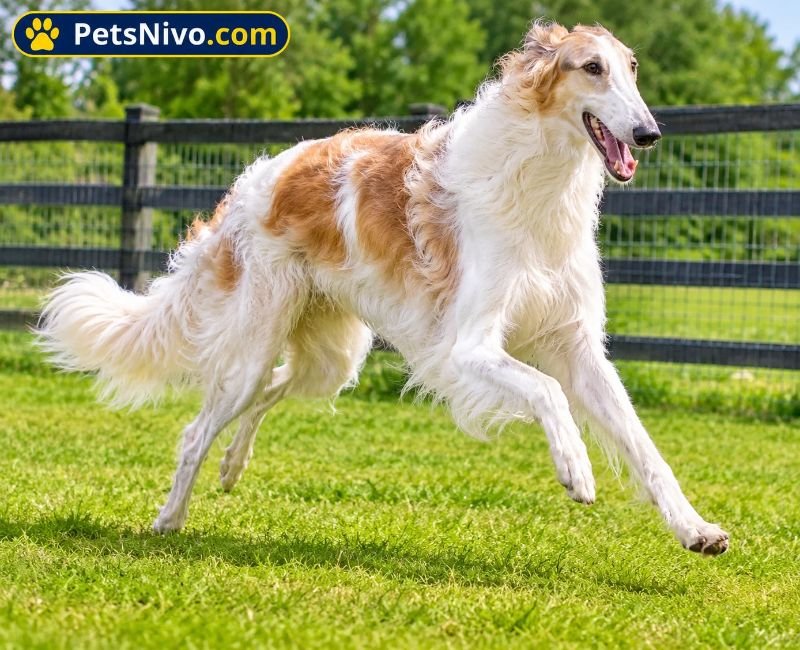
A Borzoi may suddenly chase a squirrel, rabbit, or other moving animal. A securely fenced area helps reduce the risk of running into traffic or becoming lost.
Do not rely on recall alone to keep a Borzoi safe in an open area.
Can a Russian Wolfhound Live in an Apartment?
Yes, apartment living may work if the dog’s exercise and care needs are met. Borzois can settle comfortably indoors, but their large size requires enough room to move and rest.
What Should Apartment Owners Consider?
Before choosing this breed, consider:
- Daily walking opportunities.
- Access to safe outdoor exercise.
- Space for a large dog to rest.
- Your daily schedule and availability.
- Local rules about keeping large dogs.
An apartment is not automatically unsuitable, but insufficient exercise can make ownership more difficult.
Russian Wolfhound Training Tips
Are Borzois Easy to Train?
Borzoi training can be challenging because the breed is intelligent but independent. It may not respond immediately when something more interesting catches its attention.
Which Training Methods Work Best?
Reward-based training, short sessions, and consistent routines are useful approaches.
Start with basic commands, leash manners, calm greetings, and responding to the dog’s name. Practice recall in secure areas before adding distractions.
Can First-Time Owners Train a Borzoi?
Yes, with preparation and realistic expectations. First-time owners may benefit from a qualified trainer familiar with sighthounds.
Harsh corrections can undermine trust, so patient and consistent training is preferable.
Russian Wolfhound Grooming and Coat Care Tips
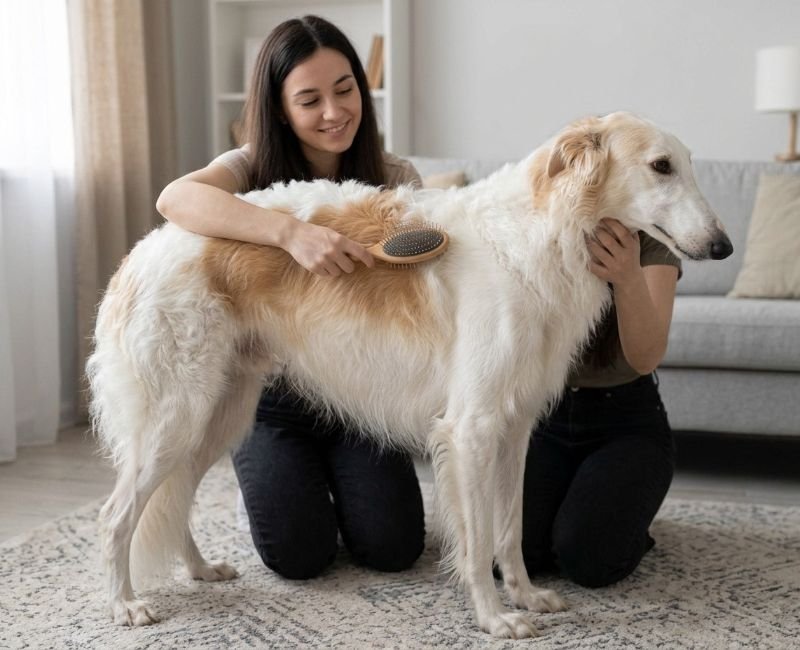
The Borzoi’s silky coat needs regular brushing to remain clean and manageable.
Regular grooming is an important part of caring for the dog breed Russian Wolfhound because its long, silky coat can develop tangles without proper maintenance.
How Often Should You Brush a Borzoi?
Brush several times a week and increase grooming when shedding or tangles become more noticeable. Pay particular attention to feathered areas.
Do Russian Wolfhounds Need Frequent Baths?
Bathing is usually needed when the dog becomes dirty. Use dog-safe products and dry the coat thoroughly.
What Other Grooming Is Necessary?
- Nails: Trim regularly to maintain comfortable movement.
- Teeth: Brush with dog-safe dental products.
- Ears: Check for redness, unusual odor, or discharge.
- Skin and coat: Check for irritation, debris, and tangles.
Starting these routines early can help make grooming less stressful.
Borzoi Health Problems and Life Expectancy
How Long Do Russian Wolfhounds Live?
A general lifespan estimate for the Borzoi is around 9–14 years, although individual dogs may live shorter or longer lives.
Genetics, preventive healthcare, nutrition, and overall lifestyle can influence longevity.
Are Russian Wolfhounds Prone to Bloat?
Gastric dilatation-volvulus (GDV), commonly called bloat, is an important emergency for owners of deep-chested dogs to understand.
Warning signs may include unsuccessful attempts to vomit, restlessness, excessive drooling, and abdominal swelling. Seek emergency veterinary care immediately if GDV is suspected.
What Other Health Issues Should Owners Know About?
Inherited eye disorders and other breed-relevant conditions may be concerns. Ask a responsible breeder about appropriate health screening and family medical history.
Not every Borzoi will develop these conditions.
How Can You Keep a Borzoi Healthy?
Arrange regular veterinary examinations, follow preventive-care recommendations, maintain dental hygiene, and monitor changes in appetite, weight, or behavior.
Discuss appropriate feeding routines and exercise around meals with your veterinarian.
Russian Wolfhound Feeding and Nutrition
What Should a Russian Wolfhound Eat?
Choose a complete, balanced dog food suitable for the dog’s age and life stage. Growing Borzois need nutrition that supports healthy development.
How Much Food Does a Borzoi Need?
The appropriate amount depends on age, weight, activity, body condition, and health. Follow feeding guidance and adjust with veterinary advice.
How Can Owners Maintain a Healthy Weight?
Monitor body condition rather than relying on appetite alone. Provide fresh water and keep treats to a limited portion of the overall diet.
Sudden weight changes or ongoing digestive problems should be discussed with a veterinarian.
Is the Russian Wolfhound Right for You?
The Borzoi may suit people who appreciate a calm indoor companion and can provide regular exercise, grooming, and safe outdoor space.
Before bringing home the dog breed Russian Wolfhound, consider whether you can provide enough exercise, grooming, training, and secure outdoor space.
Is It a Good Choice for First-Time Owners?
It can be, provided the owner understands its independent personality and is prepared to train patiently.
Is It Suitable for Families?
It may suit families that supervise children and respect the dog’s space.
Is It Suitable for People With Cats?
Extra caution is necessary because the breed may chase smaller animals.
Is It a Low-Maintenance Dog?
Not entirely. Its coat requires regular care, and its exercise and safety needs require planning.
What Should You Check Before Getting a Borzoi?
Ask about health history, temperament, behavior around other animals, and the dog’s previous environment. Meeting adult Borzois can help you understand the breed before making a decision.
If you travel frequently or need someone to care for your Borzoi while you are away, choosing a safe and reliable boarding facility is important. Read our guide on overnight dog boarding to understand how to choose comfortable and trustworthy care for your dog.
Choose a dog whose needs fit your household, schedule, and experience.
Frequently Asked Questions About the Russian Wolfhound
What Is the Russian Wolfhound’s Real Name?
It is commonly called the Borzoi.
How Big Does a Russian Wolfhound Get?
Males are generally taller than females, with minimum heights of about 28 and 26 inches, respectively, under the UKC standard.
Are Russian Wolfhounds Aggressive?
They are not generally defined by aggression, but individual temperament and socialization matter.
Are They Good Family Dogs?
They can be suitable for families that provide gentle handling and supervise children.
How Much Exercise Do They Need?
They need regular walks and safe opportunities for physical activity.
Do Russian Wolfhounds Shed?
Yes. Regular brushing helps manage loose hair and tangles.
Can They Live With Cats?
Some can, but their prey drive means careful introductions and supervision are essential.
What Is Their Lifespan?
A broad estimate is around 9–14 years.
Are They Easy to Train?
They can be trained with patience, consistency, and reward-based methods.
How Do They Differ From Russian Shepherds?
The Borzoi is a sighthound bred for speed, while Shepherd may refer to a different breed. Confirm the exact breed being discussed.
Final Thoughts
The Russian Wolfhound, or Borzoi, is an elegant and athletic breed that can make a rewarding companion for a well-prepared owner. Its independent temperament, chasing instinct, grooming needs, and exercise requirements deserve careful consideration.
Research the breed, ask about health screening, and consult experienced breed professionals before adopting or purchasing a dog. Choosing a breed that fits your lifestyle is an important step toward a healthy, long-term relationship.