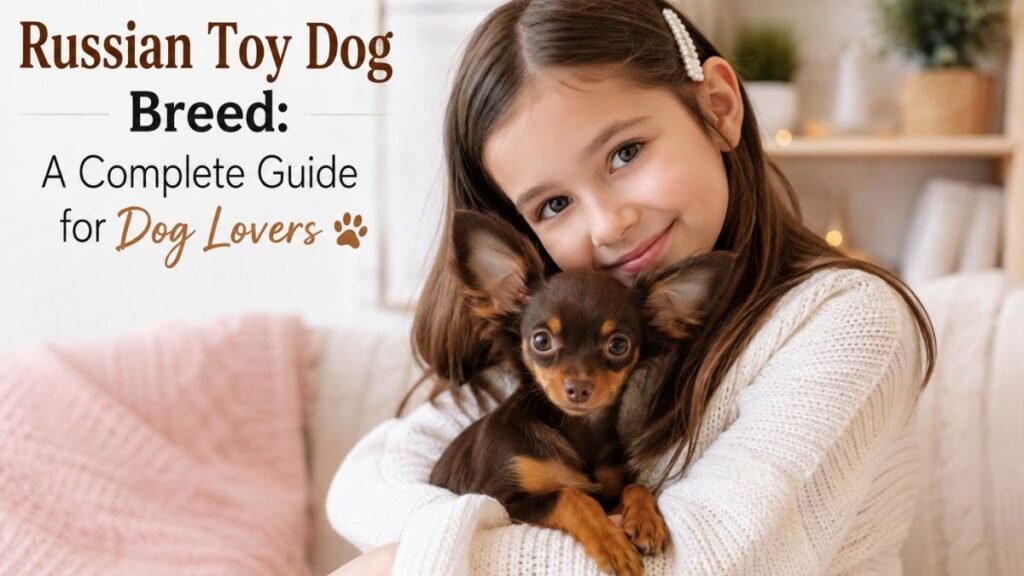
The Russian Toy Dog Breed is a tiny companion dog with a lively personality and an elegant appearance.
Although it is small, this breed is far from being a lazy lapdog. Russian Toys can be playful, alert, affectionate, and very attached to their families.
Their large ears, slim legs, expressive eyes, and small frame give them a distinctive look.
Before bringing one home, it is worth learning about its temperament, exercise, grooming, training, health, and everyday needs.
Table of Contents
- What Is the Russian Toy Dog Breed?
- History and Origin
- Russian Toy Appearance
- Russian Toy Size and Weight
- Coat Types and Colors
- Russian Toy Temperament and Personality
- Exercise and Activity Needs
- Russian Toy Training
- Grooming Requirements
- Feeding and Nutrition
- Russian Toy Health and Common Concerns
- Russian Toy Lifespan
- Russian Toy With Children and Other Pets
- Living With a Russian Toy
- Pros and Cons
- Who Is the Russian Toy Best For?
- Frequently Asked Questions
- Conclusion
What Is the Russian Toy Dog Breed?
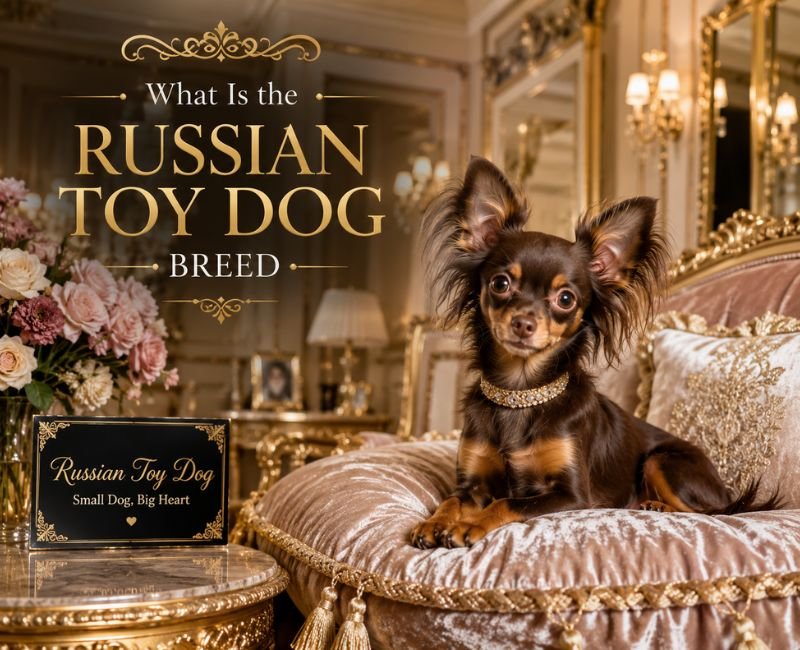
The Russian Toy is a very small companion breed that originated in Russia.
It was developed mainly as a companion rather than as a hunting, herding, or working dog.
Despite its tiny body, the Russian Toy can be active and curious. It usually enjoys playing, going for short walks, and spending time with its owner.
Its small size makes it suitable for many homes, including apartments.
However, being small does not mean the breed needs little care. Russian Toys still require proper training, socialization, nutrition, exercise, and regular veterinary attention.
History and Origin
The history of the Russian Toy is connected with small companion dogs that became popular in Russia.
These dogs were appreciated for their elegant appearance and affectionate nature.
Over time, Russian breeders developed a distinctive type of small companion dog.
The breed went through periods when its numbers became limited. Dedicated breeders continued working to preserve its characteristics.
Eventually, the Russian Toy became better known outside Russia.
It is still less common than some other small breeds, which makes it an interesting choice for people looking for a less familiar companion dog.
Russian Toy Appearance
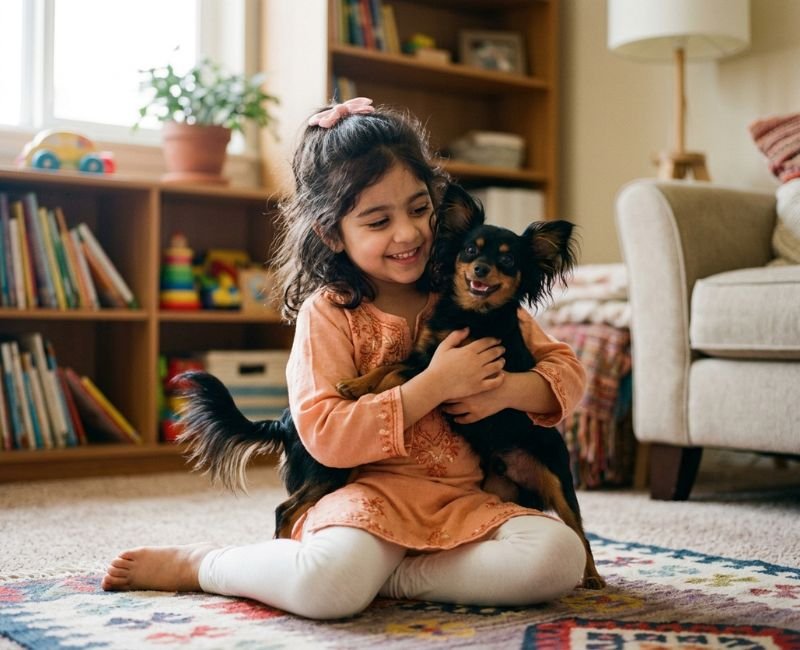
The Russian Toy has a delicate and elegant appearance.
Its body is small and fine-boned, while its legs give it a graceful look.
One of its most recognizable features is its large, upright ears.
These ears give the dog an alert expression and help distinguish it from many other toy breeds.
The eyes are also expressive and contribute to its charming appearance.
Despite looking delicate, a healthy Russian Toy should be active, alert, and confident.
Russian Toy Size and Weight
The Russian Toy is a genuinely tiny dog.
Its compact size is one of the main reasons people choose this breed.
A small dog can be easier to accommodate in an apartment or smaller home.
However, its tiny body also means owners need to be careful.
Rough play, high jumps, accidental falls, or interactions with much larger dogs can create unnecessary risks.
Puppies especially need careful handling while they are growing.
Coat Types and Colors
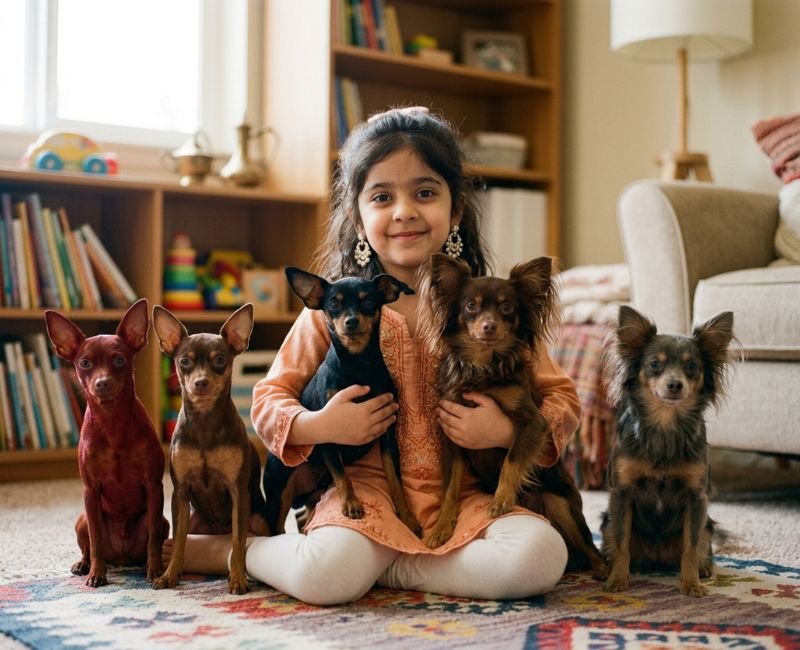
The Russian Toy has two main coat varieties: smooth-coated and long-coated.
The smooth-coated variety has short hair that lies close to the body.
Its coat is relatively easy to maintain and usually needs only basic grooming.
The long-coated variety has longer hair with feathering around the ears, legs, and tail.
This longer coat gives the dog a softer and more decorative appearance.
Russian Toys can be found in several colors, including black and tan, brown and tan, blue and tan, and different red shades.
The exact colors recognized can depend on the breed standard being followed.
Russian Toy Temperament and Personality
The Russian Toy may be tiny, but its personality can be surprisingly big.
These dogs often form strong bonds with their owners.
They may follow family members around the house because they enjoy being part of everyday activities.
Russian Toys can also be alert and vocal.
They may bark when they hear an unfamiliar sound or notice a new person.
Early socialization can help them become more comfortable with different people, sounds, places, and situations.
They are generally playful and curious.
However, individual personalities can vary. Some Russian Toys may be outgoing, while others can be more cautious around strangers.
Exercise and Activity Needs
The Russian Toy does not require hours of intense exercise.
However, it still needs regular movement and play.
Short walks can provide useful physical activity.
Indoor games are another good option, especially when the weather is unpleasant.
Mental stimulation is important too.
Simple training exercises, toys, and safe opportunities to explore can help keep the dog’s mind active.
Because the Russian Toy is so small, exercise should be appropriate for its size and physical ability.
A balanced routine of walking, playing, training, and resting is usually a good approach.
Russian Toy Training
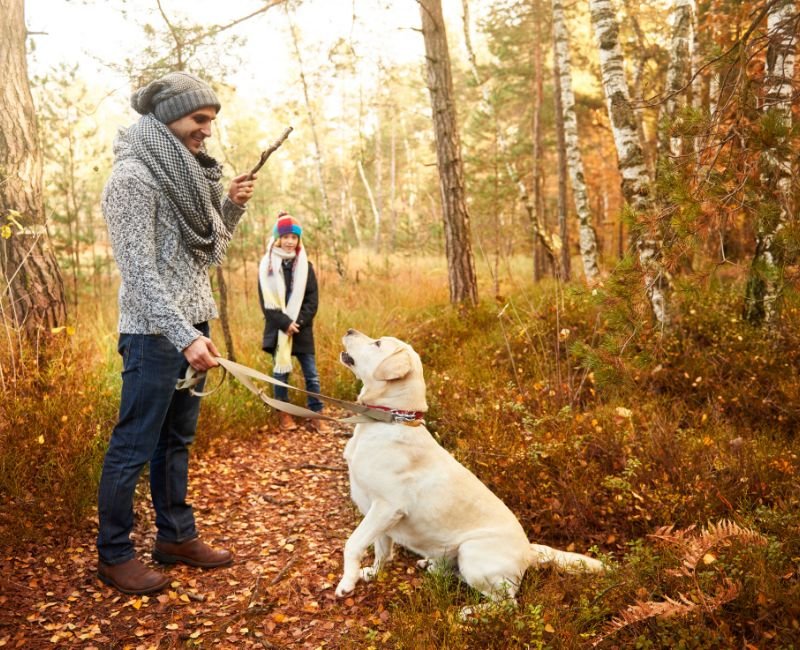
Training should begin when the dog is young.
Russian Toys can learn basic commands such as sit, stay, come, down, and leave it.
Positive reinforcement can make training more enjoyable.
When the dog performs the desired behavior, praise or an appropriate reward can encourage it to repeat that behavior.
Consistency is equally important.
Family members should use similar commands and rules so the dog does not become confused.
House training may require patience.
A regular routine can help a puppy understand when and where it should go.
Socialization should also be part of training.
A well-socialized Russian Toy may feel more confident in unfamiliar environments.
Grooming Requirements
Grooming needs depend on the coat type.
Smooth-coated Russian Toys generally have simple grooming requirements.
Regular brushing can help remove loose hair and keep the coat clean.
Long-coated Russian Toys need more attention.
Their longer hair, particularly around the ears and legs, can become tangled if it is not brushed regularly.
Bathing should be done when needed rather than too frequently.
Owners should also check the ears and keep the nails at a comfortable length.
Dental care is important as well.
Regular tooth brushing and routine veterinary dental checks can help support good oral health.
Feeding and Nutrition
A Russian Toy needs a balanced diet suitable for its age, size, and activity level.
Puppies have different nutritional requirements from adult dogs.
Food should therefore be chosen according to the dog’s life stage.
Portion control is especially important for such a small breed.
Even a small amount of extra food can represent a significant part of a tiny dog’s daily intake.
Treats can be useful during training, but they should be given in moderation.
Fresh drinking water should always be available.
If you change your dog’s food, make the change gradually.
For individual feeding advice, a veterinarian can recommend suitable portions based on the dog’s needs.
Russian Toy Health and Common Concerns
Like all dog breeds, Russian Toys can experience health problems.
Their small size also means that accidental injuries deserve special attention.
Dental problems can occur in small dogs.
Regular dental care can help maintain healthy teeth and gums.
Some Russian Toys may also experience orthopedic concerns, including kneecap problems.
Responsible breeding can help reduce the risk of certain inherited conditions.
Regular veterinary examinations are another important part of responsible ownership.
Owners should pay attention to changes in appetite, energy, movement, or behavior.
A safe home is particularly important for a tiny dog.
Reducing the risk of falls, accidental stepping, and rough interactions with larger animals can help keep the dog safer.
Russian Toy Lifespan
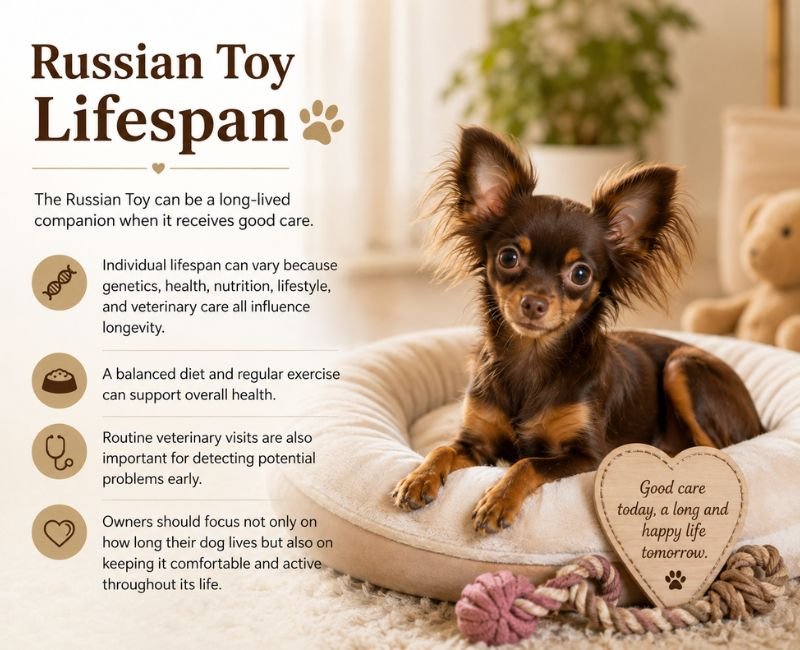
The Russian Toy can be a long-lived companion when it receives good care.
Individual lifespan can vary because genetics, health, nutrition, lifestyle, and veterinary care all influence longevity.
A balanced diet and regular exercise can support overall health.
Routine veterinary visits are also important for detecting potential problems early.
Owners should focus not only on how long their dog lives but also on keeping it comfortable and active throughout its life.
Russian Toy With Children and Other Pets
A Russian Toy can be a loving family companion.
However, its tiny body requires extra care around children.
Older children who understand how to handle a small dog gently may enjoy having one as a pet.
Very young children should always be supervised.
A child could accidentally drop or handle a tiny dog too roughly without understanding the potential danger.
Russian Toys can also live with other pets when introductions are handled carefully.
Interactions with much larger dogs should always be supervised because of the Russian Toy’s small size.
Early socialization can help the dog become more comfortable around other animals.
Living With a Russian Toy
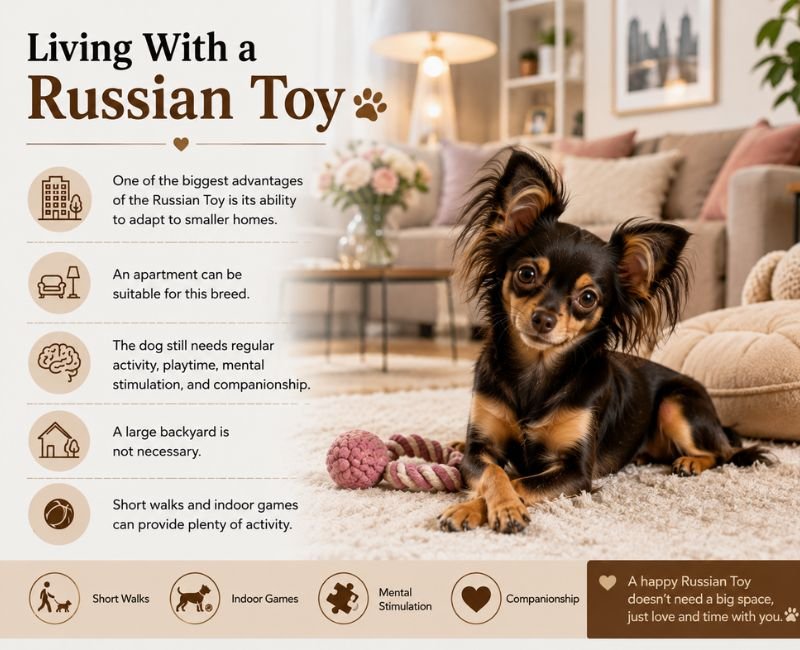
One of the biggest advantages of the Russian Toy is its ability to adapt to smaller homes.
An apartment can be suitable for this breed.
The dog still needs regular activity, playtime, mental stimulation, and companionship.
A large backyard is not necessary.
Short walks and indoor games can provide plenty of activity.
Home safety is important, though.
Stairs, high furniture, open doors, and larger pets can create potential hazards for such a small dog.
Russian Toys can also become strongly attached to their owners.
People who spend most of the day away from home should consider whether they can provide enough companionship.
Pros and Cons
Pros
- Very small and easy to accommodate
- Affectionate and people-oriented
- Playful and alert
- Suitable for many apartments
- Intelligent and trainable
- Does not need intense exercise
- Available in smooth and long coat varieties
Cons
- Physically delicate because of its small size
- Can be vocal
- May become very attached to its owner
- Needs proper socialization
- Long-coated dogs require more brushing
- Not ideal for rough play
Who Is the Russian Toy Best For?
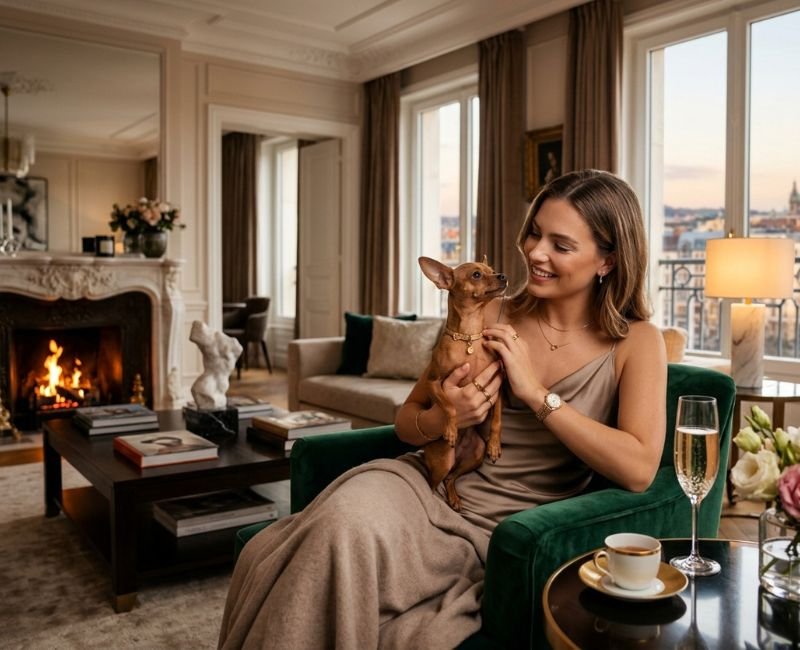
The Russian Toy can be a good choice for someone who wants a small companion and enjoys spending time with their dog.
It may suit apartment residents, couples, individuals, and families with older children.
It is particularly appealing to owners who want an affectionate dog that enjoys being involved in daily life.
However, it may not be the best choice for someone looking for a highly independent pet.
It may also be unsuitable for households where young children or large pets could accidentally handle a tiny dog roughly.
Before choosing this breed, consider your lifestyle, available time, living environment, and ability to provide consistent care.
Frequently Asked Questions
1. Is the Russian Toy a good family dog?
Yes, it can be a loving family companion when handled gently.
2. Is the Russian Toy easy to train?
Yes, it is intelligent and usually responds well to positive training.
3. Does the Russian Toy need much exercise?
No, short walks and regular play are generally suitable.
4. How long does a Russian Toy live?
A healthy Russian Toy can often live into its teenage years.
5. Is the Russian Toy good for apartments?
Yes, its small size makes it well suited to apartment living.
Conclusion
The Russian Toy Dog Breed is a tiny companion with a lively personality and elegant appearance.
Its small size makes it practical for many homes, but it still needs proper care, training, socialization, exercise, and attention.
The breed can be affectionate, playful, and strongly connected to its family.
At the same time, its delicate body means owners need to provide a safe environment and handle it carefully.
For the right owner, the Russian Toy can be a wonderful companion.
With responsible care and plenty of companionship, this little Russian breed can bring a lot of energy and affection into a home.