
When a dog becomes nervous, frightened, or stressed, it can be difficult for an owner to know what to do.
Some dogs struggle during thunderstorms. Others become anxious during car rides, vet visits, fireworks, or unfamiliar situations.
One medication that veterinarians may use in these situations is trazodone for dogs.
Trazodone is a prescription medication that can have calming and sedating effects. Veterinarians may recommend it for certain anxiety-related problems or stressful situations.
However, it is not suitable for every dog.
Before using trazodone, it is important to understand what it does, why a veterinarian may prescribe it, what side effects can occur, and what safety precautions matter.
What Is Trazodone for Dogs?
Trazodone is a medication that affects serotonin activity in the nervous system.
Serotonin is a chemical messenger involved in mood and behavior, among other functions.
In veterinary medicine, trazodone may be used to help some dogs cope with anxiety, fear, and stressful events.
It may also be considered when a dog needs to remain calm during a recovery period.
Although trazodone is commonly discussed as a calming medication, it should not be treated like an ordinary supplement.
It should be used only according to veterinary advice.
Why Do Veterinarians Use Trazodone?

Dogs can become anxious for many different reasons.
A dog may become frightened by loud sounds, unfamiliar people, traveling, veterinary procedures, or changes at home.
In some situations, anxiety can become difficult for both the dog and owner to manage.
A veterinarian may consider trazodone when a dog needs help staying calmer during a specific stressful event.
The decision depends on the dog’s individual health and behavior.
Common Reasons a Dog May Receive Trazodone
Veterinarians may consider trazodone for situations such as:
- Veterinary appointments
- Travel-related stress
- Thunderstorms
- Fireworks
- Certain fear-related problems
- Short-term stressful events
- Recovery after surgery or injury
Not every dog with these problems needs medication.
Sometimes environmental changes and behavior training may be enough.
How Does Trazodone Work?
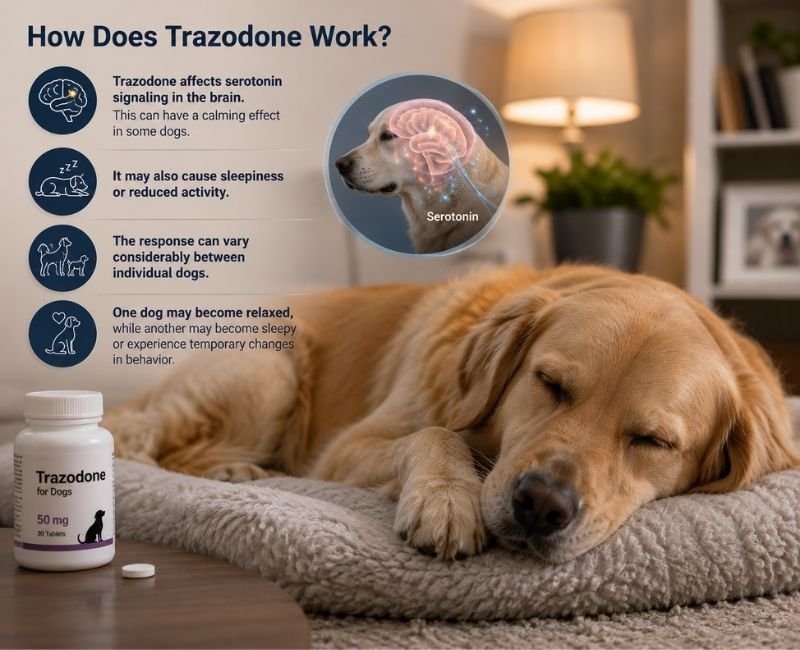
Trazodone affects serotonin signaling in the brain.
This can have a calming effect in some dogs.
It may also cause sleepiness or reduced activity.
The response can vary considerably between individual dogs.
One dog may become relaxed, while another may become sleepy or experience temporary changes in behavior.
This is why a veterinarian should be involved in the treatment plan.
How Quickly Can Trazodone Work?
Trazodone can have a relatively fast effect compared with some medications used for ongoing behavioral problems.
Veterinary references commonly describe effects beginning within a few hours.
The exact timing can vary from dog to dog.
Health, other medications, the reason for treatment, and individual sensitivity can all influence the response.
Dog owners should follow the instructions provided by their veterinarian.
Trazodone for Dogs With Anxiety
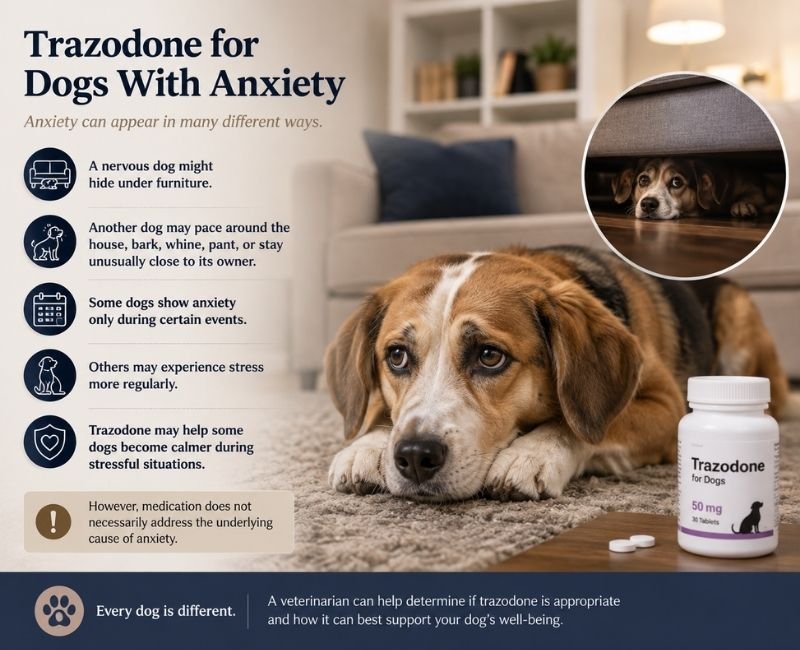
Anxiety can appear in many different ways.
A nervous dog might hide under furniture.
Another dog may pace around the house, bark, whine, pant, or stay unusually close to its owner.
Some dogs show anxiety only during certain events.
Others may experience stress more regularly.
Trazodone may help some dogs become calmer during stressful situations.
However, medication does not necessarily address the underlying cause of anxiety.
That is why behavior support is often important too.
Trazodone for Veterinary Visits
For some dogs, visiting a veterinary clinic can be overwhelming.
New smells, unfamiliar animals, strange sounds, and physical handling can all create fear.
A very anxious dog may have difficulty remaining calm enough for an examination.
In appropriate cases, a veterinarian may include trazodone in a pre-visit plan.
The purpose is to reduce stress and make the appointment easier for the dog and veterinary team.
Trazodone for Car Travel
Some dogs enjoy car rides.
Others become nervous as soon as they see the car.
Travel anxiety may cause whining, panting, pacing, trembling, or other signs of stress.
If your dog becomes extremely anxious during travel, discuss the problem with a veterinarian.
A treatment plan may involve medication along with gradual training and a more comfortable travel environment.
Trazodone for Thunderstorm Anxiety

Thunderstorms can be particularly frightening for sensitive dogs.
The sudden noise and changes in the environment may trigger a strong fear response.
Some dogs hide when a storm begins.
Others pace, bark, tremble, or try to stay close to their owners.
If storms consistently cause severe anxiety, speak with your veterinarian before the next storm season.
A veterinarian can help you develop a safe plan for managing the problem.
Trazodone for Firework Anxiety
Fireworks can produce loud and unpredictable sounds.
Dogs may have little warning before a sudden noise occurs.
This can make fireworks especially stressful for dogs that are sensitive to sound.
If your dog becomes highly anxious around fireworks, do not wait until the event begins to ask for help.
Talk to your veterinarian in advance.
A calm indoor area, reduced noise, familiar bedding, and other environmental strategies may also help.
Trazodone During Recovery

After surgery or an injury, some dogs want to return to normal activity quickly.
Running and jumping, however, may interfere with recovery in certain situations.
A veterinarian may sometimes consider trazodone when a dog needs help staying calmer during restricted activity.
The purpose is not simply to keep the dog sleepy.
It can be part of a larger recovery plan when the veterinarian believes it is appropriate.
Common Side Effects of Trazedon.
Possible side effects include:
- Sleepiness
- Reduced coordination
- Vomiting
- Diarrhea
- Panting
- Restlessness
- Agitation
- Changes in behavior
- Increased anxiety in some dogs
A dog may not experience any side effects at all.
Another dog may be more sensitive to the medication.
If you notice something unusual after your dog receives trazodone, contact your veterinarian.
Can Trazodone Make Dogs Sleepy?
Yes, sleepiness can occur.
This is partly related to the medication’s calming effects.
Some dogs may appear quieter or less active than usual.
Mild sleepiness may be expected when the medication is prescribed for a particular situation.
However, if your dog seems excessively sedated, has significant difficulty walking, or behaves in a concerning way, contact your veterinarian.
Can Trazodone Cause Stomach Problems?

Some dogs may develop digestive symptoms.
Vomiting and diarrhea are among the possible side effects.
A single mild symptom does not always mean that a serious problem is occurring.
Still, ongoing or severe digestive problems should be discussed with a veterinarian.
Your veterinarian can tell you whether the medication should be continued or adjusted.
Can Trazodone Cause Restlessness?
Although trazodone is generally used for calming purposes, some dogs may show restlessness or agitation.
This is one reason owners should observe their dogs after a new medication is introduced.
If your dog becomes unusually restless or seems more anxious, contact the veterinarian who prescribed the medication.
Is Trazodone Safe for All Dogs?
No medication is suitable for every dog.
A veterinarian may consider several factors before recommending trazodone.
These can include the dog’s age, overall health, medical history, current medications, and the reason for anxiety.
Existing health problems may also influence the treatment decision.
This is why medication should not be shared between pets.
Why You Should Not Give Human Trazodone to a Dog on Your Own
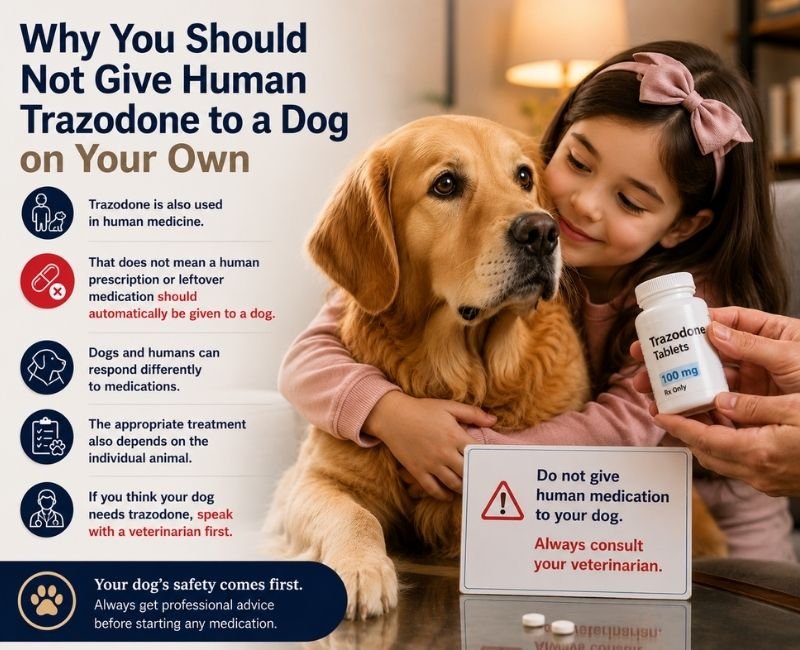
Trazodone is also used in human medicine.
That does not mean a human prescription or leftover medication should automatically be given to a dog.
Dogs and humans can respond differently to medications.
The appropriate treatment also depends on the individual animal.
If you think your dog needs trazodone, speak with a veterinarian first.
Trazodone and Other Medications
Drug interactions are an important part of medication safety.
Some medicines and supplements can affect serotonin.
Using multiple medications that influence serotonin can increase the risk of serious reactions.
For this reason, your veterinarian should know about everything your dog is currently taking.
This includes prescription medications, over-the-counter products, and supplements.
What Is Serotonin Syndrome?
Serotonin syndrome is a potentially serious reaction involving excessive serotonin activity.
It can occur when certain medications or combinations of medications affect serotonin too strongly.
Possible warning signs may include unusual agitation, changes in coordination, gastrointestinal symptoms, abnormal body temperature, or other significant changes.
If you suspect a serious medication reaction, contact a veterinarian promptly.
Does Trazodone Cure Anxiety?
Trazodone does not necessarily cure the underlying cause of anxiety.
It may help reduce anxiety or make a stressful situation easier for some dogs.
But the reason behind the anxiety still matters.
For example, a dog with noise sensitivity may need a combination of medication, environmental management, and gradual behavior training.
The best approach depends on the individual dog.
Trazodone and Behavior Training

Medication can sometimes make behavior training easier.
A highly anxious dog may struggle to learn when it is extremely frightened.
If anxiety is reduced, the dog may be better able to respond to positive training.
Training should be gentle and gradual.
Punishing a fearful dog is generally not a good way to address anxiety.
A veterinarian or qualified animal behavior professional can help with a suitable plan.
How Can Owners Help an Anxious Dog?
There are several simple ways to make a stressful environment more comfortable.
Give your dog a quiet place to retreat.
Keep a predictable daily routine when possible.
During loud events, close windows and reduce unnecessary noise.
Some dogs also feel more comfortable with familiar bedding or toys nearby.
Most importantly, pay attention to what triggers your dog’s anxiety.
Understanding the trigger can make it easier to manage the problem.
What Should You Tell Your Veterinarian?
Before your dog starts trazodone, provide your veterinarian with complete information.
Mention any:
- Current medications
- Supplements
- Medical conditions
- Previous medication reactions
- Behavioral problems
- Known anxiety triggers
Even information that seems unrelated can sometimes be important.
A complete history helps your veterinarian make a safer decision.
Can Trazodone Be Used Long Term?
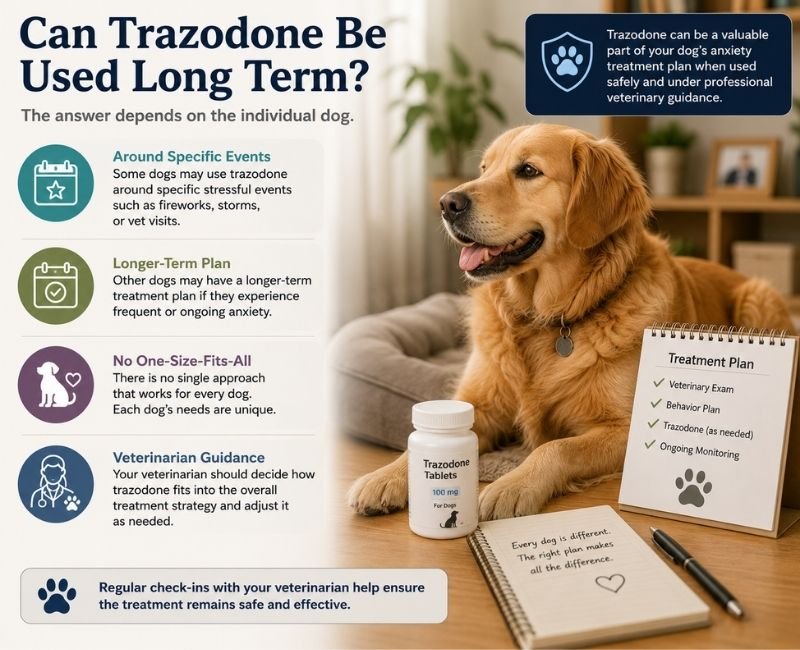
The answer depends on the individual dog.
Some dogs may use trazodone around specific stressful events.
Other dogs may have a longer-term treatment plan.
There is no single approach that works for every dog.
Your veterinarian should decide how trazodone fits into the overall treatment strategy.
What Happens If Trazodone Does Not Help?
Not every dog responds to medication in the same way.
If your dog does not seem to improve, tell your veterinarian.
Do not increase the amount or change the treatment schedule yourself.
The veterinarian may need to reassess the cause of the anxiety or consider other treatment options.
Sometimes the problem is behavioral, environmental, medical, or a combination of several factors.
When Should You Contact a Veterinarian?
Contact your veterinarian if your dog develops unusual symptoms after taking trazodone.
You should also seek advice if your dog’s anxiety becomes worse or the medication does not appear to be helping.
Severe or rapidly developing symptoms require prompt veterinary attention.
It is always safer to ask than to guess when medication is involved.
Frequently Asked Questions
What is trazodone for dogs used for?
Veterinarians may use trazodone to help some dogs with anxiety, fear, stress, veterinary visits, travel, loud noises, or recovery-related rest.
Does trazodone calm dogs?
It can have calming and sedating effects in some dogs. The response varies between individual animals.
Can trazodone make my dog sleepy?
Yes. Sleepiness is a possible effect. If sedation seems excessive or concerning, contact your veterinarian.
How long does trazodone take to work?
It may begin to have an effect within a few hours, although the timing varies between dogs.
Can trazodone cause side effects?
Yes. Possible effects include sleepiness, reduced coordination, vomiting, diarrhea, panting, restlessness, and behavioral changes.
Can I give my dog trazodone without a veterinarian?
No. A veterinarian should determine whether trazodone is appropriate for your dog.
Can trazodone be used with other medications?
Sometimes it may be used alongside other treatments, but certain combinations can cause harmful interactions. Always tell your veterinarian about other medications and supplements.
Is trazodone a cure for dog anxiety?
No. It may help manage symptoms in some situations, but behavior modification and environmental changes may also be needed.
Final Thoughts
Trazodone for dogs can be a useful veterinary medication for certain anxiety and stress-related situations.
It may be considered for veterinary visits, travel, thunderstorms, fireworks, or periods when a dog needs to remain calm during recovery.
However, every dog is different.
The medication can cause side effects and may interact with other medicines. That is why it should only be used according to veterinary advice.