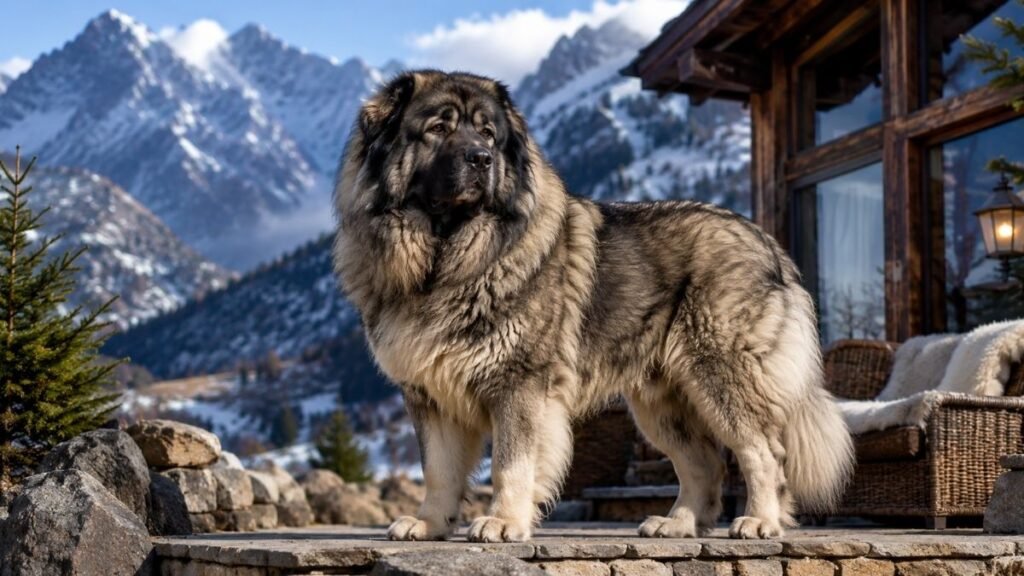
The Russian Mountain Dog, also known as the Caucasian Shepherd or Caucasian Ovcharka, is a giant guardian breed known for its thick coat, powerful build, and fierce loyalty. Originally bred to protect livestock in the Caucasus Mountains, this dog is now valued worldwide as a serious watchdog and family protector.
Here’s a quick, easy-to-read guide covering everything you need to know before considering this breed.
Table of Contents
- What Is a Russian Mountain Dog?
- History and Origin
- Appearance
- Temperament
- Living and Space Needs
- Training Tips
- Health and Lifespan
- Grooming and Diet
- Pros and Cons
- Conclusion
- FAQs
What Is a Russian Mountain Dog?
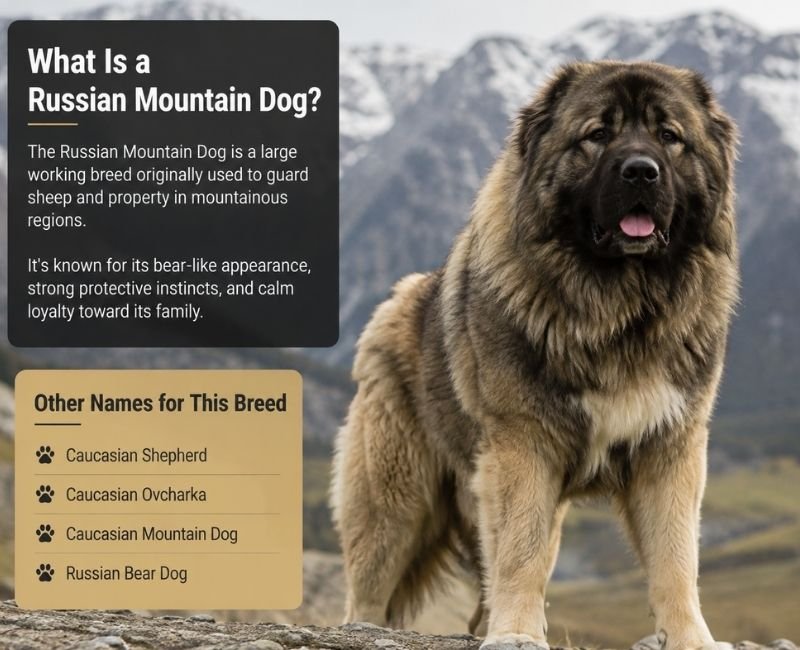
the Russian Mountain Dog was a large working breed used to guard sheep and property in mountainous regions. It’s known for its bear-like appearance, strong protective instincts, and calm loyalty toward its family.
Other Names for This Breed
- Caucasian Shepherd
- Caucasian Ovcharka
- Caucasian Mountain Dog
- Russian Bear Dog
History and Origin
Today, the breed remains rare outside Eastern Europe. However, it is gaining popularity among owners looking for a serious guardian dog.
For centuries, shepherds used these dogs to protect livestock from wolves and other predators.
Soviet-Era Development
Today, the breed remains rare outside Eastern Europe. However, it is gaining popularity among owners looking for a serious guardian dog.During the Soviet era, breeders standardized the dog by combining mountain-type and steppe-type dogs. It was later also used for property and prison security across Rusion dog.
Appearance
- Height: 27–30 inches (males), slightly smaller for females
- Weight: 100–170 lbs
- Coat: Thick double coat, short or long
- Colors: White, gray, tan, red, cream, brindle
Coat and Build
In addition, their large head, muscular body, and heavy fur give them a bold, bear-like look. As a result, they are well suited to harsh mountain winter
Temperament
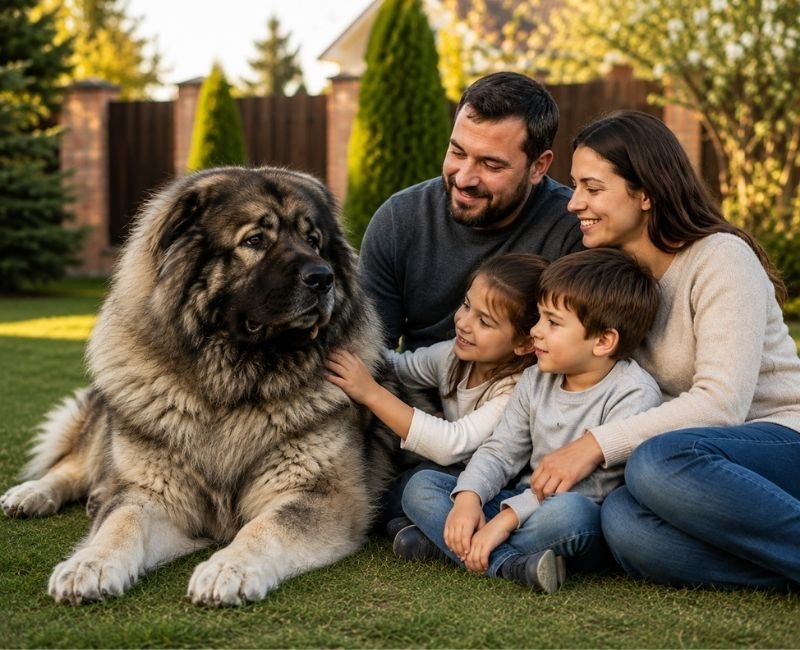
Russian Mountain Dogs are independent, confident, and highly protective. They’re affectionate with their own family. However, they’re naturally cautious around strangers and other animals.
Behavior With Family
They tend to be calm and gentle with people they trust, often forming a strong bond with one household.
Behavior With Strangers and Other Pets
Therefore, early socialization is essential to help balance their guarding instinct around visitors and unfamiliar animals.
Living and Space Needs
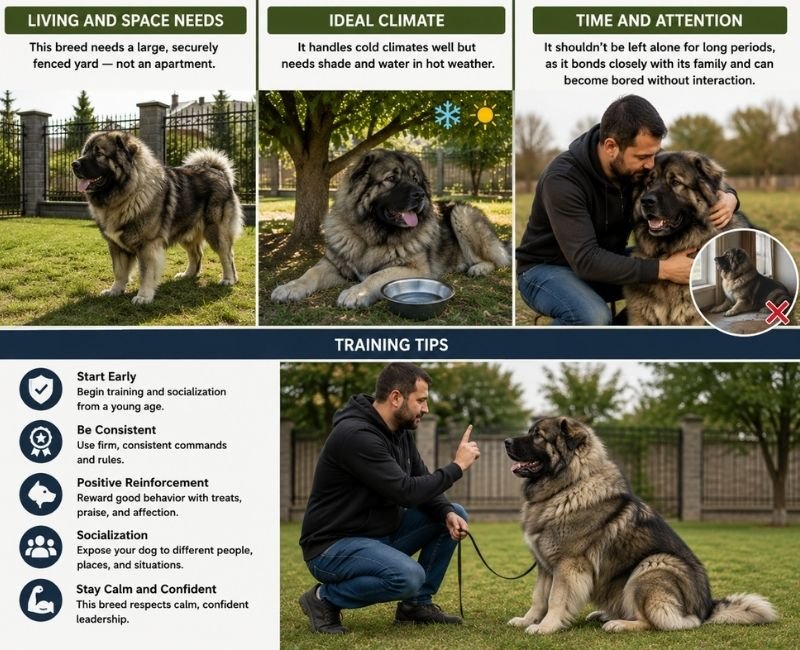
This breed needs a large, securely fenced yard — not an apartment.
Ideal Climate
Although it handles cold climates well, it still needs shade and plenty of water in hot weather.
Time and Attention
It shouldn’t be left alone for long periods, as it bonds closely with its family and can become bored without interaction.
Training Tips
For this reason, start training and socialization early using positive reinforcement.
What to Avoid
Instead, use calm and consistent training because harsh or forceful methods can backfire with this independent breed.
Who Should Own This Breed
Because of its size and strong will, this dog is best suited for experienced owners, not beginners.
Health and Lifespan
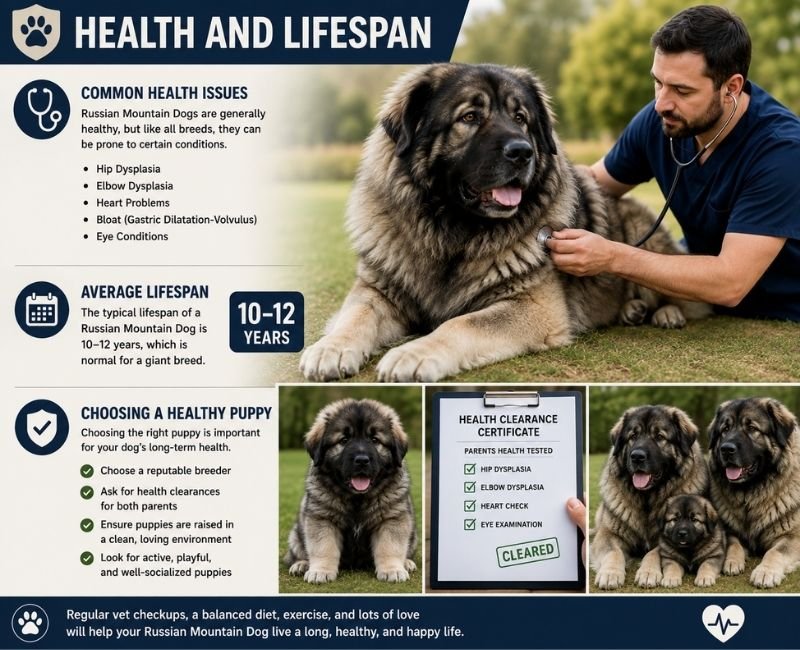
Like many giant breeds, Russian Mountain Dogs can develop certain health problems, including hip and elbow dysplasia and heart issues.
Average Lifespan
Overall, their typical lifespan is around 10–12 years, which is common for a giant breed.
Choosing a Healthy Puppy
Pick a breeder who provides health clearances for both parents.
Grooming and Diet
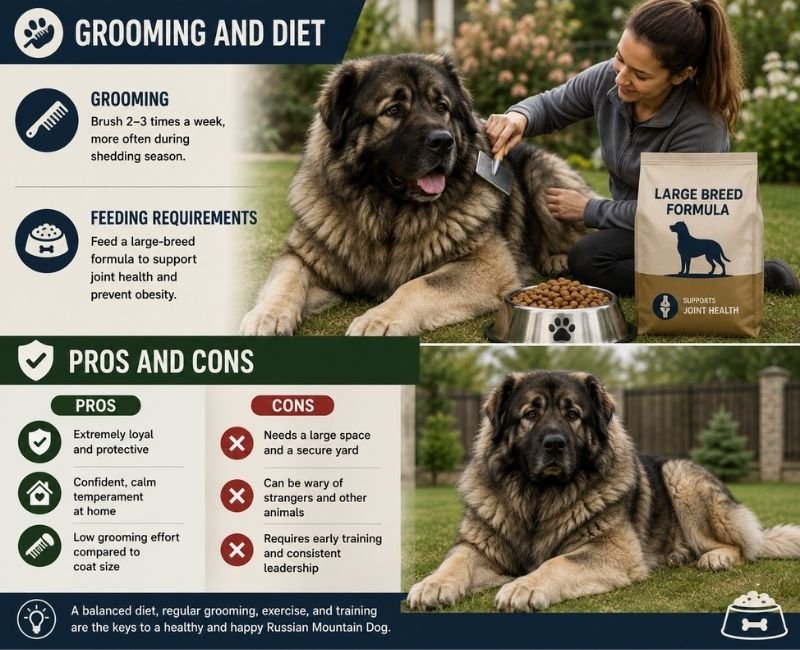
Generally, brush the coat 2–3 times a week. During shedding season, more frequent brushing may be helpful.
Feeding Requirements
In addition, feed a suitable large-breed formula to support healthy growth and joints while helping maintain a healthy weight.
Pros and Cons
Pros:
- Extremely loyal and protective
- Confident, calm temperament at home
- Low grooming effort compared to coat size
Cons:
- Not beginner-friendly
- Needs large space
- Cautious around strangers and other pets
Conclusion
Overall, the Russian Mountain Dog is a powerful, loyal, and highly protective breed best suited for experienced owners with enough space and time for proper training. However, it is not the right choice for first-time owners or small homes. For the right family, this breed can become a devoted guardian and companion. Therefore, anyone considering this dog should understand its size, temperament, training needs, and daily care requirements before making a decision. It’s not the right fit for first-time owners or small homes, but for the right family, it becomes an unmatched guardian and companion. If you’re ready for the responsibility, this breed offers loyalty that few others can match.
FAQs
Is the Russian Mountain Dog the same as the Caucasian Shepherd? Yes, they’re the same breed with different names.
How big do they get? Males reach 27–30 inches and up to 170 lbs.
Are they good with kids? Yes, with supervision and proper socialization.
Do they get along with other dogs? Usually not; they’re territorial by nature.
How much exercise do they need? Moderate daily exercise is enough.
Good for beginners? No, they need experienced owners.
Best climate for them? Cooler climates suit them best.
How long do they live? Typically 10–12 years.