The Russian Hound Dog is a fascinating hunting breed known for its strong sense of smell, stamina, and ability to follow a scent over long distances. This type of hound has a long connection with hunting traditions in Russia and has been valued for its working ability rather than only its appearance.
For people interested in Russian dog breeds, the Russian Hound is worth learning about. It has an active nature and needs regular exercise, training, and enough space to stay happy.
This guide explains the Russian Hound Dog’s history, appearance, temperament, care needs, training, and suitability for family life.
What Is a Russian Hound Dog?
The Russian Hound Dog is a scent hound traditionally associated with hunting in Russia. It was developed to help hunters locate and follow game by using its powerful sense of smell.
Unlike companion breeds that were mainly developed for life inside the home, this Russian hunting dog has strong working instincts. It enjoys activities that allow it to walk, explore, and use its natural scenting abilities.
Because of its background, owners should understand that regular physical and mental activity is an important part of caring for this type of dog.
History and Origin

The history of Russian Hounds is closely connected with hunting traditions in Russia. Hunters needed dogs that could work over large areas and continue following a scent for considerable distances.
Over time, different hound types were used for various hunting purposes. Russian Hounds became known for their endurance, scenting ability, and distinctive working style.
Their history also helps explain their behavior today. A dog bred for hunting may naturally want to investigate interesting smells, explore its surroundings, and remain active for long periods.
Appearance and Physical Features
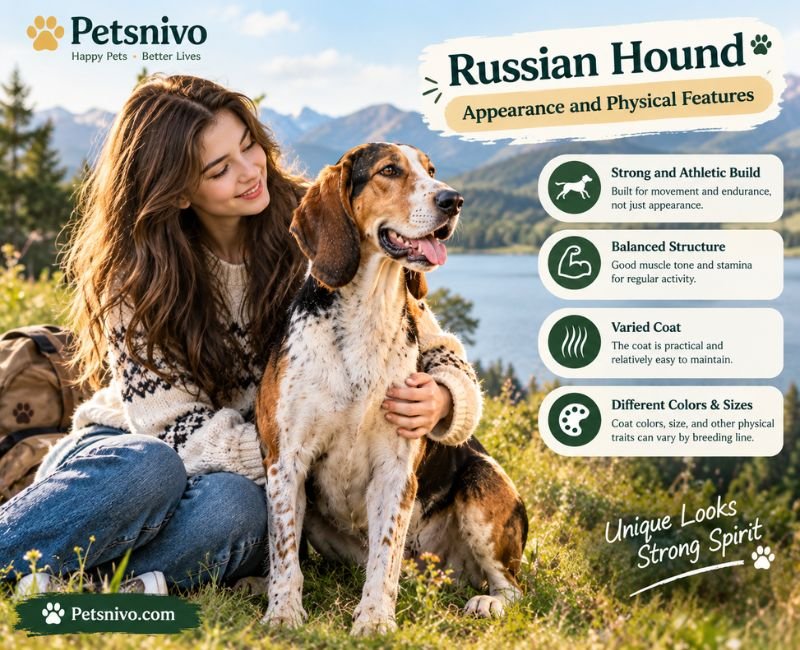
The appearance of a Russian Hound can vary depending on the specific type and breeding line. However, these dogs generally have a strong and athletic build suited to active work.
Their bodies are designed for movement and endurance rather than simply looking decorative. A healthy Russian Hound should have a balanced appearance, good muscle tone, and enough stamina for regular activity.
The coat is generally practical and relatively easy to maintain. Exact coat color, size, and physical characteristics can vary, so anyone considering one should look carefully at the particular breeding line.
Russian Hound Temperament
The Russian Hound temperament is strongly influenced by its working background. These dogs can be energetic, determined, alert, and highly interested in scents.
They may become very focused when they discover an interesting smell. This natural instinct can sometimes make outdoor walks challenging if the dog has not learned reliable recall.
At home, a well-exercised dog may be calm and pleasant. However, boredom can lead to unwanted behaviors, especially when the dog’s physical and mental needs are ignored.
Early socialization can help a Russian Hound become more comfortable around different people, animals, sounds, and environments.
Exercise and Activity Needs

Exercise is one of the most important parts of Russian Hound care.
A simple short walk may not always be enough for an active hound. Depending on the individual dog, it may benefit from longer walks, supervised outdoor activities, scent games, and other forms of exercise.
Mental stimulation is also useful. You can hide treats around a safe area and allow your dog to search for them. Simple scent-based games can provide an enjoyable way to use its natural abilities.
When exercising a Russian Hound outside, a secure area is important because a strong scent can quickly capture its attention.
Grooming Requirements

The grooming needs of a Russian Hound are usually manageable compared with some long-coated breeds.
Regular brushing can help remove loose hair and keep the coat clean. The frequency depends on the dog’s coat and shedding pattern.
Owners should also check the ears regularly. Dogs with hanging or partially hanging ears can sometimes collect moisture and dirt, so keeping the ears clean and dry is an important part of general care.
Nails should be trimmed when needed, and teeth should be cared for regularly as part of a normal grooming routine.
Feeding and Basic Care
A Russian Hound needs a balanced diet that matches its age, activity level, and individual needs.
Puppies, adults, and older dogs do not always have the same nutritional requirements. It is therefore better to choose food according to the dog’s life stage rather than simply feeding the same diet throughout its life.
Fresh water should always be available.
Portion sizes should also be appropriate. If you are unsure about the right food or amount for your dog, a veterinarian can help you choose an appropriate feeding plan.
Regular veterinary checkups, parasite prevention, vaccinations, and dental care are also important parts of responsible ownership.
Training and Socialization

Training a Russian Hound Dog can be rewarding, but owners need patience and consistency.
Because scent hounds can become highly focused on smells, recall training deserves particular attention. Start in a secure area and gradually practice around mild distractions before moving to more challenging environments.
Positive reinforcement can make training more enjoyable. Rewarding desired behavior with praise, play, or suitable treats can encourage the dog to repeat that behavior.
Socialization should begin early. Introducing a young dog to different people, safe environments, household sounds, and well-behaved animals can help build confidence.
Training should be consistent without being unnecessarily harsh.
Health Considerations
Like other dog breeds, Russian Hounds can experience health problems. Individual risk can vary according to genetics, breeding, age, lifestyle, and general care.
Owners should watch for changes in appetite, energy, movement, digestion, skin, ears, or behavior. A sudden or persistent change should be discussed with a veterinarian.
Maintaining a healthy body condition, providing regular exercise, offering a suitable diet, and keeping up with veterinary care can all support a dog’s overall well-being.
When choosing a puppy, responsible breeding practices are important. Ask about the parents, veterinary history, and health screening relevant to the breeding line.
Russian Hound Dog and Families

A Russian Hound can be suitable for an active household that understands its needs.
“If you are also interested in another Russian working breed, read our complete guide to the Russian Terrier to learn about its temperament, training, grooming, and care needs
Families should be prepared to provide regular exercise, training, attention, and safe outdoor opportunities. This may not be the easiest choice for someone looking for a dog that requires very little activity.
The dog’s individual personality also matters. Some dogs may be more relaxed, while others may have a stronger desire to explore and work.
Before bringing one home, consider your daily routine and whether you can consistently meet the dog’s physical and mental needs.
Russian Hound Dog With Children and Other Pets
A well-socialized Russian Hound can live successfully in a family environment. However, interactions between dogs and young children should always be supervised.
Children should learn how to behave respectfully around dogs. They should avoid pulling the dog’s ears or tail, disturbing it while eating, or bothering it when it wants space.
Other pets require additional consideration because hounds may have natural hunting instincts. Early socialization can help, but every dog is different.
If you are considering a home with both dogs and cats, read our guide on whether Russian Blue cats are okay with dogs.
Introductions should be slow, controlled, and supervised, especially when bringing a Russian Hound into a home with smaller animals.
Things to Consider Before Choosing This Breed
Before choosing a Russian Hound Dog, think about your lifestyle.
Ask yourself:
- Can I provide regular exercise?
- Do I have a safe place for outdoor activity?
- Can I spend time on training?
- Am I prepared for strong scent-tracking instincts?
- Can I provide regular veterinary care?
- Will the dog receive enough attention and mental stimulation?
These questions can help you decide whether this type of Russian dog breed fits your household.
A dog should not be chosen only because it looks attractive. Its exercise needs, temperament, training requirements, and natural instincts are equally important.
Frequently Asked Questions
Is a Russian Hound Dog a good family dog?
It can be a good family companion for an active household that can provide proper exercise, training, and socialization.
Is the Russian Hound easy to train?
Training can take patience because scenting instincts may distract the dog. Consistent positive training can help.
Does a Russian Hound need a lot of exercise?
Yes. Its hunting background means regular physical activity and mental stimulation are important.
Is a Russian Hound good with children?
A properly socialized dog may live well with children, but interactions should always be supervised and children should learn safe behavior around dogs.
Can a Russian Hound live with other pets?
It can depend on the individual dog and its socialization. Because of its hunting background, introductions to smaller pets should be handled carefully.
Final Thoughts
The Russian Hound Dog is an active and interesting breed type with a strong connection to Russian hunting traditions. Its scenting ability, stamina, and working instincts make it different from many ordinary companion dogs.
With proper exercise, training, socialization, nutrition, and veterinary care, a Russian Hound can become a rewarding companion for the right household. Understanding its natural behavior is the first step toward giving this energetic dog a suitable and happy life.