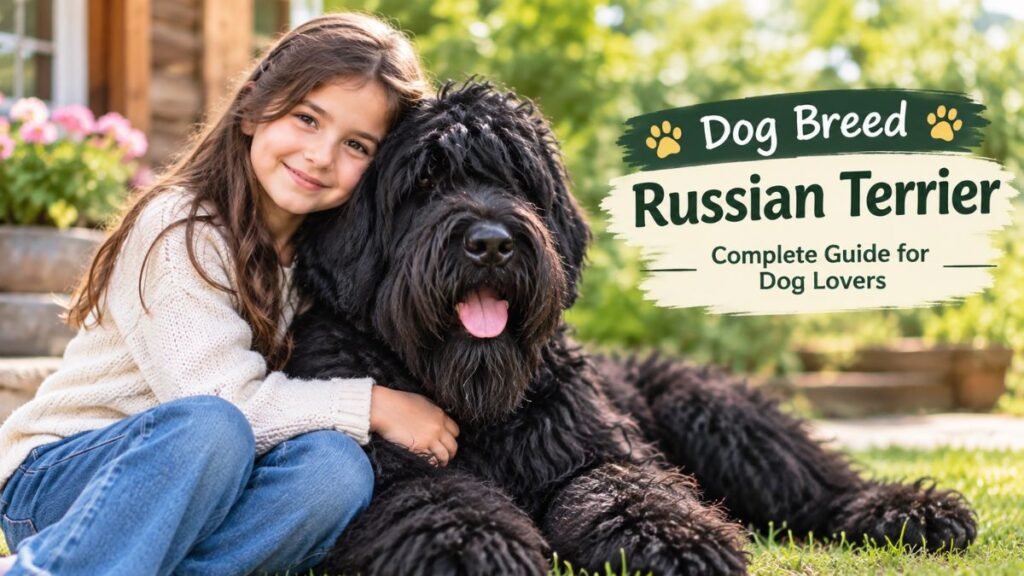
The dog breed Russian Terrier is known for its strong appearance, intelligence, loyalty, and protective nature. When people search for a Russian Terrier, they are often referring to the Black Russian Terrier, a large working dog that was developed in Russia.
This breed is very different from the small terriers that many people picture when they hear the word “terrier.” Black Russian Terriers are large, powerful, and confident dogs that were developed for demanding working roles.
They can form strong bonds with their families, but they also need proper training, socialization, grooming, exercise, and responsible care. Before bringing one home, it is important to understand both the appealing qualities and the challenges that come with this breed.
Dog Breed Russian Terrier Temperament
The Russian Terrier commonly refers to the Black Russian Terrier, a large dog developed in the Soviet Union. The breed was created as a working and guarding dog rather than as a typical companion terrier.
The dog breed Russian Terrier commonly refers to the Black Russian Terrier, a large dog developed in the Soviet Union. The breed was created as a working and guarding dog rather than as a typical companion terrier.
However, this is not usually a breed that should be chosen simply because of its impressive appearance. A Russian Terrier needs an owner who is prepared to provide consistent training, early socialization, daily activity, and regular grooming.
If you are also interested in other powerful Russian guardian breeds, you can read our guide to the Russian Mountain Dog and learn about its traits, temperament, and care needs.
History and Origin of the Russian Terrier
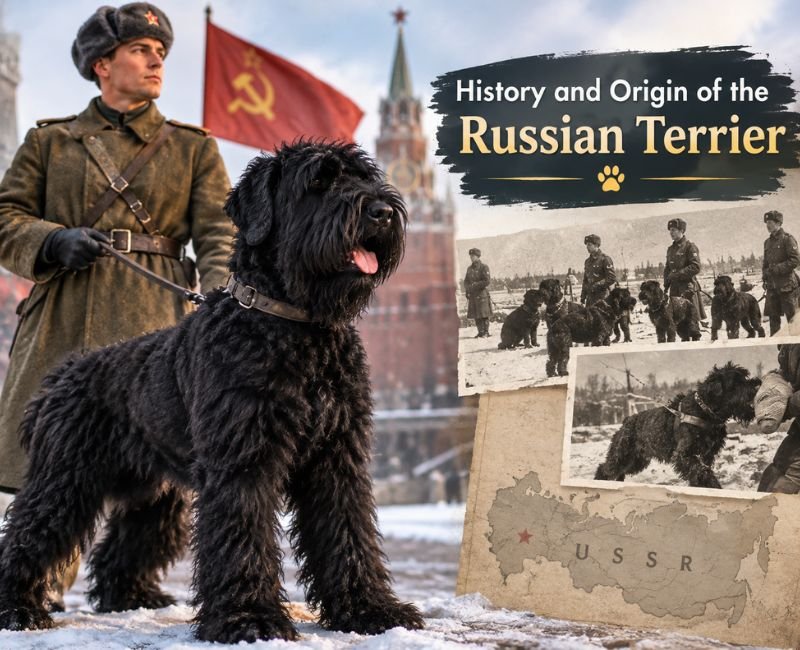
The history of the Black Russian Terrier is closely connected with the Soviet Union. The breed was developed during the 20th century for military and working purposes.
Breeders used several different breeds during its development to create a dog with useful working qualities. The goal was to produce a strong, intelligent, adaptable dog capable of working in difficult conditions.
Over time, the breed became more established and eventually gained recognition outside Russia. Today, Black Russian Terriers are kept as working dogs, guardians, and family companions.
Their history helps explain why they tend to be confident, observant, and protective.
Appearance and Physical Characteristics
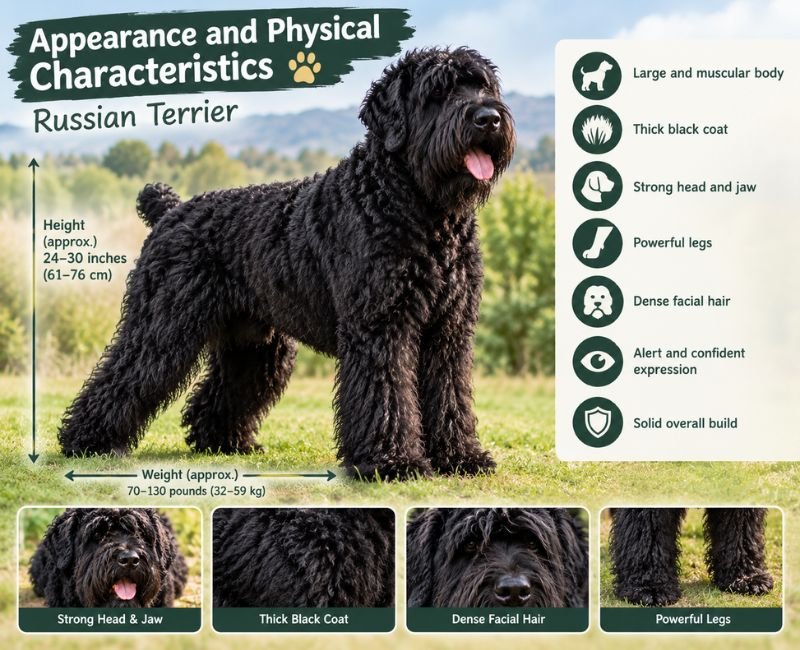
The Russian Terrier has a large and powerful appearance. It is typically recognized by its black, dense, slightly coarse coat and substantial body.
Its coat can give the dog a distinctive, rugged appearance, but maintaining that coat requires regular attention.
Some common physical characteristics include:
- Large and muscular body
- Thick black coat
- Strong head and jaw
- Powerful legs
- Dense facial hair
- Alert and confident expression
- Solid overall build
Because this is a large working breed, its size should be considered carefully before choosing one as a pet. A large dog requires enough space, appropriate exercise, and an owner who can manage its strength safely.
Dog Breed Russian Terrier Temperament
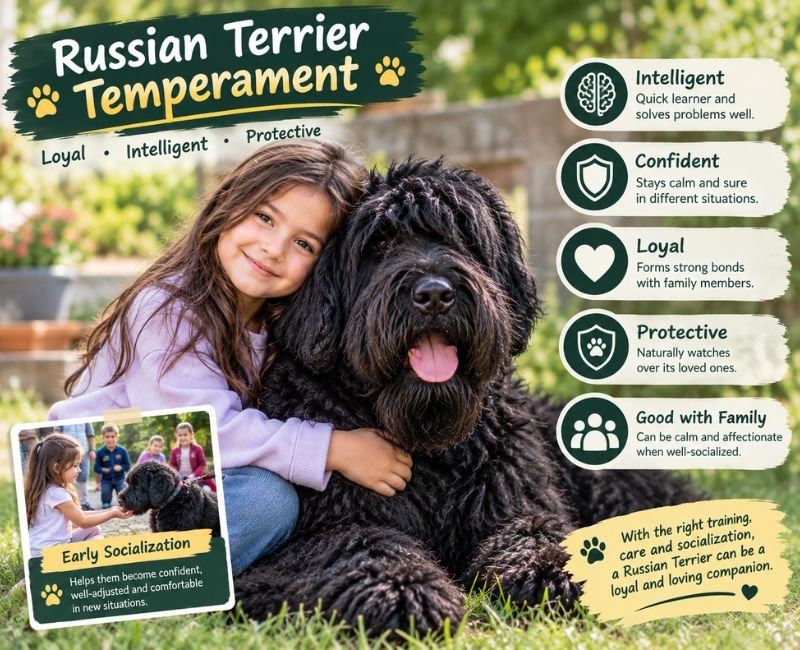
Temperament is one of the most important things to understand about the dog breed Russian Terrier.
Black Russian Terriers are generally known for being intelligent, confident, loyal, and protective. They can become strongly attached to the people they live with and may naturally pay close attention to unfamiliar people and situations.
A well-socialized Russian Terrier can be calm and affectionate with its family. However, its protective instincts should not be ignored.
Early socialization is especially important. Puppies should gradually experience different people, environments, sounds, and appropriate situations in a positive and controlled way.
Every dog is an individual, so personality can vary. Training, genetics, socialization, and the dog’s environment can all influence behavior.
Are Russian Terriers Good Family Dogs?
A Russian Terrier can become a loyal family companion when its needs are properly understood and managed.
The breed may enjoy spending time with its family and can develop a strong bond with its owners. Its intelligence also allows it to learn household routines and training commands.
However, its large size and protective personality mean that supervision and responsible handling are important, particularly around young children.
Children should be taught how to behave respectfully around dogs. They should not pull a dog’s coat, disturb it while eating, or attempt to climb on it.
If there are other pets in the home, introductions should be gradual and controlled. Early socialization can help a dog become more comfortable around different animals, but owners should always consider the individual dog’s behavior.
Families looking for smaller Russian companion dogs can also explore our guide to Russian dog breeds similar to the Shih Tzu.
Russian Terrier Training
Training is an important part of responsible Russian Terrier ownership.
These dogs are intelligent and capable of learning many commands, but intelligence does not automatically mean that training will always be easy. A strong-willed or independent dog can require patience and consistency.
Start training while the dog is young. Basic commands such as sit, stay, come, leave it, and walking calmly on a leash can provide a useful foundation.
Positive reinforcement can make training more productive. Rewarding appropriate behavior with praise, attention, or suitable treats can help the dog understand what is expected.
Avoid harsh or confusing training methods. Clear rules, repetition, patience, and consistency are more useful for building reliable behavior.
Professional training can also be helpful, especially for first-time owners or people who are unfamiliar with large working breeds.
Russian Terrier Grooming
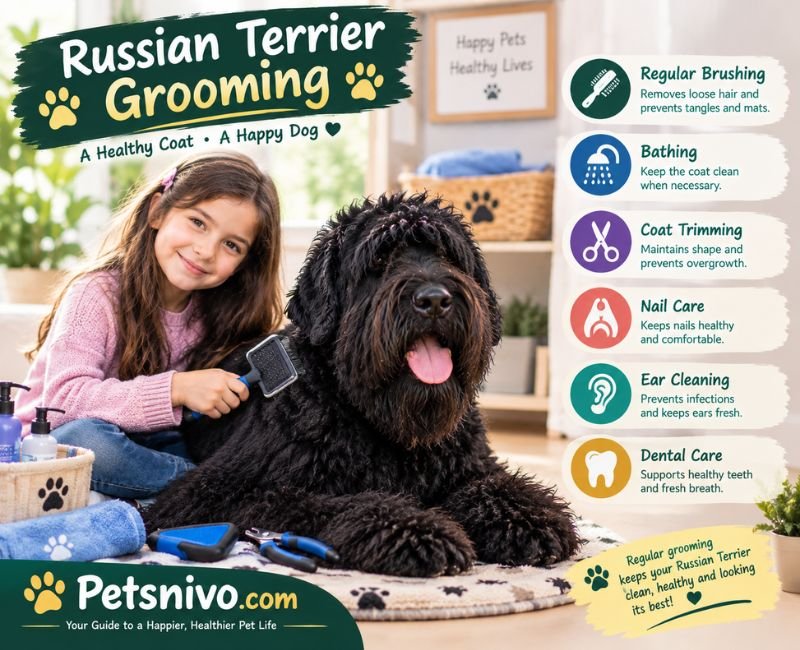
The thick coat of a Russian Terrier requires regular grooming.
Without proper maintenance, the coat can develop tangles and mats. Regular brushing helps remove loose hair and keeps the coat in better condition.
Depending on the dog’s coat and lifestyle, grooming may include:
- Regular brushing
- Bathing when necessary
- Coat trimming
- Nail care
- Ear cleaning
- Routine dental care
The hair around the face can also require attention. Keeping the coat clean and properly maintained is important for comfort as well as appearance.
Owners who are not comfortable handling a large dog’s grooming needs may want to use a professional groomer.
Exercise and Daily Activity
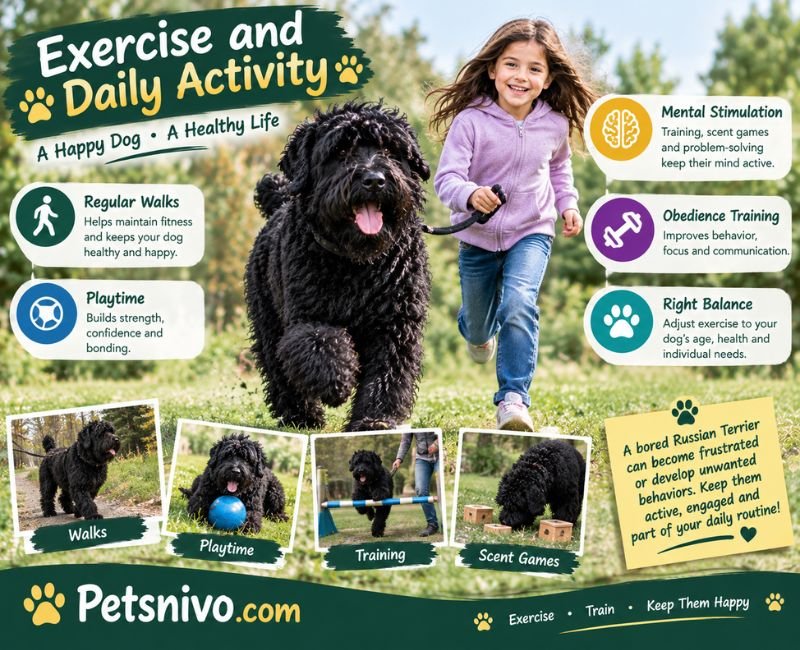
The dog breed Russian Terrier is an active working breed and needs regular physical and mental stimulation.
A simple walk may not always be enough to satisfy an intelligent dog of this type. Appropriate activities can include walks, structured play, obedience exercises, and other mentally engaging activities.
Exercise should be suitable for the dog’s age, health, and individual condition. Puppies should not be pushed into excessive or strenuous activity while their bodies are still developing.
Mental stimulation is equally important. Training sessions, scent-based activities, and problem-solving games can give an intelligent dog something useful to focus on.
A bored Russian Terrier may become frustrated or develop unwanted behaviors, so daily activity should be part of the owner’s routine.
Feeding and General Care
Good nutrition is an important part of caring for a large dog.
A Russian Terrier should receive a complete and balanced diet appropriate for its age, size, and activity level. Puppies, adults, and older dogs can have different nutritional requirements.
Fresh drinking water should always be available.
Owners should also maintain a regular veterinary care schedule. Routine checkups can help monitor the dog’s general health and allow potential problems to be discussed with a veterinarian.
Portion sizes should be managed carefully because excessive weight can place additional stress on a large dog’s body.
Instead of making major dietary changes based on internet advice, owners should discuss individual nutritional needs with a qualified veterinarian.
Common Health Considerations
Like many large dog breeds, Russian Terriers can be affected by certain health problems. The exact risks can vary between individual dogs and breeding lines.
Potential owners should ask responsible breeders about health screening and family health history when considering a puppy.
Regular veterinary examinations are also important throughout the dog’s life.
Owners should pay attention to changes in appetite, movement, energy, behavior, or other unusual signs. If something seems different from the dog’s normal condition, a veterinarian can provide appropriate guidance.
Good nutrition, appropriate exercise, routine care, and responsible breeding practices can all contribute to better overall wellbeing.
Russian Terrier Lifespan
The lifespan of a Russian Terrier can vary from one dog to another. Genetics, nutrition, healthcare, lifestyle, and general living conditions can all influence longevity.
Rather than focusing only on a number, owners should concentrate on providing a healthy and comfortable life.
Regular veterinary care, a balanced diet, appropriate exercise, grooming, and a safe home environment can all contribute to a dog’s quality of life.
Pros and Cons of Owning a Russian Terrier
Every breed has qualities that may suit some households better than others.
Potential Advantages
- Strong bond with family members
- Intelligent and trainable
- Naturally alert
- Protective personality
- Impressive working ability
- Can enjoy structured activities and training
Potential Challenges
- Large and powerful body
- Requires regular training
- Needs early socialization
- Coat requires considerable grooming
- Needs regular physical and mental activity
- May be challenging for inexperienced owners
Understanding these points before getting a dog can help potential owners make a responsible decision.
Frequently Asked Questions
1. What is a Russian Terrier?
The term Russian Terrier commonly refers to the Black Russian Terrier, a large working and guardian breed developed in the Soviet Union.
2. Is a Russian Terrier a good family dog?
A well-trained and properly socialized Russian Terrier can form a strong bond with its family. Because of its size and protective nature, responsible supervision and training are important.
3. Are Russian Terriers easy to train?
They are intelligent and capable of learning, but they can also be independent. Consistent training, patience, early socialization, and positive reinforcement are important.
4. How much grooming does a Russian Terrier need?
The breed has a thick coat that needs regular brushing and maintenance. Some owners may also use professional grooming services to keep the coat manageable.
5. How much exercise does a Russian Terrier need?
Russian Terriers need regular physical activity as well as mental stimulation. Daily walks, training, structured play, and suitable activities can help meet these needs.
Final Thoughts
The dog breed Russian Terrier is a powerful, intelligent, and loyal working dog with a distinctive appearance and protective personality. The Black Russian Terrier can become a devoted companion when it receives proper training, socialization, grooming, exercise, and care.
However, this is a large breed with significant physical and mental needs. Anyone considering one should look beyond its appearance and learn about its temperament, activity requirements, grooming routine, and training needs.
With responsible ownership and appropriate care, a Russian Terrier can become a valued part of a family and a rewarding companion for an owner prepared to meet its needs.